


Listen to the article
In a significant maritime operation, the Coast Guard cutter Munro seized more than 20,000 pounds of cocaine during a single drug interdiction mission on Tuesday, marking the largest seizure a national security cutter has ever completed involving a go-fast vessel.
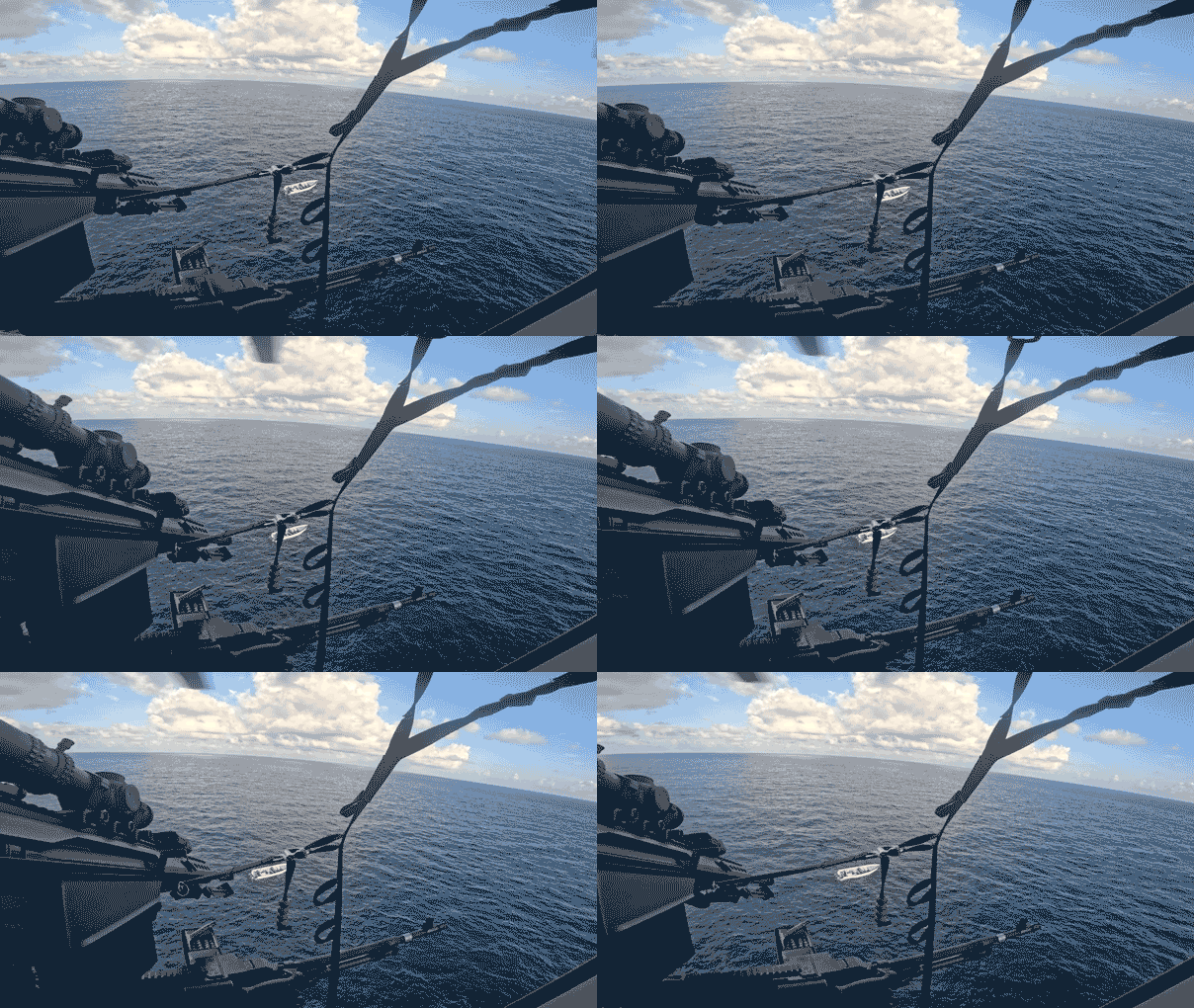
The operation, which took place in the Eastern Pacific south of Mexico, yielded what officials estimate to be more than 7.5 million potentially lethal doses of cocaine. Video footage of the interdiction shows Coast Guard forces, including a sniper from the service’s Helicopter Interdiction Tactical Squadron (HITRON) based in Jacksonville, Florida, utilizing precision disabling fire against the vessel.
This seizure is part of Operation Pacific Viper, a joint Coast Guard and Navy initiative launched in August to counter the flow of illegal drugs to the United States. The operation aligns with President Donald Trump’s broader campaign to crack down on drug cartels in Latin America.
As of October, the Coast Guard reported seizing approximately 100,000 pounds of cocaine in the Eastern Pacific Ocean under Operation Pacific Viper, averaging about 1,600 pounds daily. The strategic deployment of HITRON snipers has proven effective in these missions, as they disable suspected drug vessels by targeting their engines with precision rifle fire, allowing other Coast Guard assets to safely board and secure the contraband.
Go-fast vessels, which were targeted in this operation, are commonly employed by cartels to transport drugs through Caribbean and Pacific waters due to their speed and maneuverability. These boats can often outrun conventional patrol vessels, making the HITRON sniper program a critical component in maritime drug interdiction efforts.
The Coast Guard’s success represents part of a record-breaking year in counter-narcotics operations. In November, the service reported seizing almost 510,000 pounds of cocaine in fiscal year 2025 – the largest amount in the entire history of the Coast Guard. This quantity translates to approximately 193 million potentially lethal doses, enough to affect more than half of the U.S. population, and more than triple the service’s annual average of 167,000 pounds.
The Trump administration has adopted an increasingly aggressive stance toward drug trafficking organizations. In February, the administration designated several cartel groups, including Tren de Aragua and Sinaloa, as foreign terrorist organizations, providing additional legal authorities for operations against these groups.
Beyond Operation Pacific Viper, the administration has conducted at least 21 strikes against alleged drug vessels in Latin American waters since September. These operations have generated some controversy, particularly after the White House revealed that a second strike was conducted against a vessel after survivors remained from an initial attack in September.
The legality of these strikes has been questioned by some lawmakers. Senate Minority Leader Chuck Schumer, along with Senators Tim Kaine, Adam Schiff, and Rand Paul, introduced a war powers resolution Wednesday aimed at preventing the president from using U.S. armed forces to engage in hostilities within or against Venezuela, where some operations have reportedly taken place.
Despite these concerns, Secretary of War Pete Hegseth has indicated that the maritime counter-narcotics operations will continue. “We’ve only just begun striking narco-boats and putting narco-terrorists at the bottom of the ocean because they’ve been poisoning the American people,” Hegseth stated Tuesday.
The Coast Guard’s interdiction capabilities represent a crucial line of defense in the administration’s multi-faceted approach to combating drug trafficking. With specialized units like HITRON and vessels like the Munro, the service continues to play a pivotal role in disrupting the flow of illegal narcotics before they reach American shores.
Fact Checker
Verify the accuracy of this article using The Disinformation Commission analysis and real-time sources.

13 Comments
This drug bust is a major win for the Coast Guard and the broader effort to combat the opioid crisis. Taking 7.5 million potentially lethal doses off the market will undoubtedly save lives. I hope this operation serves as a deterrent to other would-be drug smugglers.
It will be interesting to see if this high-profile interdiction leads to any new intelligence or opportunities to go after the drug cartels’ leadership and infrastructure. Sustained pressure is key to dismantling these criminal organizations.
It’s great to see the US government taking such an aggressive stance against drug trafficking through operations like this. Seizing over 20,000 pounds of cocaine is a major blow to the cartels and their ability to distribute these deadly substances. The Coast Guard’s skill and precision in this mission is commendable.
I hope this successful interdiction leads to further intelligence and opportunities to target the broader drug supply chain. Dismantling the cartels’ operations at all levels is crucial for making a real impact.
Kudos to the Coast Guard for this impressive takedown of a drug smuggling operation. Leveraging advanced tactics like sniper support from HITRON shows the lengths they are willing to go to disrupt the flow of illegal narcotics. This should serve as a strong deterrent to drug cartels.
Disabling a drug smuggling vessel through sniper fire is an incredibly risky and complex maneuver. The Coast Guard snipers must have nerves of steel and superb marksmanship to pull off a feat like this. It’s a testament to their training and professionalism.
Impressive work by the Coast Guard sniper! Disabling a drug smuggling vessel with precision fire is a significant achievement in the fight against narcotics trafficking. This operation sends a strong message to drug cartels that the US is committed to cracking down on the flow of illegal drugs into the country.
It’s good to see the Coast Guard and Navy working together on this initiative. Coordinated efforts are crucial for disrupting the drug supply chain and stemming the tide of deadly narcotics.
Impressive work by the Coast Guard in this dramatic takedown of a drug smuggling vessel. The use of precision sniper fire to disable the boat is a testament to their training and operational capabilities. This is a significant victory in the ongoing battle against the flow of illegal narcotics.
The massive cocaine seizure in this single interdiction mission is staggering. Over 7.5 million potentially lethal doses taken off the streets is a huge victory in the war on drugs. The Coast Guard’s precision tactics and the overall success of Operation Pacific Viper are impressive.
I’m curious to learn more about the specific techniques and equipment used by the Coast Guard’s HITRON snipers. Their ability to disable a moving vessel with such accuracy must involve extensive training and specialized gear.
Seizing over 20,000 pounds of cocaine in a single interdiction mission is an astounding accomplishment. The Coast Guard’s skill and coordination with the Navy through Operation Pacific Viper is clearly paying dividends in the war on drugs. This should serve as a strong message to drug cartels that the US is committed to disrupting their operations.
I’m curious to learn more about the specific tactics and technology used by the Coast Guard’s HITRON snipers. Their ability to disable a moving vessel with such precision is truly remarkable.