


Listen to the article
U.S. Coast Guard Pursues Third Venezuelan Oil Tanker as Caribbean Tensions Escalate
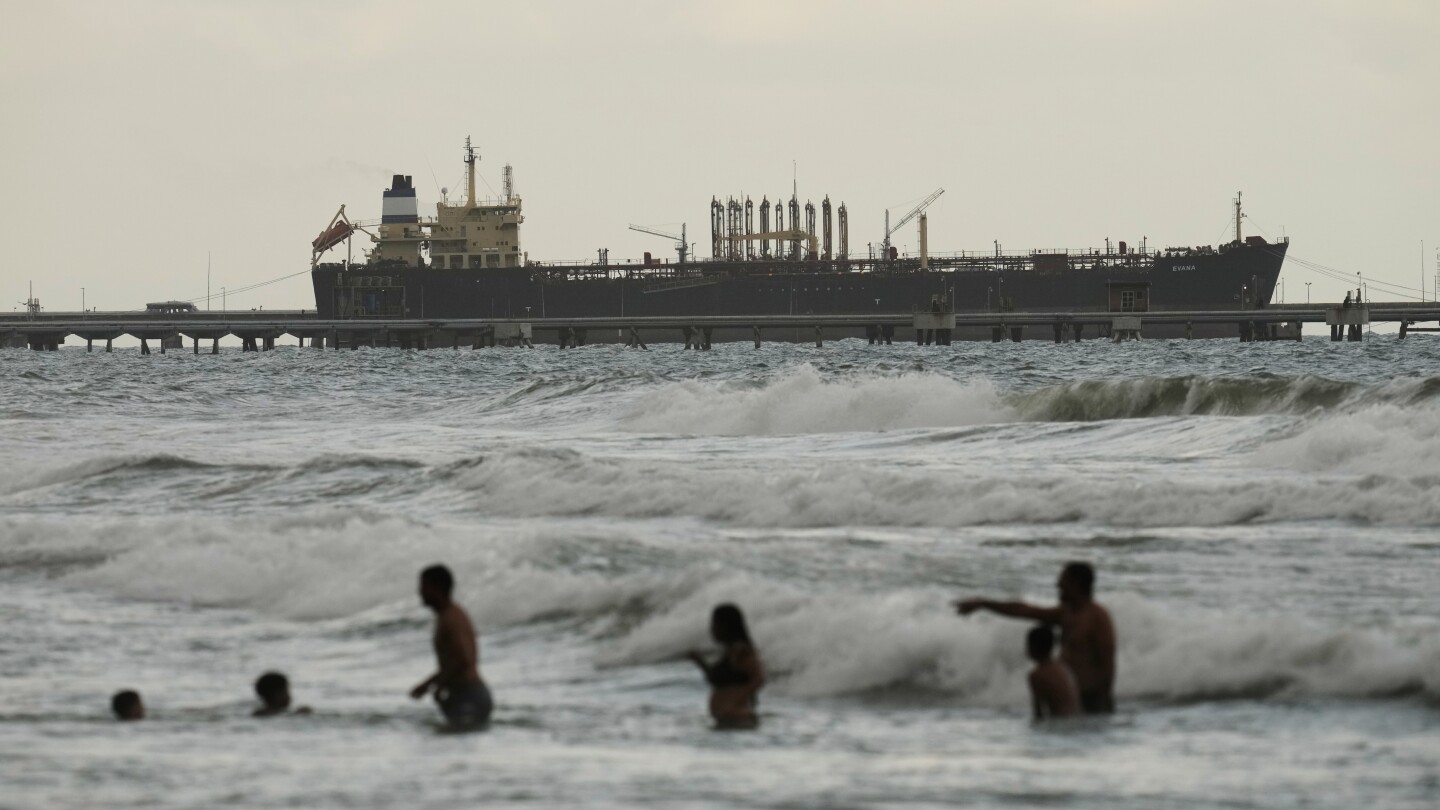
The U.S. Coast Guard launched operations Sunday against another sanctioned oil tanker in the Caribbean Sea, marking the third such action in less than two weeks as the Trump administration intensifies its pressure campaign against Venezuela’s Maduro government.
A U.S. official, speaking on condition of anonymity because they weren’t authorized to comment publicly, confirmed that Sunday’s operation targeted “a sanctioned dark fleet vessel that is part of Venezuela’s illegal sanctions evasion.” The vessel was reportedly flying a false flag and operating under a judicial seizure order.
This latest pursuit follows Saturday’s predawn seizure of the Panama-flagged vessel “Centuries,” which the White House described as “a falsely flagged vessel operating as part of the Venezuelan shadow fleet to traffic stolen oil.” Just ten days earlier, on December 10, U.S. forces seized another sanctioned tanker, “Skipper,” which wasn’t flying any nation’s flag when intercepted.
The series of maritime interdictions comes after President Donald Trump declared a “blockade” of Venezuela following the first seizure. Trump has recently escalated his rhetoric toward Venezuelan President Nicolás Maduro, demanding the return of assets seized from U.S. oil companies years ago.
“We are ready to accelerate the pace of our deep revolution!” Maduro responded in a message posted Sunday on Telegram, adding that Venezuela has spent months “denouncing, challenging and defeating a campaign of aggression that goes from psychological terrorism to corsairs attacking oil tankers.”
The conflict has deep roots in the history of Venezuela’s oil industry. U.S. oil companies dominated the country’s petroleum sector until nationalization efforts began in the 1970s and accelerated under former president Hugo Chávez and then Maduro. An international arbitration panel ordered Venezuela’s government to pay $1.6 billion to ExxonMobil in 2014 after determining that compensation offered during nationalization was insufficient.
The tanker seizures have already had significant market impact, with several sanctioned vessels reportedly diverting away from Venezuelan waters. White House Chief of Staff Susie Wiles recently told Vanity Fair that Trump “wants to keep on blowing boats up until Maduro cries uncle,” underscoring the administration’s confrontational approach.
The maritime operations in the Caribbean are running parallel to controversial U.S. actions against suspected drug smugglers. Since early September, at least 104 people have been killed in 28 known strikes against vessels in the Caribbean and eastern Pacific that the administration claims are trafficking fentanyl and other illegal drugs into the United States.
These strikes have drawn scrutiny from lawmakers and human rights activists who question the evidentiary basis for targeting specific vessels and characterize the fatal strikes as extrajudicial killings.
The escalating military action has also sparked significant debate in Congress. Senator Rand Paul (R-Ky.), a frequent critic of U.S. military interventions, called the tanker seizures “a provocation and a prelude to war” during an appearance on ABC’s “This Week.”
“At any point in time, there are 20, 30 governments around the world that we don’t like that are either socialist or communist or have human rights violations,” Paul said. “But it isn’t the job of the American soldier to be the policeman of the world.”
Democrats have pressed Trump to seek congressional authorization for the military operations. Senator Tim Kaine (D-Va.) argued on NBC’s “Meet the Press” that Trump’s approach contradicts his pledge to keep the United States out of unnecessary conflicts.
“We should be using sanctions and other tools at our disposal to punish this dictator who is violating the human rights of his civilians and has run the Venezuelan economy into the ground,” Kaine said. “But I’ll tell you, we should not be waging war against Venezuela. We definitely should not be waging war without a vote of Congress.”
As tensions escalate, the maritime confrontations risk further deteriorating the already strained relationship between Washington and Caracas, with significant implications for regional stability and global oil markets.
Fact Checker
Verify the accuracy of this article using The Disinformation Commission analysis and real-time sources.
