


Listen to the article
A federal judge has indefinitely blocked the Trump administration’s controversial $1.776 billion Anti-Weaponization Fund on Friday, raising questions about the program’s future even after administration officials indicated it would not move forward. The ruling intensifies pressure on the Justice Department to formally dismantle the fund through official legal channels rather than relying solely on verbal assurances.
U.S. District Judge Leonie Brinkema, appointed during the Clinton administration, extended a court order preventing any implementation of the fund. In her decision, Brinkema expressed skepticism that public statements from administration officials were sufficient to guarantee the program would remain dormant. She specifically cited President Trump’s recent comments expressing disappointment about the fund’s halt, suggesting this indicated potential plans to revive it in the future.
The fund originated from a lawsuit settlement between President Donald Trump and the Internal Revenue Service. Its stated purpose was to compensate alleged victims of government “lawfare,” a term used to describe what supporters characterize as politically motivated legal actions. However, the program immediately drew sharp criticism from Democratic lawmakers, who labeled it a “slush fund” that could potentially benefit Trump’s political allies and individuals facing charges related to the January 6 Capitol riot.
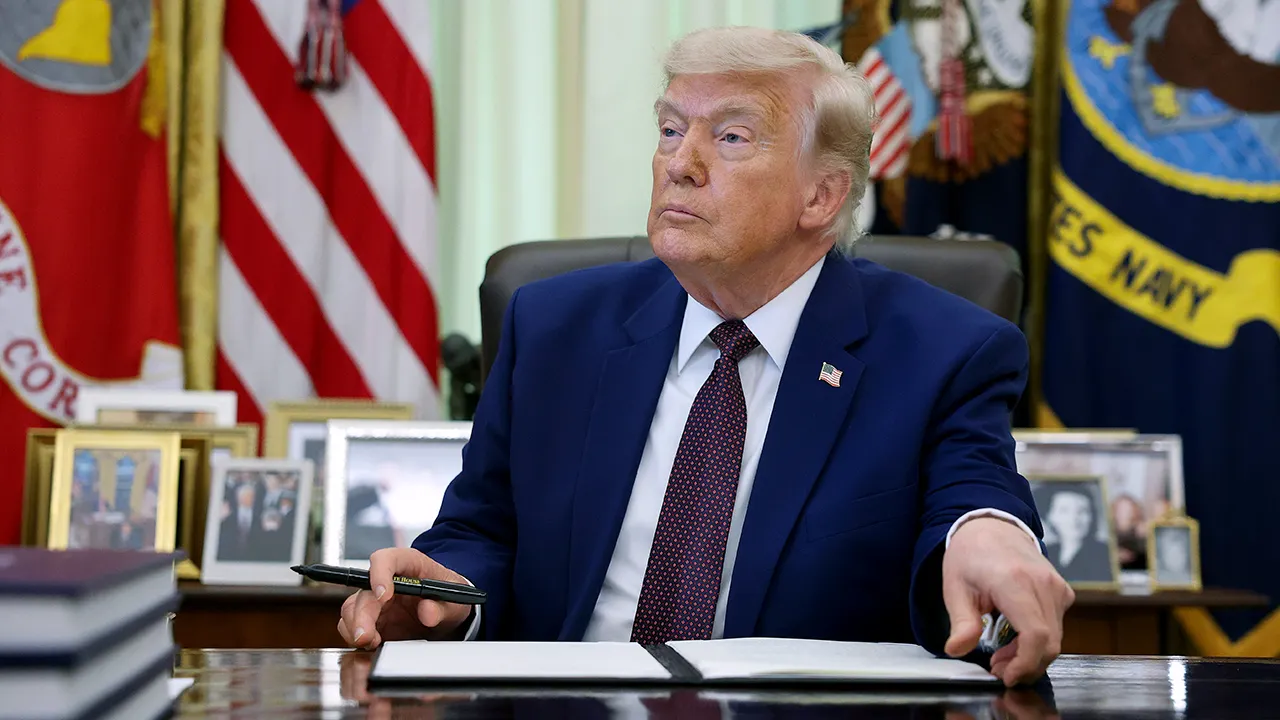
During a weekend appearance on “Meet the Press,” Trump openly expressed his desire to continue with the compensation program. “If it was up to me, I’d pay them the kind of money that they deserve. People have been destroyed. Lives have been destroyed,” the president stated, reinforcing concerns among critics that the administration might attempt to resurrect the fund despite official statements to the contrary.
Judge Brinkema has given the Justice Department one week to provide written confirmation that the Anti-Weaponization Fund is being formally terminated and will not be reinstated. This requirement underscores judicial skepticism about informal declarations from government officials and demands concrete legal action to ensure the program’s cancellation.
The legal battle has unfolded across multiple courtrooms with conflicting outcomes. Earlier this week, U.S. District Judge Richard Leon, appointed during the George W. Bush administration, rejected a separate emergency request from Citizens for Responsibility and Ethics in Washington (CREW) seeking immediate intervention. Leon indicated he was willing to accept Justice Department representations that the fund had been effectively abandoned.
However, Leon issued a stern warning to administration officials during his ruling. “I give the Justice Department this warning: Don’t play possum with me,” he stated from the bench, making clear that his decision should not be interpreted as permission to quietly revive the program at a later date. He also reminded government attorneys that he has the authority to sanction lawyers who make false representations to the court.
Deputy Attorney General Todd Blanche announced during a congressional hearing earlier this month that the Anti-Weaponization Fund would not proceed. His testimony before House lawmakers appeared to signal a definitive end to the controversial program. However, the settlement agreement that established the fund and the departmental directives creating its operational framework have not been formally rescinded, leaving the legal structure technically intact.
Justice Department attorney Andrew Block argued before Judge Leon that Blanche’s congressional testimony effectively resolved CREW’s legal challenge because the government had publicly committed not to move forward with the fund. Yet Leon repeatedly questioned why Blanche had not formally rescinded a May 18 order that originally established procedures for the fund’s operation, a question Block could not satisfactorily answer.
CREW attorney Nikhel Sus contended that the settlement agreement remains legally operative with upcoming deadlines requiring government action. According to Sus, a five-member oversight board must be established by June 17, while funding transfers are scheduled for July 17. “On paper, the fund is still a legally operating entity,” Sus argued, emphasizing that verbal assurances alone do not constitute legal termination.
The conflicting judicial decisions highlight the unusual legal limbo surrounding the fund. While one federal judge has accepted the administration’s word that the program will not proceed, another has demanded formal written proof of termination. This divergence reflects broader concerns about transparency and accountability in government operations, particularly regarding programs involving substantial public funds.
The controversy surrounding the Anti-Weaponization Fund reflects deeper political divisions over claims of government overreach and politically motivated prosecutions. Supporters of the fund argue that individuals targeted by what they view as partisan legal actions deserve compensation for reputational and financial damages. Critics counter that the program lacks clear eligibility criteria and accountability measures, creating potential for abuse.
Judge Leon indicated he will continue considering CREW’s request for a preliminary injunction and suggested he could intervene if evidence emerges that the administration is attempting to revive the fund through alternative means. His ongoing oversight represents an additional check on potential efforts to resurrect the program without proper legal procedures.
The Trump administration now faces a critical decision point. To satisfy judicial concerns and definitively close this chapter, officials must formally rescind the legal documents that created the fund’s framework. Failure to do so will likely result in continued legal challenges and judicial scrutiny, potentially exposing the administration to contempt proceedings if judges determine that informal assurances were made in bad faith.
Fact Checker
Verify the accuracy of this article using The Disinformation Commission analysis and real-time sources.

27 Comments
Production mix shifting toward Politics might help margins if metals stay firm.
Good point. Watching costs and grades closely.
Good point. Watching costs and grades closely.
If AISC keeps dropping, this becomes investable for me.
Good point. Watching costs and grades closely.
Good point. Watching costs and grades closely.
The cost guidance is better than expected. If they deliver, the stock could rerate.
Good point. Watching costs and grades closely.
Good point. Watching costs and grades closely.
Nice to see insider buying—usually a good signal in this space.
Good point. Watching costs and grades closely.
Good point. Watching costs and grades closely.
I like the balance sheet here—less leverage than peers.
Exploration results look promising, but permitting will be the key risk.
Good point. Watching costs and grades closely.
Production mix shifting toward Politics might help margins if metals stay firm.
Silver leverage is strong here; beta cuts both ways though.
The cost guidance is better than expected. If they deliver, the stock could rerate.
Good point. Watching costs and grades closely.
Good point. Watching costs and grades closely.
Nice to see insider buying—usually a good signal in this space.
Good point. Watching costs and grades closely.
Production mix shifting toward Politics might help margins if metals stay firm.
Good point. Watching costs and grades closely.
Silver leverage is strong here; beta cuts both ways though.
Good point. Watching costs and grades closely.
Good point. Watching costs and grades closely.