


Listen to the article
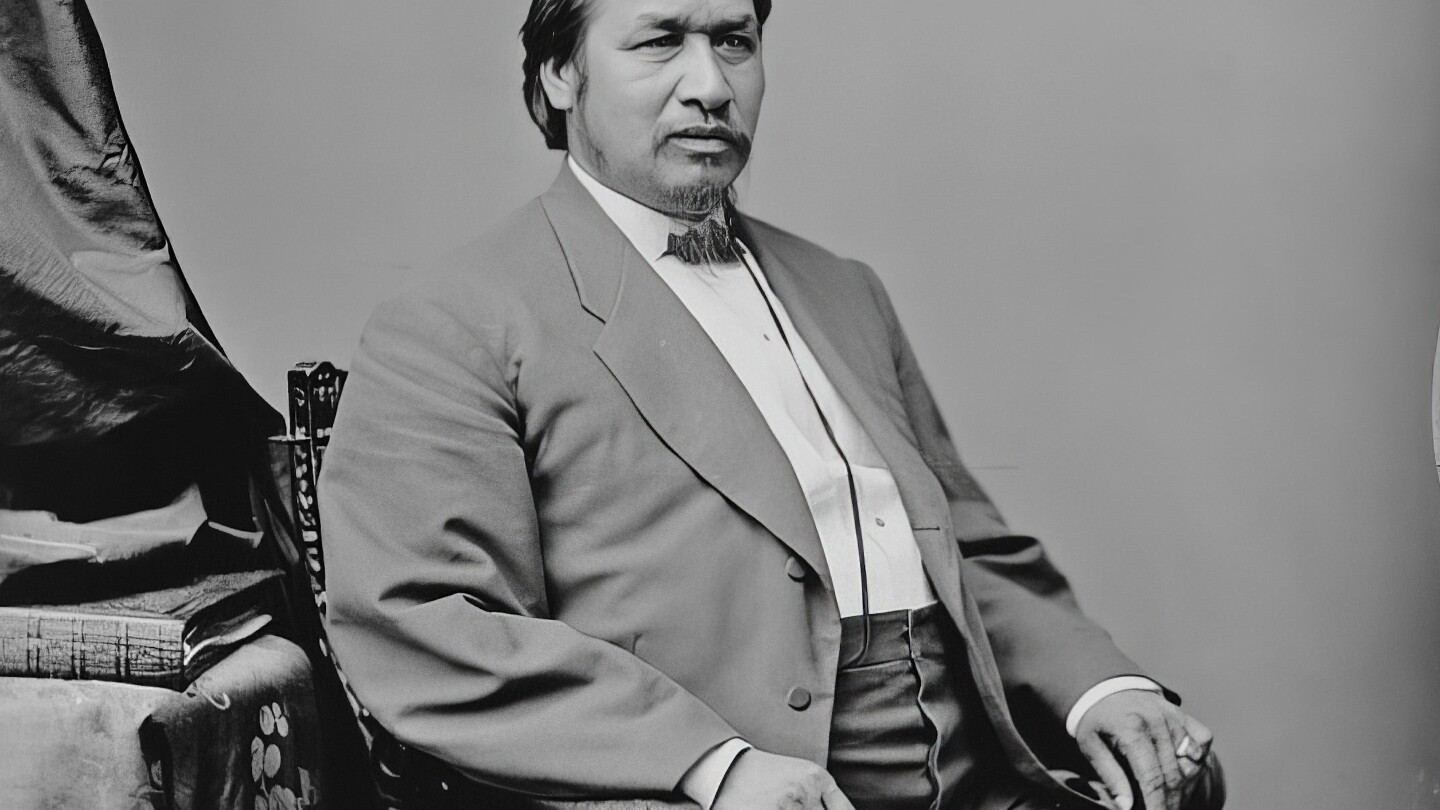
A Civil War hero and Seneca leader, Ely Samuel Parker, was posthumously admitted to the New York State Bar on Friday, correcting a 130-year-old injustice that barred him from practicing law during his lifetime because of his Native American heritage.
The ceremonial admission took place in a Buffalo courthouse, culminating a years-long effort by Parker’s descendants to secure recognition for their ancestor, who was denied admission to the bar because Native Americans were not considered U.S. citizens until 1924, nearly three decades after his death.
“Today we correct that injustice,” said Melissa Parker Leonard, Parker’s great-great-great-grandniece, addressing an audience that included numerous robed judges. “We acknowledge that the failure was never his. It was the law itself.”
Parker’s historical significance extends far beyond this posthumous honor. He played a pivotal role during the Civil War’s conclusion, standing at General Ulysses S. Grant’s side during Robert E. Lee’s surrender at Appomattox in 1865. It was Parker who transcribed the final terms of surrender that both generals signed, cementing his place in American history.
Following the war, Grant appointed Parker as Commissioner of Indian Affairs, making him the first Native American to hold this significant federal position. According to retired Judge John Browning, who assisted with the application, Parker is also the first Native American to receive posthumous admission to any state bar.
Judge Gerald Whalen, presiding justice of the 4th Appellate Division, noted the clear qualifications Parker possessed. “Even a cursory review of his biography will show that Mr. Parker was not only clearly qualified for admission to the bar, but he in fact exemplified the best and highest ideals of the legal profession that the bar represents,” Whalen stated before finalizing the admission.
Born on the Seneca Nation of Indians’ Tonawanda reservation near Buffalo in 1828, Parker was educated at a Baptist mission school where he adopted the name Ely Samuel Parker instead of his Seneca name, Hasanoanda. He later studied law at a firm in Ellicottville, New York, but his career aspirations were thwarted by discriminatory citizenship requirements.
Parker’s story reflects the complex relationship between Native Americans and the United States government throughout the 19th century. Native Americans weren’t granted citizenship until the Indian Citizenship Act of 1924, long after Parker’s death in 1895.
Unable to practice law formally, Parker pivoted to civil engineering. However, he continued applying his legal knowledge to defend Seneca lands, partnering with attorney John Martindale to secure important legal victories in both the New York Court of Appeals and the U.S. Supreme Court, achievements that demonstrated his legal acumen despite official barriers.
His friendship with Ulysses S. Grant began in Galena, Illinois, where Parker was supervising construction of a federal building as an engineer for the U.S. Treasury Department. This connection would later prove pivotal when Grant brought Parker into his military circle during the Civil War as his military secretary, ultimately elevating him to brigadier general.
The historic admission ceremony represents not just recognition of Parker’s individual accomplishments but acknowledges broader historical injustices faced by Native Americans.
“Today is Ely’s triumph, but it is also all of ours, too,” said Lee Redeye, deputy counsel for the Seneca Nation of Indians, during the ceremony. “For we stand victorious over the prejudice of the past.”
Parker’s remains rest in Buffalo’s Forest Lawn Cemetery, but his legacy continues through this recognition and the ongoing efforts to acknowledge historical figures whose contributions were overlooked due to prejudice and discrimination.
“This moment is deeply personal for our family,” Leonard said at the ceremony. “It allows Ely to rest in the knowledge that he did his best, and that his best changed the course of our history.”
Fact Checker
Verify the accuracy of this article using The Disinformation Commission analysis and real-time sources.

8 Comments
It’s remarkable that Parker was able to achieve so much despite the discrimination he faced. His service and contributions during the Civil War are a testament to his character and abilities.
Agreed. Parker’s story is a powerful example of resilience and perseverance in the face of adversity. This recognition is well-deserved.
This news raises important questions about the ongoing challenges Native Americans face in the legal system and other institutions. While this is a positive step, there is still much work to be done to address systemic inequalities.
That’s a fair point. This should be seen as just one step in a larger effort to ensure equal rights and opportunities for Native Americans. Continued advocacy and reform will be crucial.
It’s wonderful to see this long-overdue recognition for Ely Samuel Parker, a pioneering Native American leader who played a crucial role in the Civil War’s conclusion. His story deserves to be more widely known.
Ely Samuel Parker’s life and legacy are a powerful reminder of the rich diversity and contributions of Native Americans throughout US history. This posthumous recognition is an important way to honor his memory and impact.
Parker’s posthumous admission to the New York State Bar is an important step in acknowledging and correcting the injustices faced by Native Americans in the legal system. This symbolic gesture is a meaningful way to honor his legacy.
Absolutely. Barriers to the legal profession were yet another way that Native Americans were denied equal rights and opportunities. Addressing these historical wrongs is crucial.