


Listen to the article
Faith Leaders Condemn Protest Disruption at Minnesota Church, Sparking Rights Debate
Several religious leaders have issued urgent calls to protect worshippers’ rights while expressing compassion for migrants after protesters disrupted a Sunday service at Cities Church in St. Paul, Minnesota. The incident has ignited a national conversation about the boundaries of protest and the sanctity of religious spaces.
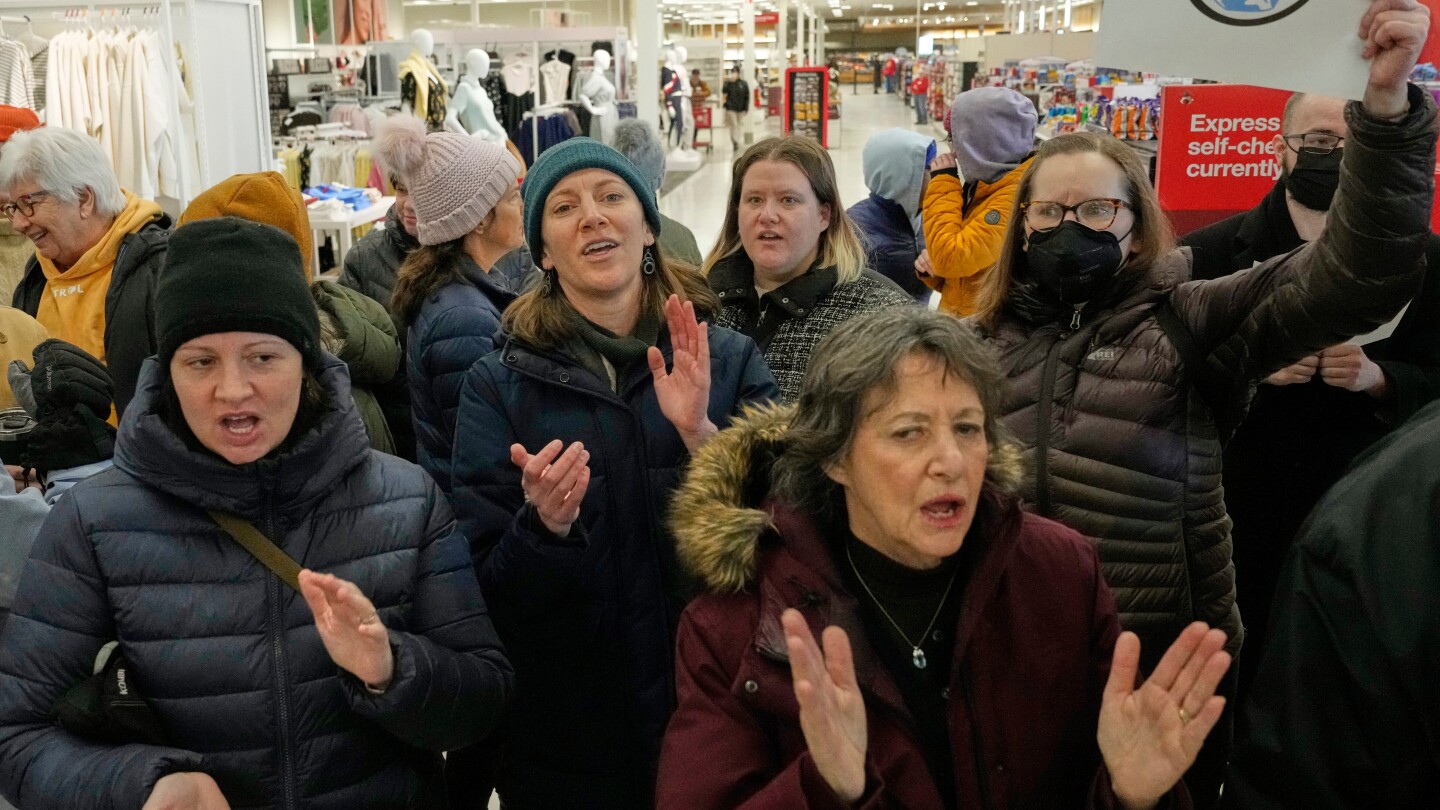
Approximately three dozen demonstrators entered the church during worship, with some approaching the pulpit while others chanted “ICE out” and invoked the name of Renee Good, a woman fatally shot by an Immigration and Customs Enforcement (ICE) agent during a January 7 operation in Minneapolis.
The protest appeared to target David Easterwood, one of the church’s pastors who also leads the local ICE field office. Nekima Levy Armstrong, a prominent local activist who helped lead the disruption, identified herself as an ordained reverend.
“The interference was so significant that services were forced to end prematurely,” stated the Minnesota-Wisconsin Baptist Convention, which includes Cities Church among its members. The convention described the incident as “an unacceptable trauma,” noting that video footage showed protesters “shouting insults and accusations at youth, children, and families.”
The U.S. Department of Justice has opened a civil rights investigation into the incident. Assistant Attorney General for Civil Rights Harmeet Dhillon condemned the protest as “un-American and outrageous,” stating her office is investigating potential violations of the federal Freedom of Access to Clinic Entrances (FACE) Act, which prohibits interference with religious worship.
The protest reflects escalating tensions in Minnesota, where more than 2,000 federal immigration officers have encountered growing resistance from community activists. This confrontation has occurred amid political finger-pointing between the Trump administration and Minnesota officials over the heightened enforcement climate.
Kevin Ezell, president of the North American Mission Board, strongly condemned the disruption: “No cause — political or otherwise — justifies the desecration of a sacred space or the intimidation and trauma inflicted on families gathered peacefully in the house of God.”
The incident highlights the deep divisions among American Christians regarding immigration enforcement. The estimated 11 million undocumented immigrants in the United States and the increase in border crossings during the Biden administration have created complex moral and legal questions for religious communities.
White evangelical churches have generally supported stronger immigration enforcement, while Catholic leadership has advocated more forcefully for migrant rights. The Southern Baptist Convention, America’s largest Protestant denomination with a conservative evangelical theology, finds itself at the center of this debate.
Miles Mullin, who leads the Ethics and Religious Liberty Commission of the Southern Baptist Convention, acknowledged that faith leaders often participate in social justice protests but emphasized a “red line” against actions that prevent others from worshipping. “This is something that just shouldn’t happen in America,” Mullin said. “For Baptists, our worship services are sacred.”
Many faith leaders have expressed concern since January when the Trump administration announced that federal immigration agencies could make arrests at churches, schools, and hospitals, ending policies that had protected these sensitive locations. While no immigration raids during church services have been reported, some churches have posted notices prohibiting ICE agents from entering, and others have reported declining attendance during enforcement operations.
White House press secretary Karoline Leavitt called the protest “despicable,” warning that “President Trump will not tolerate the intimidation and harassment of Christians in their sacred places of worship.”
The Rev. Joe Rigney, a founding pastor at Cities Church who served until 2023, expressed that security would have been his primary concern had protesters disrupted service during his tenure, particularly following last summer’s fatal shooting at a Minneapolis Catholic school Mass.
As churches across the country grapple with increasingly divisive political tensions, the incident has prompted many religious communities to reevaluate their security protocols while attempting to maintain open and welcoming environments for worship.
Fact Checker
Verify the accuracy of this article using The Disinformation Commission analysis and real-time sources.

9 Comments
While the protesters’ actions were disruptive, I appreciate their passion for important social causes. However, the sanctity of religious spaces must be preserved. I hope the community can find a constructive way to address the core issues through open and respectful dialogue.
Protecting the rights of worshippers is crucial, but the underlying issues driving the protest also merit serious consideration. Perhaps the community could explore ways for the concerns of marginalized groups to be addressed through proper channels, without infringing on religious freedom.
This is a difficult situation. I can understand the protesters’ desire to raise awareness of important issues, but interrupting a church service seems like an inappropriate and counterproductive approach. There needs to be more dialogue to find ways for all voices to be heard respectfully.
The protesters were wrong to interrupt the service, but I understand their desire to draw attention to important issues like immigration enforcement. Seeking to protect worshippers’ rights is valid, yet the concerns of marginalized groups shouldn’t be ignored either. An open, empathetic dialogue is needed.
Well said. This situation highlights the complexities of balancing competing rights and interests. With goodwill on all sides, perhaps a mutually acceptable solution can be found.
This is a tricky balancing act between the right to protest and the right to practice religion freely. I think the faith leaders are correct to defend their congregants’ ability to worship without interference. But the protesters also raise valid concerns that deserve a thoughtful response.
This is a complex issue with valid concerns on both sides. While the right to peacefully protest is important, disrupting a religious service crosses a line and infringes on the worshippers’ freedom of religion. Both sides should strive for respectful dialogue to address the underlying issues.
I agree, finding the right balance between protest rights and religious freedom is critical. Hopefully the community can come together to have a constructive discussion and find a way forward.
While I sympathize with the protesters’ cause, disrupting a religious service crosses an ethical line in my view. Worshippers should be able to practice their faith freely without fear of interference. The leaders are right to defend the sanctity of their church space.