


Listen to the article
Border Patrol Chief Celebrates Legal Victory as Federal Court Overturns Chicago Immigration Restrictions
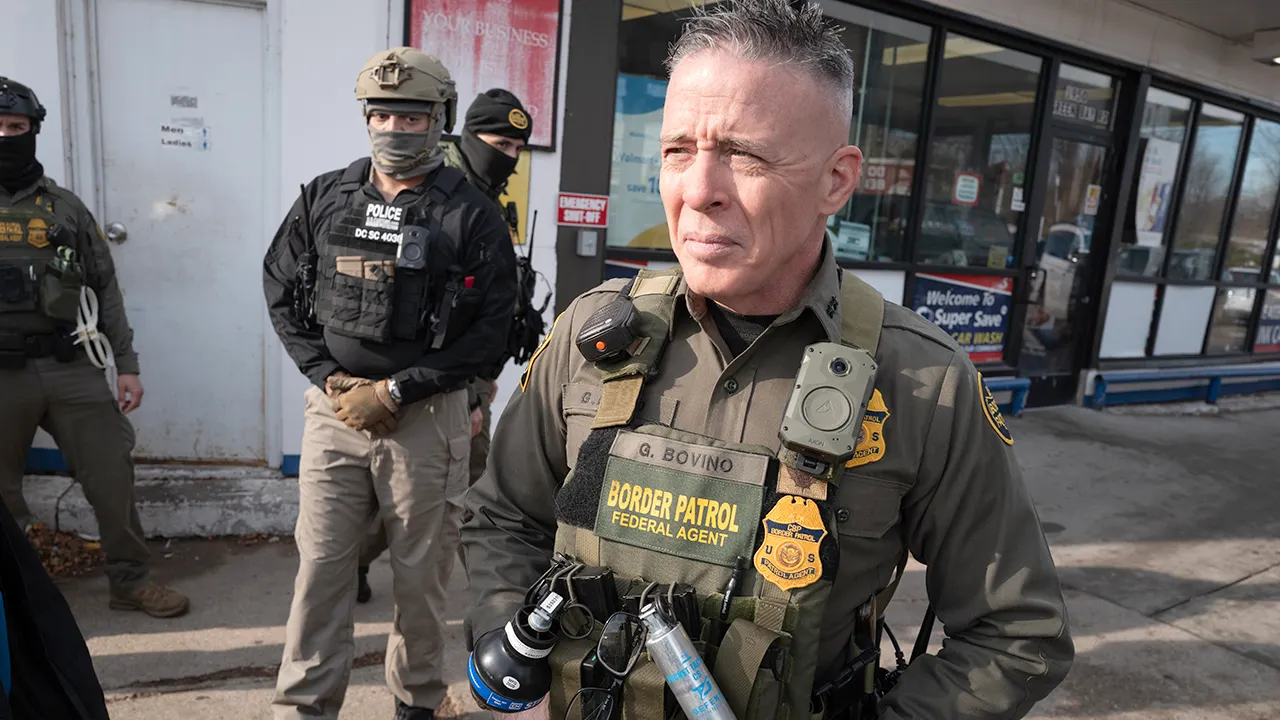
Border Patrol Chief Greg Bovino declared vindication Monday after a federal appeals court dismantled restrictions on immigration enforcement operations in Chicago, delivering a significant legal victory to the Trump administration’s controversial urban immigration crackdown.
The three-judge panel from the U.S. Court of Appeals for the 7th Circuit issued a sharp rebuke to Obama-appointed Judge Sara Ellis, tossing out her preliminary injunction that had severely limited federal immigration enforcement activities in the Chicago area. The appeals court described Ellis’ ruling as “overbroad” and “constitutionally suspect.”
“Chicago efforts vindicated!!! Well done,” Bovino posted on social media platform X following the decision. In a subsequent message, he added, “What’s not suspect is legal, ethical, and moral Border Patrol Agents conducting operations in Chicago. Well done, Border Patrol! TRUTH came through!”
The circuit court specifically criticized Ellis for applying her injunction too broadly, targeting “the entire Departments of Homeland Security and Justice, as well as anyone acting in concert with them.” According to the panel, this overreach “effectively established the district court as the supervisor of all Executive Branch activity in the city of Chicago.”
Ellis had previously issued a 233-page opinion justifying the class-wide preliminary injunction, arguing it merely required federal agents to follow current DHS policies on use of force and body-worn cameras during enforcement actions. “The Court’s order should break no new ground, and indeed it tracks similar orders entered in other crowd control cases across the country,” Ellis wrote.
The injunction had come in response to Operation Midway Blitz, the Trump administration’s aggressive campaign launched last year targeting illegal immigration and street crime in Chicago. The operation has been marked by numerous clashes between federal agents and protesters.
Bovino has been at the center of controversy in recent months. He was removed from his leadership role in Minneapolis following intense backlash over the killing of two anti-ICE activists, Renee Good and Alex Pretti, by federal officers. In January, he was replaced by Border Czar Tom Homan and returned to his previous position as chief of the Border Patrol’s El Centro Sector in Southern California.
Despite this setback, Bovino has remained a prominent and polarizing figure in the administration’s urban immigration enforcement strategy. Under his leadership, the Border Patrol expanded operations beyond traditional border areas into major urban centers including Chicago, Minneapolis, and Los Angeles.
Following Monday’s court victory, Bovino praised Border Patrol agents as the “most highly trained, experienced agency ready to take on expeditionary type missions in the toughest of environments.” He added, “Our operations are conducted with much foresight with the most experienced, proven, and battle hardened agents the Border Patrol has to offer to ensure we WIN every time.”
The court’s ruling represents a significant development in the ongoing tension between federal immigration enforcement policies and local jurisdictions that have sought to limit cooperation with federal authorities. Chicago, like many major cities, has designated itself as a sanctuary city, limiting local law enforcement’s cooperation with federal immigration authorities.
Immigration enforcement in urban areas has been a cornerstone of the Trump administration’s approach to addressing illegal immigration. The strategy has generated intense controversy, with supporters arguing it enhances public safety and opponents contending it creates fear in immigrant communities and diverts resources from border security.
The appeals court decision effectively removes judicial restrictions on immigration enforcement operations in Chicago, potentially allowing federal agents to resume more aggressive tactics that had been temporarily curtailed by Judge Ellis’ injunction.
As federal immigration operations likely resume in Chicago, tensions between immigration authorities and local communities may increase again, particularly in areas with significant immigrant populations. Activists and civil liberties organizations have indicated they may pursue further legal challenges to immigration enforcement tactics they deem excessive or unconstitutional.
Fact Checker
Verify the accuracy of this article using The Disinformation Commission analysis and real-time sources.

14 Comments
The appeals court’s decision is a legal victory for the Border Patrol, but the underlying tensions over immigration enforcement in cities like Chicago remain unresolved. Ongoing dialogue and compromise may be needed.
This is a politically charged issue, and the debate is likely to continue. It will be interesting to see how the various parties respond and whether any new approaches are proposed.
This is a complex issue with valid arguments on both sides. The court’s rejection of the broad restrictions suggests the federal government’s position, but the local community’s concerns must also be addressed.
It will be important to see how the different stakeholders respond and whether any new policy solutions emerge that can find a middle ground.
The court’s rejection of the broad restrictions imposed by the lower court judge is an interesting development. However, the underlying disagreements over immigration enforcement in cities like Chicago remain unresolved.
This is a politically charged issue, and the legal battle is likely to continue. It will be important to see how the different stakeholders respond and whether any new policy solutions emerge.
Interesting that the appeals court has overturned the previous restrictions on immigration enforcement in Chicago. However, the fundamental disagreements over the appropriate scope of these operations are still unresolved.
This is a complex issue with valid concerns on both sides. Ongoing dialogue and compromise may be needed to find a balanced solution that addresses the needs of all stakeholders.
This is a complex and contentious issue, with valid arguments on both sides. I’m curious to see how the city government and local community groups react and what the long-term implications might be.
It’s good that the court process is playing out, but these types of disputes often don’t have clear-cut resolutions. Ongoing dialogue and compromise may be needed.
Interesting development in the ongoing immigration enforcement debate. It will be important to see how Chicago responds to this court decision and whether any further legal challenges are brought.
The court’s decision seems to reinforce the federal government’s authority in this area, though the debate over the appropriate scope of immigration operations will surely continue.
Vindication for the Border Patrol as the appeals court overturns the previous restrictions, but the debate over the appropriate scope of immigration enforcement will surely continue. Curious to see Chicago’s next steps.
The court’s decision seems to reaffirm the federal government’s authority, though the local community’s concerns shouldn’t be dismissed. Finding the right balance will be an ongoing challenge.