


Listen to the article
China’s military buildup has reached what a new congressional report describes as a “war footing,” with a dramatic expansion of nuclear capabilities that threatens to erode America’s longstanding deterrence edge in the Indo-Pacific region.
According to the U.S.-China Economic and Security Review Commission’s 2025 annual report to Congress, China has constructed approximately 350 new intercontinental missile silos and increased its nuclear warhead stockpile by 20% in just the past year. This rapid nuclear expansion forms part of a comprehensive military modernization program that experts warn could strain America’s readiness to counter potential Chinese aggression.
The commission’s report presents a sobering assessment, concluding that Beijing is transforming the People’s Liberation Army into a force “capable of fighting and winning a war against the United States” – even without matching U.S. nuclear numbers. This transformation hinges not only on traditional military hardware but also on cutting-edge technologies that could redefine future conflicts.
China has unveiled an artificial intelligence-powered electronic warfare system with the capability to detect and suppress U.S. radar signals as far away as Guam, the Marshall Islands, and Alaska. In mid-2025, Beijing introduced a new 6G-based electronic warfare platform designed to coordinate radar jamming and signal interception across vast distances. The system reportedly utilizes high-speed data links and artificial intelligence to synchronize attacks on U.S. and allied radar networks, exemplifying what Chinese military strategists refer to as “intelligentized warfare.”
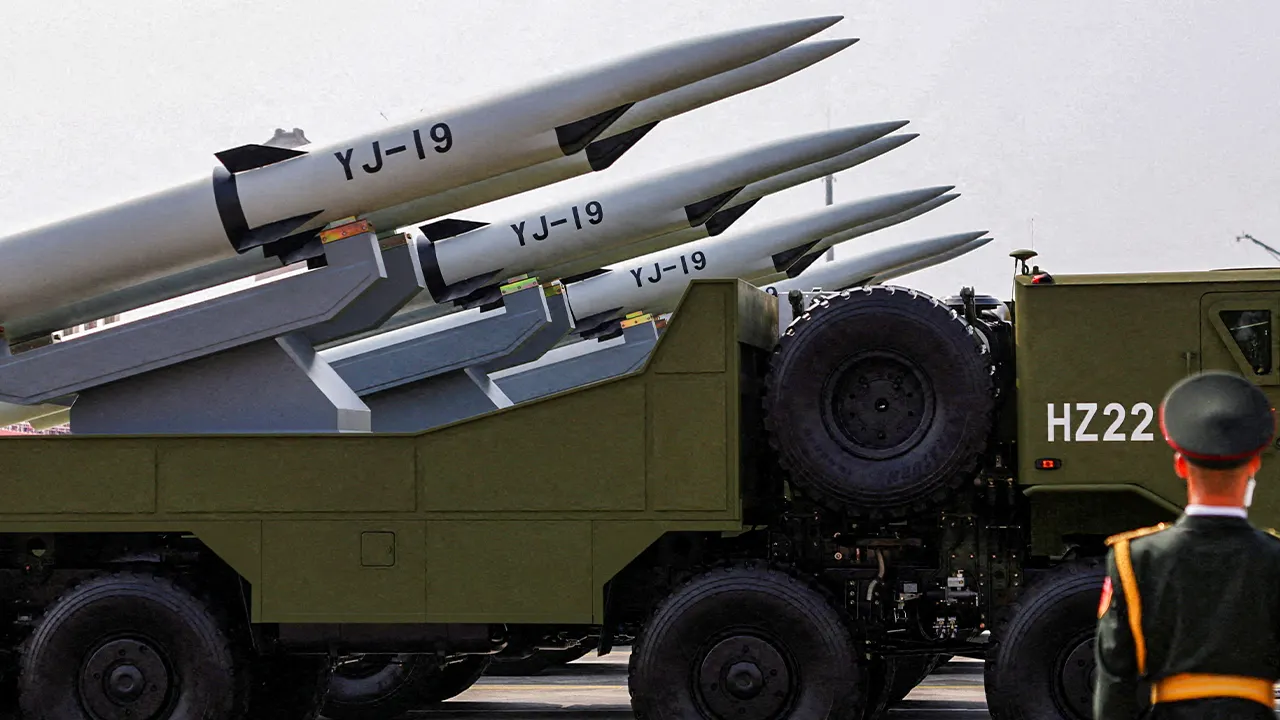
The report’s timing coincides with China’s public display of its complete nuclear triad – missiles launchable from land, air, and sea – at a military parade in Beijing this September. This demonstration showcases China’s strategic commitment to developing a comprehensive nuclear deterrent.
Military analysts view these developments with particular concern because China’s nuclear arsenal now stands at approximately 600 warheads, with Pentagon assessments indicating Beijing aims to possess 1,000 by 2030. While still numerically smaller than U.S. and Russian arsenals, China’s rapid expansion alters strategic calculations in the Indo-Pacific.
The commission warns that these military advances, combined with China’s political crackdown internally and economic leverage internationally, could enable Beijing to act “quickly and decisively in a crisis,” potentially reducing the time available for the U.S. and its allies to respond to aggression.
Of particular concern is Taiwan’s security. The commission is urging Congress to require the Pentagon to conduct a comprehensive audit of U.S. readiness to defend Taiwan, questioning whether Washington remains capable of meeting its legal obligations under the Taiwan Relations Act. The report calls for both classified and unclassified assessments of whether U.S. forces could “resist any resort to force or coercion” by China – especially in scenarios where American forces might simultaneously face aggression from Russia, Iran, or North Korea.
The economic implications of a Taiwan conflict would be severe, potentially eliminating up to 10% of global GDP – comparable to the 2008 financial crisis – while carrying what the report describes as a “cataclysmic” risk of nuclear escalation and wider conflict across the Indo-Pacific region.
Beyond military concerns, the report highlights how China’s economic influence compounds security threats. Beijing’s dominance in critical sectors such as foundational semiconductors, rare earth minerals, and printed circuit boards creates dependencies that could leave the United States “reliant on its rival for the backbone of its modern economy and military.”
The commission has issued 28 recommendations, including congressional action to bar Chinese-made components from U.S. power grids, create a unified economic statecraft agency to enforce export controls, and reaffirm diplomatic support for Taiwan – including its partnership with the Vatican, one of Taiwan’s few remaining formal diplomatic allies.
“China’s rapid military and economic mobilization shortens U.S. warning timelines,” the report concludes, warning that without a coordinated response, America’s deterrence posture “risks falling short” against Beijing’s expanding capabilities.
Fact Checker
Verify the accuracy of this article using The Disinformation Commission analysis and real-time sources.

14 Comments
This report underscores the importance of maintaining a strong and technologically advanced military to deter potential aggression. However, I hope that diplomacy and de-escalation efforts can still play a role in managing the U.S.-China relationship and reducing the risk of conflict.
I agree. Diplomacy and open communication channels will be critical to avoiding miscalculation and unintended escalation, even as both sides continue to modernize their military capabilities.
This news highlights the complex and rapidly evolving geopolitical landscape. It will be important for policymakers to carefully analyze the implications and develop a comprehensive strategy to address China’s military modernization in a way that promotes regional stability and international security.
While the details in this report are alarming, I would encourage readers to seek out objective analysis from a range of sources before drawing firm conclusions. Maintaining an open and informed dialogue on these critical national security issues is essential.
That’s a fair point. Nuance and balance are important when discussing sensitive geopolitical topics like this. A diversity of perspectives can help inform a more complete understanding of the situation.
The rapid expansion of China’s nuclear and military capabilities is certainly a cause for concern. However, it’s important that any response or countermeasures are carefully considered and coordinated with allies to avoid further escalation or unintended consequences.
The potential impact of China’s military buildup on commodities and energy markets is an interesting angle to consider. Increased demand for strategic resources could have wide-ranging economic implications that warrant close monitoring and analysis.
While the geopolitical implications of this news are significant, I’m curious to understand the potential impact on the commodities and energy sectors. China’s military buildup could drive increased demand for strategic minerals, uranium, and other resources needed to fuel its defense programs.
This is certainly concerning news. China’s rapid military buildup, especially in nuclear capabilities, is a worrying development that could significantly impact the regional balance of power. It will be crucial for the U.S. and its allies to closely monitor these activities and formulate an appropriate strategic response.
While the details in this report are concerning, it’s important to remember that geopolitical tensions are often complex and multi-faceted. A balanced, nuanced approach that considers the perspectives of all stakeholders will be crucial in addressing these challenges effectively.
The report’s findings on China’s use of cutting-edge technologies like AI-powered electronic warfare systems are particularly intriguing. It will be interesting to see how these advanced capabilities factor into potential future conflicts and how the U.S. plans to counter them.
You raise a good point. The integration of AI and other emerging technologies into military systems is a game-changer that could drastically alter the nature of warfare. Both sides will need to invest heavily in R&D to maintain a technological edge.
The expansion of China’s nuclear arsenal is certainly concerning, but I would caution against overstating the threat or assuming an inevitable conflict. Maintaining a robust deterrence while also seeking avenues for constructive engagement will be key.
This report underscores the need for continued investment in U.S. military capabilities and technological innovation to maintain a credible deterrent against potential adversaries. At the same time, diplomatic efforts to reduce tensions and build trust should not be overlooked.