


Listen to the article
The Small Business Administration has moved to pull nearly two dozen foreign products from a key federal procurement platform, acting on concerns that some vendors may have been falsely labeling their goods as American-made to win government contracts.
Working alongside the U.S. General Services Administration, the SBA removed the products from its GSA Advantage! platform — an online catalog used by federal agencies to source supplies from approved vendors. The agency said the action was prompted by suspicions that China-based companies were misrepresenting the origin of their products to gain access to government purchasing dollars.
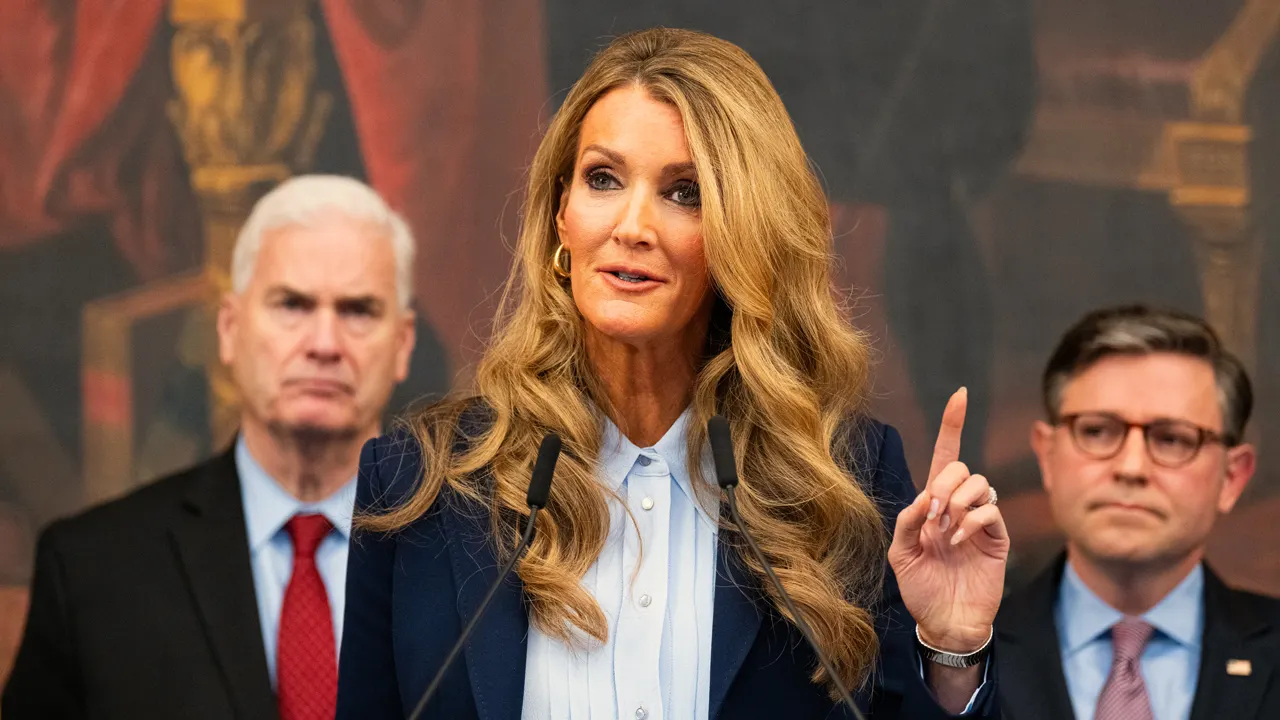
SBA Administrator Kelly Loeffler said the move reflects a broader commitment to ensuring that federal spending supports domestic businesses rather than foreign manufacturers hiding behind misleading labels. “Every taxpayer dollar spent by the federal government should go to support American businesses, workers and products,” Loeffler said in a statement.
The issue came to light at the White House Small Business Summit, where Sherrill Manufacturing, a New York-based company that describes itself as the only manufacturer of 100% American-made stainless steel flatware, raised the alarm. Company representatives told the SBA that certain China-based competitors appeared to be only partially assembling or finishing their products on U.S. soil before marketing them as domestically produced.
That kind of misrepresentation carries consequences beyond competitive unfairness. Federal law, specifically the Buy American Act — a Great Depression-era statute passed in 1933 — requires government agencies to prioritize American-made goods in procurement above certain value thresholds. The Berry Amendment, dating back to 1941, similarly mandates that the Department of Defense purchase domestically sourced steel and other materials for national security reasons. When vendors falsely claim American origin, they can inadvertently drag legitimate domestic suppliers like Sherrill into compliance violations they had no part in creating.
Loeffler was direct about the administration’s stance. “When foreign companies were caught falsely claiming ‘Made in America’ status in the federal procurement system, President Trump directed the SBA and GSA to take aggressive action,” she said, adding that the administration would not tolerate what she described as “foreign impostors that hijack Made in America labels.”
Sherrill Manufacturing CEO Matthew Roberts praised the agencies’ response and expressed gratitude to the Trump administration. He noted that the company’s factory has a manufacturing history stretching back to World War I, when it supplied America’s armed forces. “We deeply appreciate President Trump, SBA Administrator Kelly Loeffler, and GSA Administrator Ed Forst for their continued efforts to keep American manufacturing alive and restore pride in products made in the USA,” Roberts said.
The crackdown fits within a pattern of trade and procurement policy the Trump administration has pursued across both of its terms. During his first term, Trump signed executive orders aimed at maximizing the use of domestically sourced raw materials, including iron, aluminum, and cement. He issued a new executive order along similar lines earlier this year, directing federal agencies to tighten enforcement of truthful advertising requirements for products claiming American origin.
The concern over “Made in America” fraud is not limited to flatware. Across a range of industries — from steel and electronics to textiles and construction materials — U.S. officials and domestic producers have long raised alarms about Chinese manufacturers routing goods through third countries or conducting minimal finishing work on American soil to technically meet origin requirements while circumventing the spirit of domestic sourcing laws. The practice has become more visible as tariffs on Chinese imports have increased, giving companies greater financial incentive to disguise the true origin of their products.
Federal procurement represents a massive market. The U.S. government spends hundreds of billions of dollars annually on goods and services, making the GSA Advantage! platform a significant channel for vendors seeking stable, large-scale contracts. Tightening standards on who can list products and under what conditions could meaningfully redirect that spending toward verified domestic manufacturers.
The SBA did not disclose which specific vendors or product listings were removed from the platform, leaving the scope of enforcement somewhat unclear. It is also not known whether the agency intends to pursue further removals or refer any cases to law enforcement for investigation into potential fraud.
What is clear is that the administration views procurement policy as an extension of its broader economic nationalism agenda — one that uses the government’s purchasing power as a tool to bolster American industry and penalize what it sees as deceptive foreign competition.
Fact Checker
Verify the accuracy of this article using The Disinformation Commission analysis and real-time sources.

13 Comments
The cost guidance is better than expected. If they deliver, the stock could rerate.
Nice to see insider buying—usually a good signal in this space.
Interesting update on China-Linked Products Removed From Federal Marketplace After Government Agency Purge. Curious how the grades will trend next quarter.
If AISC keeps dropping, this becomes investable for me.
If AISC keeps dropping, this becomes investable for me.
Good point. Watching costs and grades closely.
Good point. Watching costs and grades closely.
Interesting update on China-Linked Products Removed From Federal Marketplace After Government Agency Purge. Curious how the grades will trend next quarter.
Good point. Watching costs and grades closely.
If AISC keeps dropping, this becomes investable for me.
The cost guidance is better than expected. If they deliver, the stock could rerate.
Good point. Watching costs and grades closely.
Good point. Watching costs and grades closely.