


Listen to the article
China Implements New Export Restrictions on Fentanyl-Related Chemicals
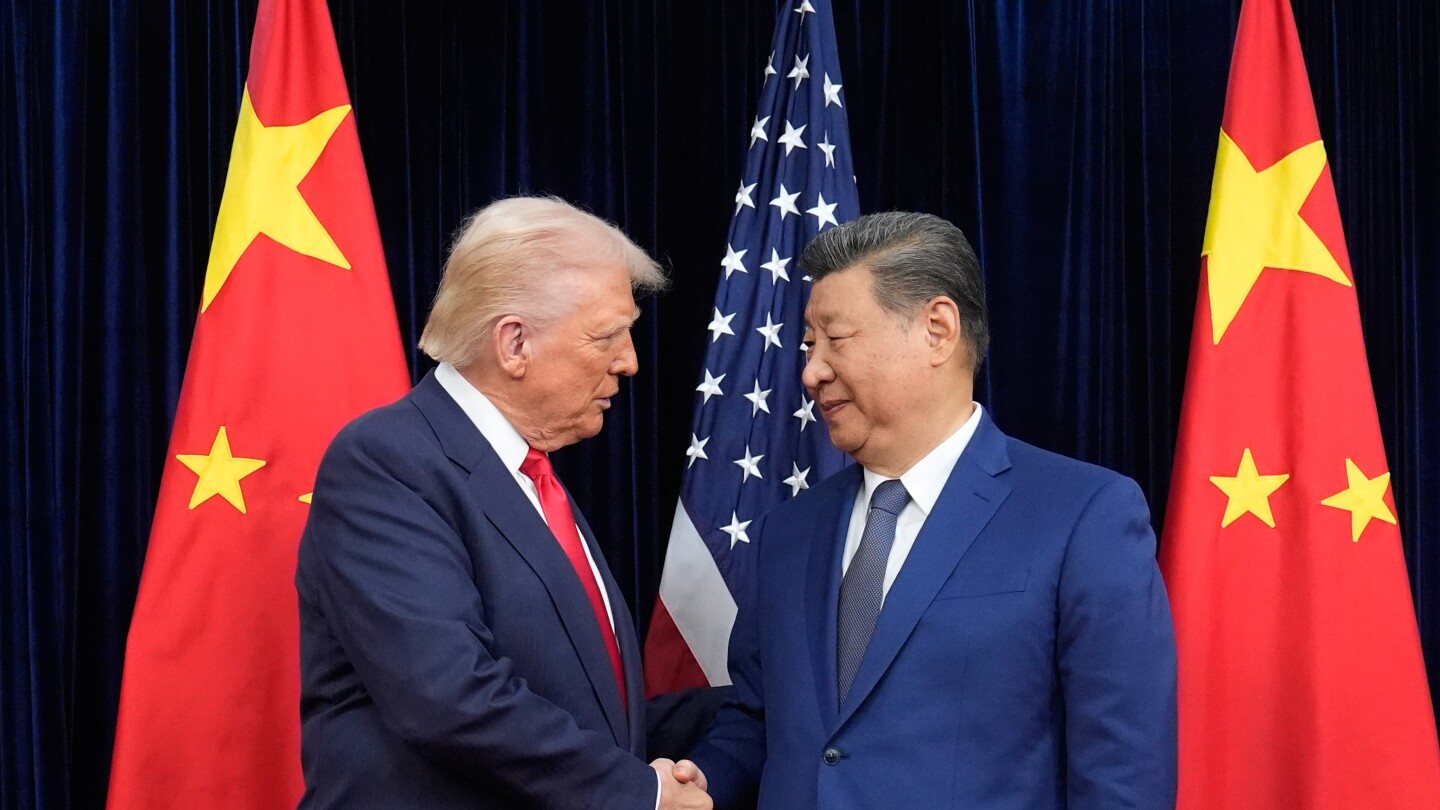
Beijing announced Monday it will impose new export restrictions on 13 drug-making chemicals to the United States, Canada, and Mexico, fulfilling a pledge made to President Donald Trump during recent trade discussions with Chinese leader Xi Jinping.
The targeted chemicals are used to produce synthetic opioids, including fentanyl, which has been blamed for tens of thousands of overdose deaths annually in the United States. The announcement comes after Trump and Xi’s meeting in South Korea last month, where Trump agreed to reduce a related tariff from 20% to 10% in exchange for China’s commitment to help combat the fentanyl crisis.
“What the Trump administration has essentially agreed with Beijing is for Beijing to restart what it had been doing during the second part of 2024,” before Trump returned to the White House, explained Vanda Felbab-Brown, a senior fellow at the Brookings Institution who specializes in the opioid crisis.
The White House defended the president’s approach, with deputy press secretary Anna Kelly stating that Trump “has taken every possible action to stop the flow of illicit narcotics into our country, from securing the border to striking drug boats to curbing fentanyl precursors.”
The cooperative relationship on fentanyl control between the two global powers has experienced significant fluctuations over the years, often reflecting the broader state of U.S.-China relations. In 2019, during Trump’s first term, Beijing took a substantial step by restricting fentanyl and related substances at his request. However, as tensions escalated over human rights issues, China began scaling back counternarcotics cooperation in 2020 before formally suspending it two years later.
The Biden administration in 2023 designated China as a “major illicit drug-producing country.” Later that year, then-President Biden met with Xi in California, successfully securing Beijing’s agreement to resume cooperation. China subsequently restricted additional substances, including another synthetic opioid and chemicals used to enhance fentanyl, with further restrictions on key fentanyl precursors implemented in September 2024.
Following Trump’s return to office and his imposition of two 10% tariffs on China—citing its failure to adequately control chemical exports—Beijing responded with its own tariffs and again paused cooperation on fentanyl.
“The Trump administration made the big error in completely discounting and ignoring what China was doing with the U.S. in 2024 and just coming in with guns blazing” on tariffs, Felbab-Brown noted. This approach, she argued, has allowed Beijing to “get double points” by agreeing to resume measures that were already being implemented in the second half of 2024.
In addition to the export restrictions, China’s National Narcotics Control Commission issued a public notice Monday urging businesses to comply with tax codes, customs rules, internet laws, and foreign currency regulations—a move signaling tougher enforcement and addressing U.S. concerns.
It’s worth noting that the newly restricted chemicals can still be exported without a license to countries other than the three North American nations specified in the Chinese Commerce Ministry announcement. This is particularly significant since fentanyl is predominantly manufactured in Mexico, using precursor chemicals that often originate in China.
Experts point out that the fundamental challenge remains the dual nature of these chemicals, which have legitimate uses in chemistry, agriculture, and the pharmaceutical industry, but are increasingly diverted to produce synthetic opioids.
In September, Trump continued to designate China as a “major illicit drug-producing country,” stating: “For too long, China has enabled illicit fentanyl production in Mexico and elsewhere by subsidizing the export of the precursor chemicals needed to produce these deadly drugs and failing to prevent Chinese companies from selling these precursors to known criminal cartels.”
The effectiveness of these new export restrictions in significantly reducing the flow of fentanyl into the United States remains to be seen, as manufacturers have consistently demonstrated the ability to adapt to regulatory changes by modifying chemical formulations or finding alternative supply routes.
Fact Checker
Verify the accuracy of this article using The Disinformation Commission analysis and real-time sources.

12 Comments
It’s good to see China taking action on the fentanyl issue, but I’m curious how they will implement and enforce these new export restrictions. Transparency and accountability will be important to build trust in this process.
This announcement seems like a positive development in the ongoing efforts to address the opioid crisis. However, the real test will be in the implementation and enforcement of these new export restrictions on fentanyl precursors.
The deal between Trump and Xi seems like a positive development, though the opioid crisis is a complex issue that will require sustained cooperation on multiple fronts. I hope these new export controls can make a meaningful impact.
Agreed, this is a step in the right direction, but there is still a lot of work to be done. Enforcement and monitoring will be key to ensuring the effectiveness of these measures.
I’m curious to see how the Trump administration will follow up on this deal with China. Maintaining pressure and cooperation will be key to ensuring these new export controls have a meaningful impact.
Agreed, the follow-through and continued coordination between the US and China will be critical. This is a complex issue that requires a sustained, multi-faceted approach.
These chemical export controls could have implications for the global supply chain, especially for industries that rely on these precursor materials. It will be important to monitor the impact on legitimate commerce as well as the illegal drug trade.
That’s a good point. The unintended consequences of these measures will need to be carefully considered and mitigated where possible.
This is an important step in the fight against the opioid crisis. Restricting the export of these chemicals could help reduce the supply of illicit fentanyl and save lives. It will be interesting to see how effective the new measures are in practice.
You’re right, any progress in this area is crucial. However, there are still significant challenges in stemming the flow of these dangerous drugs into the US.
I’m skeptical about whether this deal will actually lead to a significant reduction in fentanyl-related overdoses in the US. The opioid crisis has many complex drivers, and disrupting the supply chain is just one part of the solution.
You raise a fair concern. Addressing the demand side and improving treatment and prevention efforts will also be crucial to tackling this public health emergency effectively.