


Listen to the article
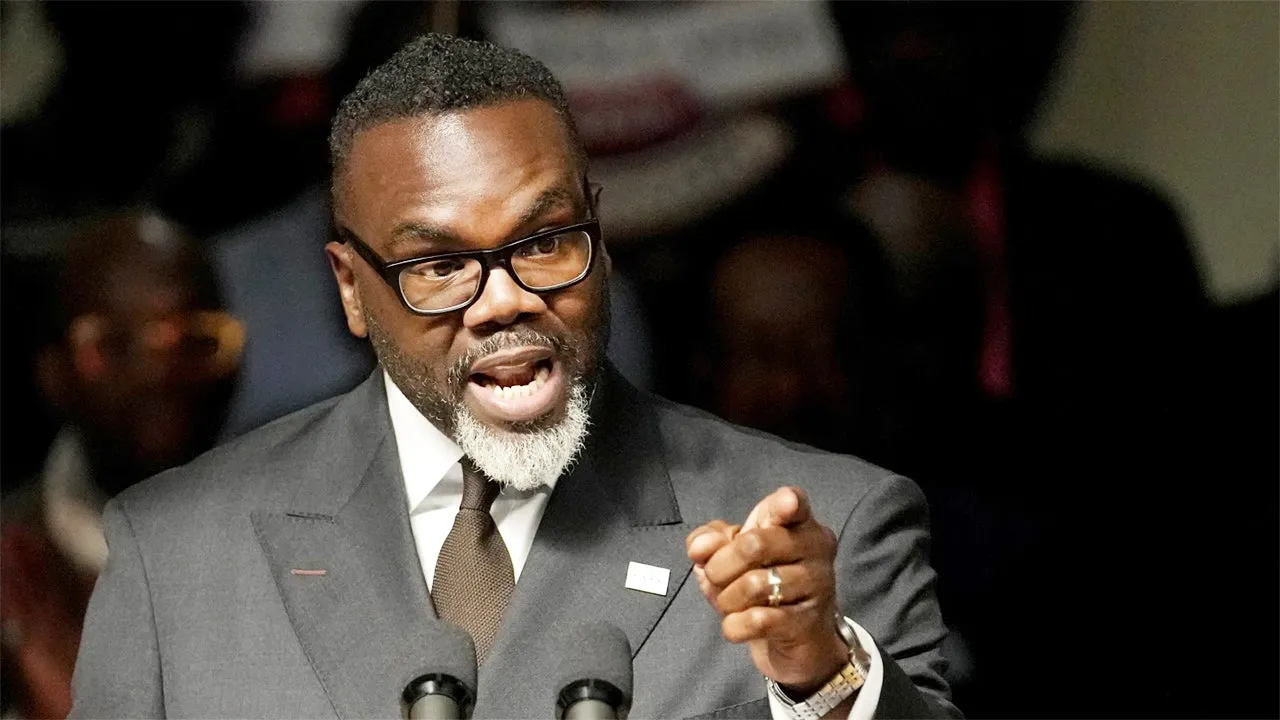
Chicago faces its first-ever potential municipal shutdown as Mayor Brandon Johnson threatens to veto the city council’s 2026 budget, calling the plan “morally bankrupt” due to its omission of his proposed corporate “head tax.”
The city council passed the budget with a 30-18 vote over the weekend, but without Johnson’s signature by December 30, Chicago could enter uncharted territory. The mayor has criticized the council’s proposal for failing to include his favored $33-per-worker, per-month tax on businesses, which he argues is necessary to address the city’s projected $1.2 billion shortfall for 2026.
“Corporations should put more skin in the game,” Johnson has maintained, attributing part of the city’s financial woes to Trump administration policies that he claims favor businesses over working-class families.
However, the mayor’s position has drawn criticism from across the political spectrum. Even Democratic Governor JB Pritzker has spoken against the head tax, warning it would “penalize the very thing that we want, which is more employment.”
The Washington Post published a scathing editorial titled “Chicago Has Lost Its Mind,” suggesting Johnson’s tax plans would stifle economic growth. The mayor dismissed the criticism, quipping that the newspaper “wouldn’t be the first time a publication got something I’ve done wrong.”
The standoff represents a significant fracture within the city’s Democratic leadership. Chicago’s 50-member city council consists of 48 Democrats and two independents, with no Republican representation, making this dispute an intra-party conflict.
Alderman Gilbert Villegas, a noted ally of former Mayor Lori Lightfoot, has pledged to “work hard to see if we can get 38-40 votes to override the veto,” indicating that the political battle lines are being drawn around policy differences rather than partisan divisions.
The council’s alternative budget includes several revenue-generating measures: legalized video gambling machines at restaurants and Chicago-Midway Airport, an increased shopping bag tax, and a novel proposal to tax social media companies at $0.50 per active Chicago user beyond 100,000 users, expected to generate $31 million.
Alderman Pat Dowell, who represents Chicago’s South Side and is allied with Johnson, leads the pro-budget coalition. She described the council’s proposal as “not perfect but a good budget and one we can work with.”
On the opposing side, progressive Alderman Byron Sigcho-Lopez supports Johnson’s head tax and condemned the council’s plan as an “immoral, bankrupt, ‘Michael Sacks’ budget.” This reference to billionaire financier Michael Sacks, who runs asset manager GCM Grosvenor and was a close ally of former Mayor Rahm Emanuel, adds another dimension to the conflict.
According to local reports, Sacks donated directly to several aldermen’s campaigns before the budget fight, prompting scrutiny over outside influence in the process. Alderman Bill Conway III, who represents Chicago’s downtown “Loop” district, defended Sacks, telling WGN, “Michael is someone who cares about the future of the city, and he tries to work with those who are like-minded.”
While a municipal shutdown would be unprecedented in Chicago’s history, budget vetoes are not entirely unfamiliar. Harold Washington, the city’s first Black mayor who served in the 1980s, vetoed four budgets during his tenure. Those standoffs typically led to successful last-minute negotiations rather than shutdowns.
As the December 30 deadline approaches, both sides appear entrenched in their positions. The mayor’s office has not commented publicly on whether Johnson will follow through with the veto threat, leaving Chicago’s municipal services and financial stability hanging in the balance as 2025 draws to a close.
The budget dispute reflects broader tensions in urban governance nationwide, as major cities struggle with post-pandemic fiscal realities and debate how to distribute the burden of economic recovery between businesses and residents.
Fact Checker
Verify the accuracy of this article using The Disinformation Commission analysis and real-time sources.

7 Comments
This corporate tax proposal seems heavy-handed and could backfire, stunting job creation. I hope the mayor and city council can find a more balanced approach to address Chicago’s fiscal challenges.
This is a tough situation. While the city needs revenue, a new tax on businesses could be counterproductive. I hope the mayor and council can find common ground and a solution that works for all.
I’m curious to learn more about the specific factors behind Chicago’s budget shortfall. Is the head tax really the best approach, or are there other options they should explore first?
As an investor, I’m concerned this could create economic uncertainty in Chicago. A municipal shutdown and contentious tax debate is the last thing businesses and residents need right now.
The mayor’s stance on businesses ‘putting more skin in the game’ is understandable, but a head tax could drive companies and jobs away. A more nuanced solution is needed to fix the budget gap.
The mayor’s arguments have some merit, but I worry the head tax is too blunt an instrument. There may be more surgical ways to raise revenue and address inequities without stifling growth.
Agreed. A more nuanced approach that balances the city’s needs with the realities of the business environment would be ideal.