


Listen to the article
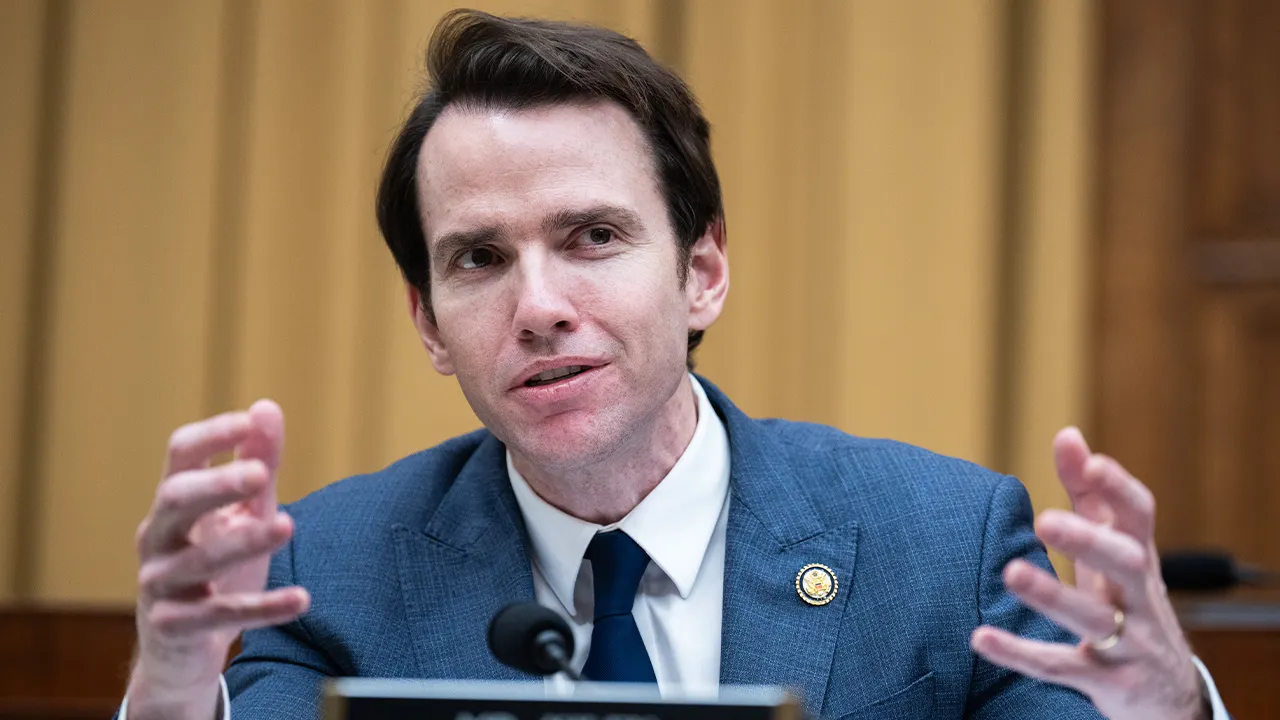
In a significant political shift that further narrows the Republican majority in the House of Representatives, California Congressman Kevin Kiley has left the GOP to become an Independent, his office confirmed on Monday.
Kiley, who represents a blue-leaning district in California, had previously announced his intention to run as an Independent candidate in the November midterms but has now accelerated his political transformation.
“This last week, we registered under no party preference in California,” Kiley told local reporters. “I’m also today asking the clerk of the U.S. House of Representatives to have that reflected in the official roster…so I will be the sole Independent member of the House of Representatives.”
The congressman’s decision comes at a critical time for House Republicans, who currently hold a precarious one-vote majority. That margin is expected to increase to just two votes following a special election in a reliably Republican Georgia district this week. Despite changing his party affiliation, Kiley said he would continue to caucus with Republicans to maintain his committee assignments.
“The rules of the House of Representatives essentially force you, as an administrative matter, to caucus with one party or the other, which, by the way, I don’t think is a good thing,” Kiley explained. He noted that committee assignments operate through party structures, making it necessary to maintain some affiliation with a caucus to effectively serve constituents.
Kiley’s move to Independent status appears strategically timed, as his current seat in California’s 3rd congressional district was recently redrawn to favor Democratic candidates more heavily. The redistricting effort was led by California Governor Gavin Newsom, a potential 2028 presidential contender, who championed the map changes despite strong objections from California Republicans.
The California redistricting was widely viewed as a direct response to similar actions taken by Texas Republicans, who passed a new congressional map that could potentially give the GOP an advantage in up to five additional seats. This tit-for-tat redistricting battle represents the increasingly partisan nature of electoral map drawing across the country.
Prior to formally dropping his GOP affiliation, Kiley had demonstrated his independent streak by introducing legislation to ban mid-decade redistricting when both the California and Texas controversies were unfolding. He also emerged as one of the most vocal Republican critics of Speaker Mike Johnson, specifically regarding Johnson’s refusal to engage in the redistricting fight and for keeping the House out of session during the entire 43-day government shutdown last year.
Rather than running in California’s redrawn 5th district, which would have been more favorable to a Republican candidate, Kiley announced last week that he would instead seek election in the state’s newly redrawn 6th congressional district. The nonpartisan Cook Political Report rates this district as “D+5,” indicating a Democratic advantage but not an insurmountable one.
“It’s true that I was fully prepared to run in the new 5th, having tested the waters and with polls showing a favorable outlook in a ‘safe’ district,” Kiley said in a statement. “But doing what’s easy and what’s right are often not the same. And at the end of the day, as much as I love the communities in the 5th district that I represent now — and as excited as I was about the new ones — seeking office in a district that doesn’t include my hometown didn’t feel right.”
The congressman acknowledged the political challenge ahead but expressed confidence in his ability to build support across party lines. “The new 6th district is Democratic-leaning but open-minded. While this will be a more challenging race, I believe we can build a winning coalition for common sense,” he said.
Kiley’s decision reflects the increasingly complex political landscape in previously safe districts as redistricting battles intensify nationwide, with both parties seeking electoral advantages through map redrawing ahead of crucial midterm elections.
Fact Checker
Verify the accuracy of this article using The Disinformation Commission analysis and real-time sources.

5 Comments
Kiley’s move highlights the growing political divides within the Republican party. As an Independent, he may be able to carve out a distinct position and potentially work across the aisle more easily. This could be an interesting development to follow in the lead-up to the midterms.
The thinning of the GOP’s House majority is significant, even if Kiley plans to caucus with Republicans. This could make it more challenging for the party to pass legislation, especially in a polarized political environment. It will be worth watching how this plays out in the coming months.
This is an interesting political move by Rep. Kiley. While it may thin the GOP’s slim House majority, it could potentially give him more independence and influence as a swing vote. It will be worth watching how this plays out in the midterms and beyond.
Kiley’s decision to leave the GOP and become an Independent is a bold move. It will be interesting to see how this impacts the political dynamics in the House, especially with the Republicans holding such a narrow majority. This could open up new opportunities for bipartisanship.
I’m curious to see how Kiley’s transition to an Independent will affect his legislative priorities and voting patterns. Will he continue to align closely with Republicans or seek a more centrist approach? This could be an important test case for the viability of Independent candidates.