


Listen to the article
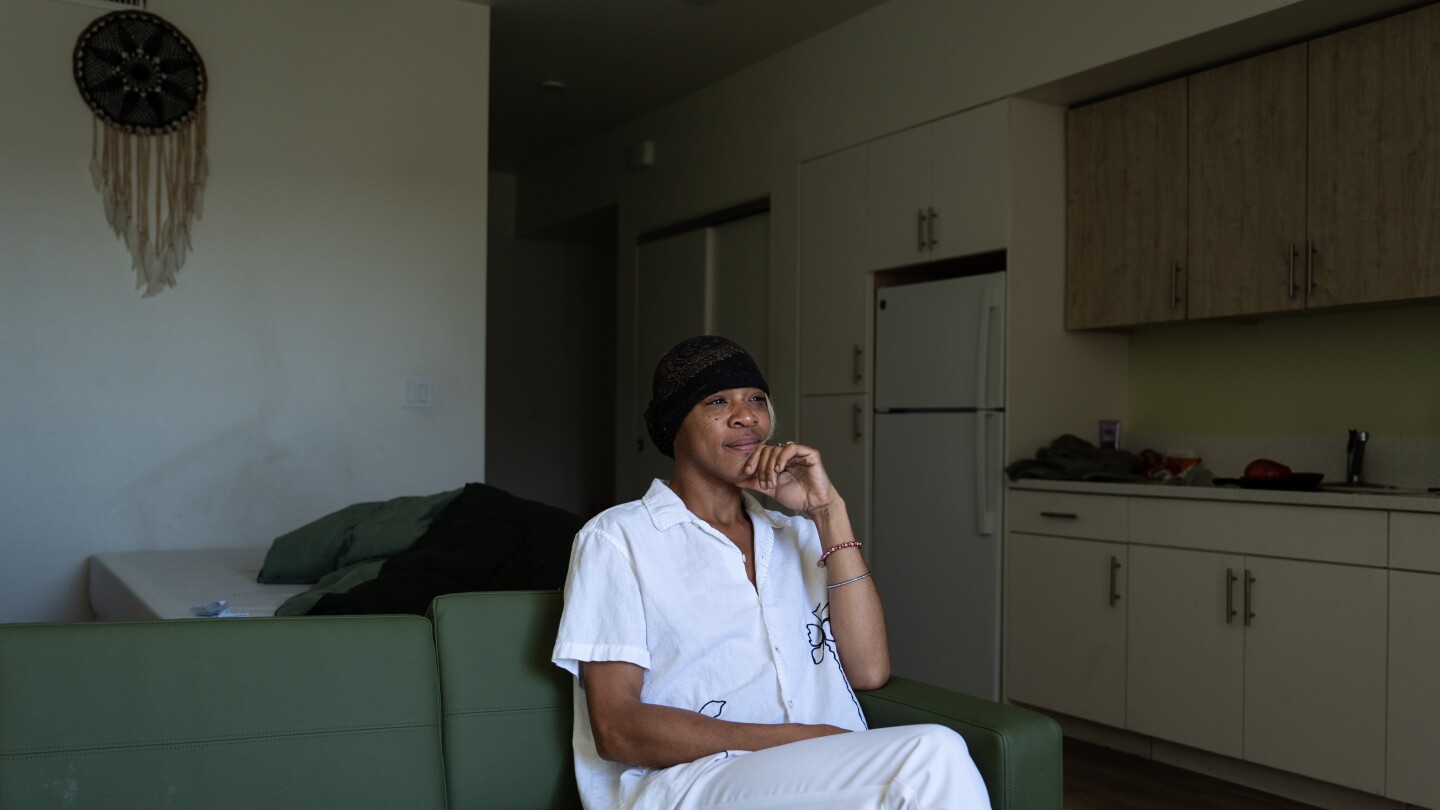
From homeless to housed, Quantavia Smith now has the keys to more than just a studio apartment in Los Angeles—she has access to a new life. The 38-year-old’s efficiency apartment, built directly above a metro station, offers her independence and opportunity at just $19 a month, a fraction of its $2,000 market value.
“It is more a sense of relief, a sense of independence,” said Smith, who moved in July. “Having your own space, you feel like you can do anything.”
Smith’s housing represents a growing trend across major U.S. cities that are increasingly linking new housing developments with public transportation access. Urban planners and city officials are promoting transit-oriented development as a multipronged solution to housing shortages, traffic congestion, and environmental concerns.
“Transit-oriented development should be one of, if not the biggest solution that we’re looking at for housing development,” said Yonah Freemark, research director at the Urban Institute’s Land Use Lab, who specializes in the subject. “It takes advantage of all of this money we’ve spent on transportation infrastructure. If you build the projects and don’t build anything around the areas near them, then it’s kind of like money thrown down the drain.”
The Los Angeles County Metropolitan Transportation Authority has set an ambitious goal to build 10,000 housing units near transit sites by 2031. The agency offers land discounts to developers in exchange for affordable housing commitments and community benefits.
Similarly, Washington D.C.’s transit authority has completed eight projects since 2022, creating nearly 1,500 apartments and a million square feet of office space. About half of these projects involved Amazon, which committed $3.6 billion in low-cost loans and grants for affordable housing in Washington, Nashville, Tennessee, and Washington state’s Puget Sound area.
For residents like Bernie Hernandez, who moved his family from Connecticut to Boston’s Chinatown, proximity to public transit has transformed daily life. His apartment is a 10-minute walk to the subway and close to multiple bus stops.
“The big difference is commuting. You don’t need a car,” said Hernandez, whose car now sits mostly idle, saving on gas and commuting time. His 17-year-old daughter uses the subway to get to school, and essential services are within walking distance. “You get to go to different places very quickly. Everything is convenient.”
States are increasingly taking legislative action to support these developments. California Governor Gavin Newsom recently signed a law enabling taller apartment buildings on transit agency-owned land and near public transportation routes.
“Building more homes in our most sustainable locations is the key to tackling the affordability crisis and locking in California’s success for many years to come,” said State Senator Scott Wiener, who authored the bill.
Colorado has implemented requirements for cities to allow an average of 40 housing units per acre within a quarter-mile of transit, while Utah mandates about 50 units per acre. Washington state passed legislation this year permitting taller housing developments in mixed-use commercial zones near transit.
“It’s about giving people the opportunity to drive less and live more,” explained Democratic Representative Julia Reed, who authored Washington’s bill.
In Massachusetts, Democratic Governor Maura Healey has prioritized housing initiatives, including enforcement of a 2021 law requiring 177 communities to create zoning districts that allow multi-family housing. The state has provided nearly $8 million to help communities establish these zones, while threatening to withhold funding from non-compliant towns. As a result, more than 6,000 housing units are currently in development.
“You put housing nearby public transit,” Healey said. “It’s great for people. They can literally get up, leave their home, walk to a commuter rail and get to work.”
Despite progress, these initiatives face significant challenges. Housing advocates point to local resistance, insufficient funding, government bureaucracy, rising construction costs, and higher mortgage interest rates as impediments. A 2023 Urban Institute study found a troubling trend: nine times more housing units were built far from public transit than near it over the past two decades.
In Massachusetts, 19 communities have yet to create new zoning districts. Some unsuccessfully sued the state, while others saw residents reject proposed zones. In Lexington, which has approved 10 projects, community pushback resulted in shrinking the designated zone from 227 acres to 90 acres.
“If we allow the state to come in and dictate how we zone, what else are they going to come in and dictate?” said Anthony Renzoni, a selectman from Holden, which sued the state.
For Smith, however, the benefits are clear. She’s one of 300 new residents in her East Hollywood complex, which is helping revitalize the area with a Filipino grocery, medical clinic, and farmers market opening soon. Half of the 187 units are reserved for formerly homeless residents like Smith, who now has a case worker and assistance with life skills and employment.
“I’m very fortunate to be somewhere where the transit takes me where I want to go,” she said. “Where I want to go is not that far.”
Fact Checker
Verify the accuracy of this article using The Disinformation Commission analysis and real-time sources.

6 Comments
Interesting approach to addressing housing and climate challenges. Linking affordable housing to public transit access seems like a smart way to maximize infrastructure investment and reduce emissions.
The $19/month rent for Quantavia Smith’s apartment is remarkably affordable, especially in a high-cost city like LA. This model of integrating affordable housing with public transit access seems like a win-win for residents and the environment.
As someone who follows the mining and commodities sector, I’m curious how the materials and energy requirements for constructing these transit-oriented developments compare to traditional suburban housing. Addressing the housing crisis while also considering the climate impact is a complex challenge.
This is an encouraging example of how creative urban planning can provide affordable housing options and promote more sustainable transportation. I wonder if similar transit-oriented developments are being considered in other cities struggling with housing shortages.
That’s a good question. Expanding these types of projects to more cities could have significant benefits in terms of increasing housing supply and reducing car dependency. It would be interesting to learn about the challenges and best practices in implementing this approach in different urban contexts.
Kudos to the urban planners and city officials who are championing transit-oriented development as a holistic solution. Linking affordable housing to public transit infrastructure is a creative approach that could have widespread benefits if scaled up in other cities.