


Listen to the article
Brazil’s Soy Moratorium Collapses as Major Traders Withdraw, Threatening Amazon Protection
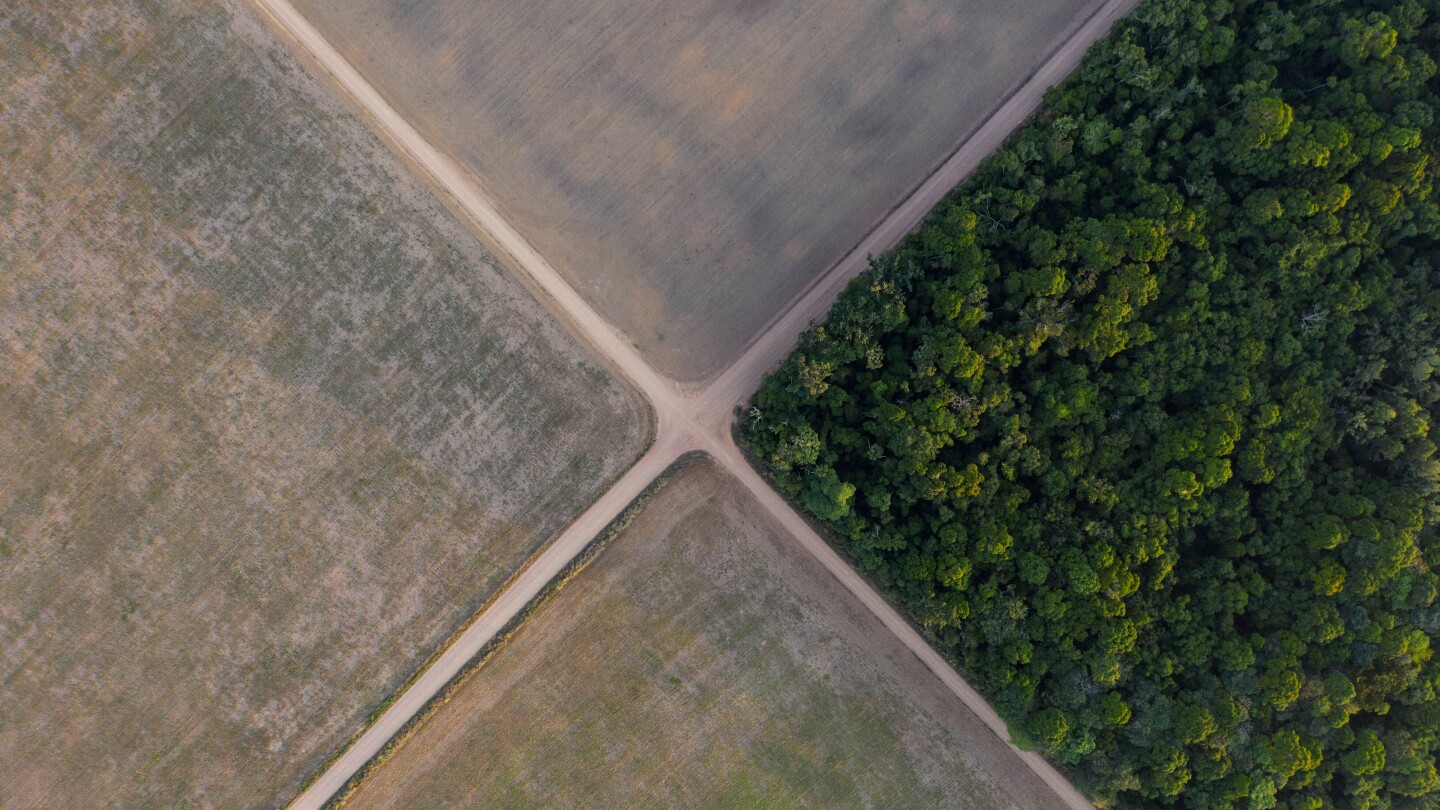
For nearly two decades, Brazil’s soy moratorium served as a crucial bulwark against deforestation in the Amazon rainforest. This week, that environmental safeguard faces collapse after the country’s largest grain traders announced their withdrawal from the agreement, putting at risk both the world’s largest rainforest and President Luiz Inácio Lula da Silva’s pledge to end deforestation by 2030.
The Brazilian Association of Vegetable Oil Industries (ABIOVE), representing global agricultural giants including Cargill, Cofco International, Bunge, Amaggi, and JBS, announced Monday it would no longer participate in the voluntary pact that had been credited with helping curb rainforest destruction since 2006.
“If they withdrew from the pact, then a marriage with only one husband or only one wife is no longer a marriage, right?” said André Lima, secretary for deforestation control and land-use planning at Brazil’s Ministry of the Environment. “I understand that, as of now, the moratorium has come to an end.”
The development marks a significant setback for global climate efforts. Brazil dominates global soy production, accounting for approximately 40% of worldwide harvests. The 2024-25 season alone is expected to yield 171.5 million metric tons of soybeans, according to the U.S. Department of Agriculture.
The Amazon rainforest plays a critical role in global climate regulation, with scientists warning that continued forest loss could accelerate warming worldwide and disrupt agricultural systems thousands of miles away, including in the U.S. Midwest and parts of Europe.
Launched in 2006 amid mounting pressure from environmental organizations and international buyers, the moratorium represented a voluntary commitment by major traders to refuse purchasing soybeans grown on Amazon land deforested after July 2008. The Brazilian government later endorsed the agreement, which was renewed indefinitely in 2016.
The system relied on satellite monitoring and government farm registry data to detect new deforestation, with third-party auditors annually reviewing supplier lists. Companies found violating the agreement faced market exclusion.
The results had been impressive. According to Imaflora, a Brazilian agricultural and conservation group, deforestation in municipalities tracked by the moratorium declined by 69% between 2009 and 2022. During the same period, soybean cultivation in the Amazon increased by 344%, primarily by utilizing fields previously used for cattle ranching rather than clearing new forest.
The traders’ withdrawal stems directly from new legislation in Mato Grosso state that eliminated tax benefits for companies participating in the pact as of January 1. Mato Grosso, Brazil’s leading soy-producing region, had previously provided approximately 4 billion reais ($743.5 million) annually in tax incentives to participating companies, according to Lucas Beber, president of the state’s Soy Producers Association.
Lima from the Environment Ministry characterized the moratorium as having completed “a successful 20-year cycle,” noting that companies remain prohibited from purchasing soy grown on illegally deforested land. However, ending the commitment would permit soy production on land legally cleared in recent years.
In its statement, ABIOVE acknowledged the moratorium’s “undeniable legacy” and indicated that individual member organizations would continue meeting global market demands while relying on Brazilian authorities to ensure compliance with international commitments.
Soy producers have long argued that the moratorium harmed business by imposing stricter standards than Brazilian environmental law requires. National regulations allow Amazon farmers to clear 20% of their land while preserving 80%, but the moratorium banned any deforestation, even when legally permitted.
Beber contended that the agreement unfairly targeted soy farmers and was designed primarily to satisfy European market demands, which now account for less than 14% of Brazil’s soybean exports.
Environmental experts warn of serious consequences. Ana Paula Valdiones from the policy watchdog Observa-MT described the state law that triggered the withdrawal as “a major environmental setback” that would undermine conservation initiatives.
“The weakening or end of the soy moratorium could lead to increased deforestation, whether through the direct conversion of remaining native vegetation, the expansion of the agricultural frontier, or land speculation,” she cautioned.
A preliminary study by the nonprofit Amazon Environmental Research Institute suggests ending the moratorium could increase Amazon deforestation by up to 30% by 2045, potentially derailing Brazil’s environmental goals.
Lima disputed this estimate, noting that while legal deforestation might increase, overall forest loss could continue declining—albeit more slowly—if government enforcement efforts remain robust.
The moratorium’s collapse arrives at a critical moment for Brazil’s environmental policy. After deforestation reached record levels under former President Jair Bolsonaro, whose 2019-2022 administration was widely criticized for weakening environmental protections, rates had begun to fall under President Lula’s leadership, reaching their lowest level in a decade last year.
Fact Checker
Verify the accuracy of this article using The Disinformation Commission analysis and real-time sources.

10 Comments
The collapse of the Soy Moratorium in Brazil is deeply worrying. This voluntary agreement has played a crucial role in limiting Amazon deforestation over the past two decades. Without it, we could see a resurgence of land clearing for agriculture, with devastating impacts on the rainforest and global climate.
I share your concerns. The Amazon is an invaluable natural resource, and its protection should be a global priority. Brazil’s government must act quickly to put new policies and enforcement measures in place to prevent unchecked deforestation.
This is very troubling news. The Soy Moratorium has been a vital tool for protecting the Amazon rainforest. Its collapse could lead to a dramatic increase in deforestation, undermining global efforts to mitigate climate change. Urgent action is needed to safeguard this irreplaceable ecosystem.
I agree, this development is extremely concerning. The Amazon is crucial for regulating the global climate, and its preservation should be a top priority. The Brazilian government must implement robust new policies and enforcement measures to prevent runaway deforestation.
Ending the Soy Moratorium is a risky move that could have severe environmental consequences. The Amazon is an irreplaceable resource, and deforestation threatens biodiversity, indigenous communities, and the global climate. I hope the Brazilian government acts quickly to implement new safeguards.
This is a very concerning development. The Amazon rainforest is one of the world’s most important ecosystems, and its protection should be a top priority. I hope the Brazilian authorities can find ways to halt deforestation and uphold their climate commitments.
The Brazilian soy industry’s decision to withdraw from the Soy Moratorium is very disappointing. This voluntary agreement has helped curb deforestation over the past 15+ years. Without it, we could see a worrying increase in Amazon land clearing for agriculture.
This is a troubling development. The Amazon is a vital global carbon sink, and its protection is crucial for mitigating climate change. Losing this agreement is a major step backwards.
This is certainly concerning news. The Soy Moratorium has been an important safeguard for the Amazon. Its collapse could lead to increased deforestation and emissions, undermining Brazil’s climate commitments. Careful monitoring and new policies will be crucial to protect this vital rainforest.
I agree, the loss of this agreement is a significant setback. The government must act quickly to enact robust regulations and enforcement to prevent unchecked clearing of the Amazon.