


Listen to the article
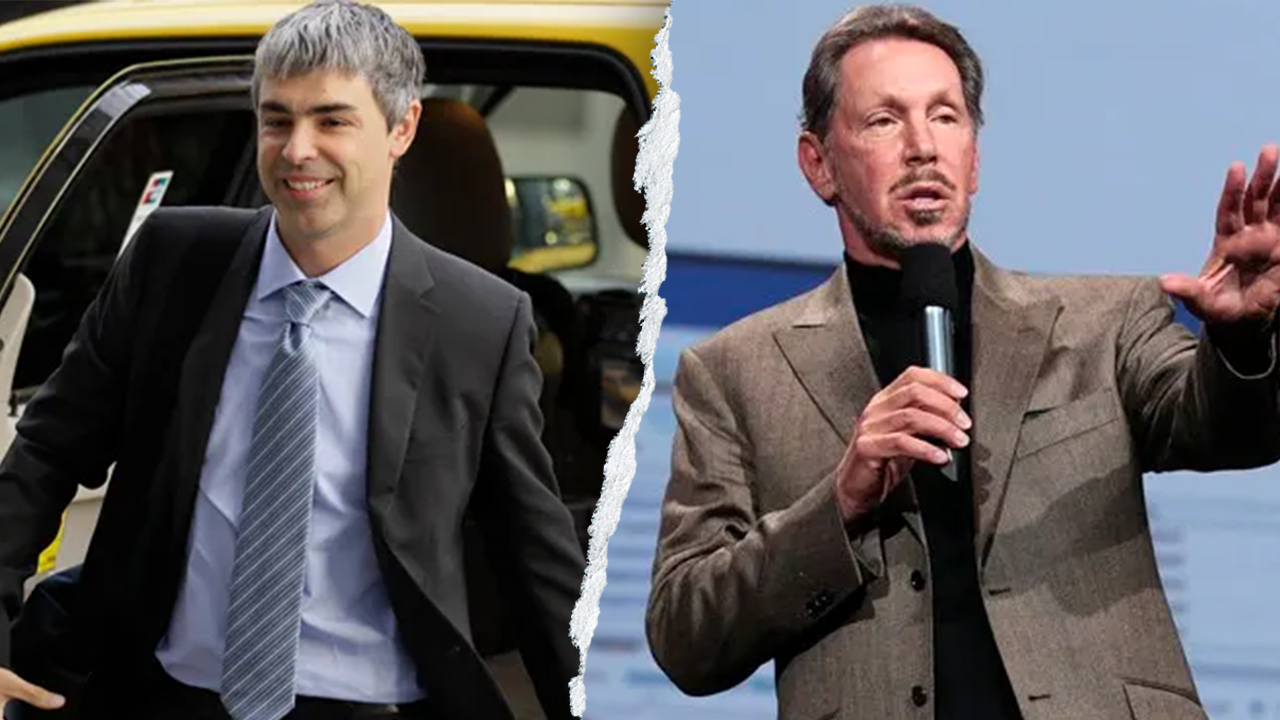
In a development that could significantly reshape California’s economic landscape, high-profile tech leaders Larry Page and Larry Ellison have joined a growing exodus of wealthy individuals from the Golden State. Industry insiders warn this departure trend may accelerate dramatically by 2026 due to controversial tax proposals.
Silicon Valley entrepreneur Allison Huynh told reporters that two proposed tax measures could trigger a “mass migration” of not just billionaires but crucial investors in emerging technologies. Huynh, who previously fundraised for former Presidents Barack Obama and Joe Biden, described the proposals as “rage bait” designed by Democrats to mobilize voters for the November elections.
“It is the Democrats’ answer to MAGA,” Huynh explained, characterizing the proposals as an “Eat the rich” strategy to energize their base.
Public records from the California Secretary of State’s office reveal Google co-founder Larry Page moved several business entities out of California in December. His family office, Koop LLC, influenza research fund, Flu Lab LLC, and flying-car venture, One Aero, now list addresses outside California, with the latter relocating to Florida. These moves appear timed ahead of the January 1, 2026, residency date connected to one of the proposed tax measures.
Meanwhile, Oracle founder Larry Ellison has reportedly sold his San Francisco home for $45 million in what would be the city’s largest real estate transaction of 2025, according to The New York Post, though major outlets haven’t independently verified the sale.
The first proposal under consideration is an annual wealth tax that would impose a 1 to 1.5 percent levy on assets exceeding $50 million. Crucially, this would apply to paper valuations, not just liquid assets. Huynh illustrated the impact: “If you have $1 million in liquid assets, that’s cash, and $49 million, say, in artwork or in a house that you inherited from your family, you would be responsible for the entire 50 million in terms of your cost basis for that 1 percent.”
The second proposal, the 2026 Billionaire Tax Act, would create a one-time five percent tax on assets valued above $1 billion, including business holdings. This could create severe liquidity problems for asset-rich but cash-poor entrepreneurs.
“You could be a founder worth a hundred billion dollars. But say you only have like $2 million in liquid assets because all that money is used to run your new AI company. Well, doesn’t matter; you’re going to be taxed entirely on that $100 billion. And so, effectively, you owe the state of California one time, $5 billion,” Huynh explained.
While the annual tax proposal isn’t currently scheduled for the November ballot, supporters of the billionaire tax are gathering signatures for its inclusion.
The potential economic impact extends far beyond individual wealth. Huynh emphasized that founders and investors in critical industries like robotics and artificial intelligence are already planning their exits, selling California properties and house-hunting in Florida, Texas, and Puerto Rico.
“These are founders, investors in robotics, in AI companies. They are controversial, but you have to admit they have created a lot of value, thousands and hundreds of thousands of jobs in California,” she noted.
Previous corporate relocations like SpaceX and Oracle, which moved operations to Texas, illustrate how these departures can result in significant job losses for California. The state risks not just losing wealthy individuals but entire business operations and the employment they generate.
Huynh likened the state’s approach to a failing restaurant that raises prices instead of addressing fundamental problems. “Instead of lowering the price, they increase the price,” she said. “And then you go into the restaurant, and it’s like $50 for a bowl of really bad dumplings.”
The continuing exodus of high-net-worth individuals and businesses could dramatically reshape California’s tech landscape and economic future, creating opportunities for states with more favorable tax environments while potentially diminishing the Golden State’s longstanding dominance in technology innovation.
Fact Checker
Verify the accuracy of this article using The Disinformation Commission analysis and real-time sources.

7 Comments
I’m curious to see if these tax proposals really are ‘rage bait’ designed to energize the Democratic base, as the insider suggests. The potential consequences for California’s economy seem quite serious if it sparks an exodus of wealth and investment.
This seems like a classic case of politics and economics colliding. While the tax proposals may be politically popular, the potential economic fallout could be substantial. California will need to carefully weigh the tradeoffs and potential unintended consequences.
This is an interesting development. It will be worth watching if more billionaires and investors decide to leave California over the proposed tax measures. The potential ‘mass migration’ could have significant economic impacts on the state.
This seems like a complex issue with valid concerns on both sides. While the ‘Eat the rich’ strategy may energize the Democratic base, the state needs to ensure its policies don’t drive away the businesses and investment it relies on. Striking the right balance will be crucial.
It’s concerning to see prominent figures like Larry Page already taking steps to move their businesses out of California. If this trend continues, it could have a significant ripple effect on the state’s economy and innovation ecosystem. I wonder what other factors might be driving this exodus.
The relocation of Larry Page’s various business entities out of California is a telling sign. If other prominent tech leaders follow suit, it could deal a major blow to the state’s economy and innovation ecosystem. I wonder what policy changes might convince them to stay.
I’m curious to see how this all plays out. The potential migration of billionaires and investors could have far-reaching consequences, both for California’s economy and the broader political landscape. It will be important to follow the developments closely.