


Listen to the article
Democratic Party Faces Internal Tensions and Leadership Challenges in 2025
The year 2025 has laid bare significant divisions within the Democratic Party, creating a roster of political casualties whose missteps are already influencing the landscape for the 2026 midterm elections. From established leaders facing pressure from an increasingly vocal progressive wing to prominent figures who failed to capitalize on critical opportunities, this past year has created numerous challenges for a party struggling to redefine itself while out of power.
Progressive momentum has dominated Democratic discourse in 2025, creating substantial headwinds for traditional party leadership. Both House Minority Leader Hakeem Jeffries (D-N.Y.) and House Whip Katherine Clark (D-Mass.) faced primary challenges from their progressive base, with challengers citing dissatisfaction with their resistance strategy against the Trump administration.
“It’s unclear if those calls are disproportionately loud in a moment where Democrats find themselves out of power,” political observers note, but moderate Democrats have expressed concern that this leftward pressure is alienating centrist voters the party needs to regain power. The emergence of figures like New York City Mayor-elect Zohran Mamdani, who has promised expansive government program increases, signals a potential shift in the party’s direction.
California Governor Gavin Newsom has emerged as one of the key Democratic foils to Trump’s agenda, but his focus on national positioning has raised questions about his future prospects. While Newsom successfully pushed through a controversial redistricting effort designed to squeeze five Republicans out of office – a response to similar Republican efforts in Texas – critics argue he has spent more time on national messaging than demonstrating executive leadership.
“Newsom burned precious time in 2025 to show voters in California and across the country what kind of executive he could be,” noted political analysts. With just one year remaining in his gubernatorial term and potential 2028 presidential ambitions, Newsom faces mounting pressure to establish credentials beyond being merely oppositional to Trump.
Former President Joe Biden’s legacy has already begun to fade in 2025. The Trump administration’s swift actions on border security – bringing unauthorized crossings to historically low levels with a few key executive orders – effectively undermined Biden’s claims that his administration had done everything possible to address illegal immigration.
More damaging revelations emerged through a House investigation into Biden’s use of an autopen, revealing an unprecedented delegation of authority to his aides. Additionally, a book by journalists Jake Tapper and Alex Thompson exposed the extensive efforts by Biden’s inner circle to manage perceptions of his age and cognitive abilities during his presidency.
These revelations have left Democrats grappling with questions about their future direction while providing Republicans with ample material to challenge Democratic transparency and governance.
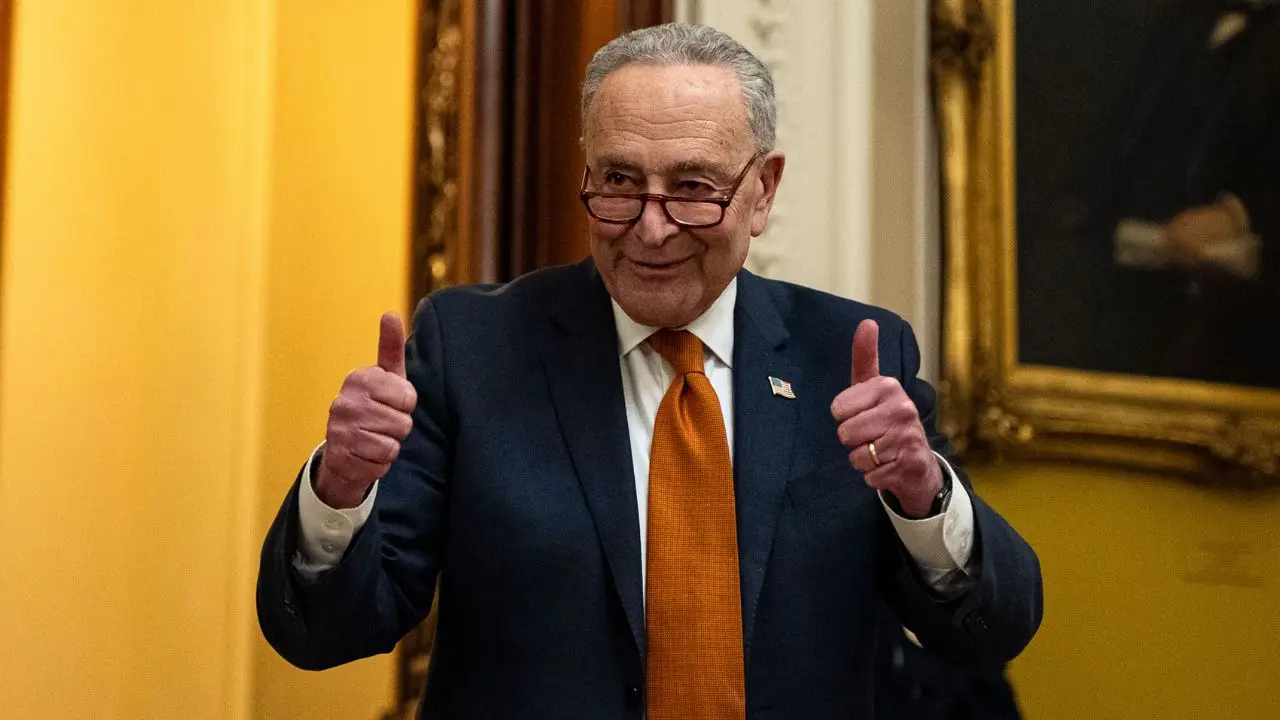
Senate Minority Leader Chuck Schumer (D-N.Y.) has perhaps faced the most politically damaging year among Democratic leaders. Schumer received substantial blame for a disastrous 43-day government shutdown that ended with few Democratic wins. While he didn’t join the eight Democratic senators who eventually supported the Republican plan to end the impasse, calls for his resignation mounted as he failed to maintain party unity.
Republicans suggested Schumer’s shutdown strategy was primarily designed to appease the progressive base, yet he simultaneously failed to build bridges with the party’s ascendant left wing. His conspicuous reluctance to endorse self-proclaimed socialist Zohran Mamdani in New York City’s mayoral race highlighted his awkward position between moderates and progressives.
“Now at the close of 2025, Schumer has left questions unanswered about whether he can still effectively lead the party and whether he represents the party’s future,” political observers note.
As Democrats look toward the 2026 midterms, these internal tensions between establishment figures and progressive challengers will likely intensify, forcing the party to navigate complex questions about its identity and electoral strategy in a political environment dominated by a second Trump administration.
Fact Checker
Verify the accuracy of this article using The Disinformation Commission analysis and real-time sources.

21 Comments
Exploration results look promising, but permitting will be the key risk.
Good point. Watching costs and grades closely.
If AISC keeps dropping, this becomes investable for me.
The cost guidance is better than expected. If they deliver, the stock could rerate.
Exploration results look promising, but permitting will be the key risk.
Good point. Watching costs and grades closely.
Good point. Watching costs and grades closely.
Nice to see insider buying—usually a good signal in this space.
If AISC keeps dropping, this becomes investable for me.
Good point. Watching costs and grades closely.
Good point. Watching costs and grades closely.
Exploration results look promising, but permitting will be the key risk.
Good point. Watching costs and grades closely.
The cost guidance is better than expected. If they deliver, the stock could rerate.
Nice to see insider buying—usually a good signal in this space.
Good point. Watching costs and grades closely.
Nice to see insider buying—usually a good signal in this space.
Good point. Watching costs and grades closely.
Good point. Watching costs and grades closely.
Silver leverage is strong here; beta cuts both ways though.
Good point. Watching costs and grades closely.