


Listen to the article
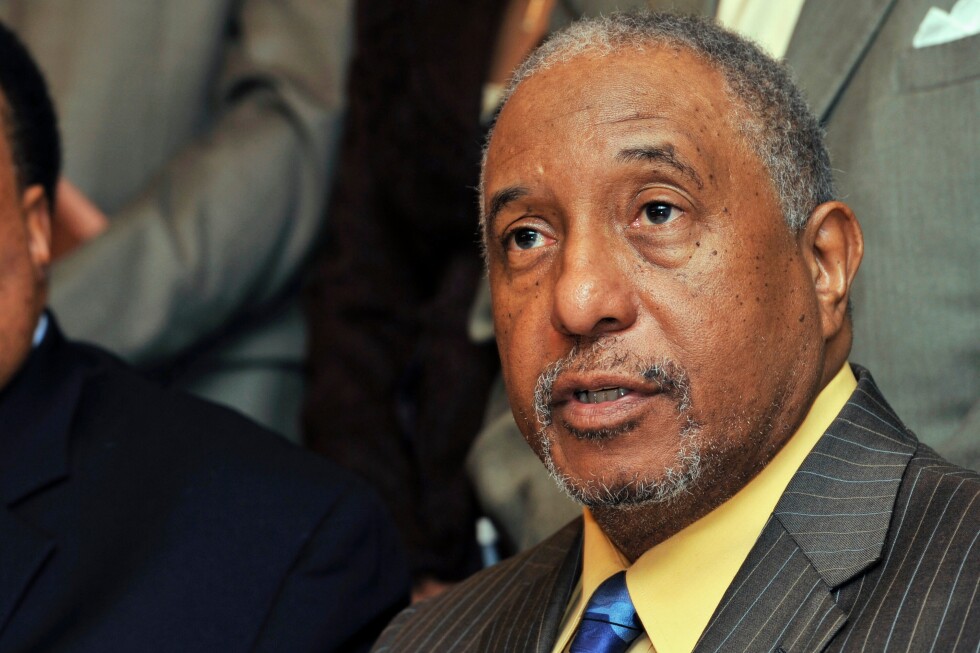
Civil rights pioneer Bernard LaFayette, who helped shape the voting rights movement in Selma, Alabama, died Thursday morning of a heart attack. He was 85, according to his son, Bernard LaFayette III.
LaFayette’s groundbreaking work in Selma laid the foundation for the historic 1965 Voting Rights Act, positioning him as a crucial yet often overlooked architect of American civil rights progress. Two years before “Bloody Sunday” shocked the nation’s conscience with televised images of John Lewis and other marchers being beaten on Selma’s Edmund Pettus Bridge, LaFayette had already been working diligently behind the scenes.
As one of the founding members of the Student Nonviolent Coordinating Committee (SNCC) in 1960, LaFayette accepted the challenge of organizing in Selma when others deemed it too dangerous. The organization had initially removed Selma from consideration after scouts reported that “the white folks were too mean and the Black folks were too scared.”
Undeterred, LaFayette moved to Selma in 1963 as director of the Alabama Voter Registration Campaign. Working alongside his former wife Colia Liddell, he methodically built local leadership capacity and gradually convinced residents that meaningful change was possible, creating momentum that would ultimately prove unstoppable.
The dangers LaFayette faced were constant and deadly. On the same night Medgar Evers was murdered in Mississippi, LaFayette survived an assassination attempt outside his home in what the FBI later described as part of a conspiracy to kill civil rights workers. When confronted by an armed assailant, LaFayette recalled feeling “an extraordinary sense of internal strength instead of fear.” He stood between his attacker and an armed neighbor who had come to his defense, demonstrating his unwavering commitment to nonviolence even in life-threatening situations.
By 1965, when Selma became the focal point of the civil rights movement, LaFayette had moved on to organizing in Chicago. He missed the infamous Bloody Sunday march but quickly mobilized supporters from Chicago to join a second march attempt two weeks later. By then, President Lyndon Johnson had introduced the Voting Rights Act to Congress, transforming the event into what LaFayette described as “a victory march.”
LaFayette’s dedication to civil rights was deeply personal. Growing up in Tampa, Florida, he witnessed his grandmother fall while attempting to board a segregated trolley when he was just seven years old. “I felt like a sword cut me in half, and I vowed I would do something about this problem one day,” he wrote in his 2013 memoir, “In Peace and Freedom: My Journey in Selma.”
His grandmother later arranged for him to attend Nashville’s American Baptist Theological Seminary (now American Baptist College), where he roomed with future congressman John Lewis. Together, they led nonviolent campaigns that successfully desegregated Nashville’s downtown. In 1960, shortly after the Supreme Court banned segregation in interstate travel, the roommates integrated a Greyhound bus during their Christmas break journey home, refusing to move from the front seats despite the driver’s anger.
In 1961, LaFayette joined the Freedom Rides, enduring beatings in Montgomery, Alabama, and imprisonment in Mississippi’s notorious Parchman Prison. His activism later expanded beyond the South, as he trained youth leaders in Chicago and organized tenant unions that established protections that remain in place today.
LaFayette also spearheaded efforts to address lead poisoning among Chicago children, organizing high school students to collect urine samples for screening and pushing city officials to develop what became the nation’s first mass screening program for lead poisoning.
By 1968, LaFayette was serving as the national coordinator for Martin Luther King Jr.’s Poor People’s Campaign. He was with King at the Lorraine Motel on the morning of his assassination. King’s last words to him emphasized the need to institutionalize and internationalize nonviolence, a mission LaFayette dedicated his life to fulfilling.
After earning his doctorate from Harvard University, LaFayette’s influence extended globally. He conducted nonviolence workshops in South Africa with the African National Congress, worked for peace in Nigeria during its civil war, and promoted nonviolence throughout Latin America.
“Bernard literally went everywhere he was invited as sort of a global prophet of nonviolence,” said Andrew Young, the civil rights leader and former UN ambassador who worked closely with LaFayette throughout their careers.
LaFayette once reflected that the constant threat of death during his years as an organizer taught him that life’s value “lies not in longevity, but in what people do to give it significance.” Through his lifelong commitment to nonviolence and justice, Bernard LaFayette gave his life profound significance indeed.
Fact Checker
Verify the accuracy of this article using The Disinformation Commission analysis and real-time sources.
