


Listen to the article
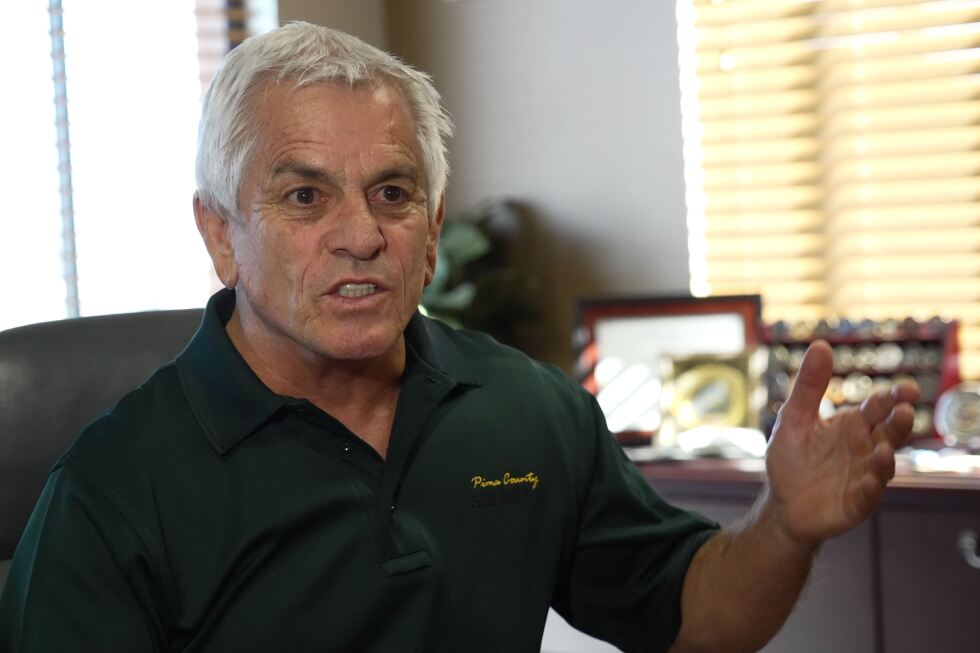
The spotlight has intensified on Pima County Sheriff Chris Nanos as he leads the high-profile investigation into the disappearance of Nancy Guthrie, mother of “Today” show host Savannah Guthrie. The case, now entering its second week, has thrust the Arizona sheriff into national attention, creating challenges for a law enforcement veteran unaccustomed to such scrutiny.
“I’m not used to everyone hanging onto my every word and then holding me accountable for what I say,” Nanos admitted to reporters three days into the investigation of the 84-year-old woman’s apparent abduction from her Tucson-area home.
The investigation has faced several complications, with Nanos acknowledging certain missteps. Among them was the decision to return the crime scene to the family before authorities had completed their work, allowing journalists to photograph blood droplets at the front door that the sheriff later confirmed belonged to Guthrie.
The sheriff also faced criticism for attending a University of Arizona basketball game while the victim remained missing. Dr. Matt Heinz, a Democratic member of the county’s government board, publicly rebuked this decision: “That does not look good. I mean, dude, watch the game at home. Read the room.”
Defending his actions to the Green Valley News, Nanos explained, “Even though I want to, I can’t [work around the clock], and to sit back and say, ‘Well, it’s a bad image,’ I guess I’m going to have to live with that image. Because I got to a point where I needed to decompress a little bit and back away from my team a little bit so I’m not on them all the time.”
Nancy Guthrie was last seen at her home on January 31 and reported missing the following day. The investigation’s first major breakthrough came Tuesday when authorities released surveillance videos showing an individual approaching her door wearing a gun holster, ski mask, and backpack. While these brief videos—totaling less than a minute—provided the first glimpse of who was outside Guthrie’s home, they revealed neither what happened to her nor whether she remains alive.
Shortly after releasing these images, authorities detained a man during a traffic stop south of Tucson, questioning him before ultimately letting him go.
Nanos, who hails from El Paso, Texas, has built his career in Pima County law enforcement, starting as a detention officer in 1984 and working his way up to become second-in-command before his appointment as sheriff in 2015 when his predecessor retired.
His law enforcement experience includes participating in the investigation of one of Tucson’s most tragic events: the 2011 mass shooting outside a grocery store that killed six people and wounded 13 others, including then-U.S. Representative Gabby Giffords. At that time, Nanos led the agency’s criminal investigations division.
As sheriff, Nanos has taken certain controversial positions, including refusing to enforce federal immigration laws during President Donald Trump’s crackdown, stating he would instead focus his limited resources on local crime and public safety issues.
His political career has been marked by close contests. After his initial appointment as sheriff, Nanos lost the 2016 election to Republican Mark Napier but reclaimed the position in 2020. His 2024 reelection was particularly narrow, defeating Republican challenger Heather Lappin by just 481 votes amid controversy.
Weeks before that election, Lappin was placed on administrative leave from her position at the sheriff’s department. She subsequently filed a lawsuit alleging Nanos had taken this action to undermine her campaign by raising ethical concerns about her handling of a reporter’s request regarding inmate call reimbursements. Lappin denied any wrongdoing.
Heinz believes this administrative action likely impacted the election outcome, given the slim victory margin. Regarding the Guthrie investigation, Heinz acknowledged the importance of transparency but cautioned against speaking publicly when there’s “not really anything actionable or helpful or of interest.”
Not everyone has criticized Nanos’s handling of the investigation. Tom Morrissey, a retired chief U.S. marshal and former chairman of the Arizona Republican Party, defended the sheriff, noting the complexities of balancing public information with operational security.
“The perpetrator or perpetrators are watching what law enforcement is doing up close and personal, and it does impact their ability to avoid being discovered or arrested,” Morrissey explained.
When interviewed Friday, Nanos expressed frustration with an Associated Press reporter’s questions about aspects of the case under FBI jurisdiction, suggesting the journalist might be trying to create friction between him and federal partners.
Reflecting on his performance in the Guthrie investigation, Nanos remained pragmatic: “I’m going to have people who think I’m doing a good job, and I’m going to have people think I am doing a bad job. But that’s what we have elections for.”
Fact Checker
Verify the accuracy of this article using The Disinformation Commission analysis and real-time sources.

12 Comments
This case certainly has the sheriff under intense scrutiny. It’s a challenging situation for any law enforcement official to navigate, with the public and media closely watching their every move. Transparency and clear communication will be key as the investigation continues.
You raise a good point. High-profile cases like this can put significant pressure on law enforcement. The sheriff will need to balance the demands of the investigation with managing public perceptions and expectations.
The decision to return the crime scene to the family before finishing the work does seem like a misstep. Handling sensitive evidence and preserving the integrity of the investigation should be the top priorities. Hopefully the sheriff can learn from this experience and make adjustments going forward.
I agree, that was a concerning decision. Maintaining control of the crime scene is crucial, especially in a high-profile case like this. The sheriff will need to demonstrate a stronger command of the investigation procedures to regain public trust.
This case highlights the challenges that law enforcement can face when dealing with complex, high-stakes investigations. The sheriff will need to demonstrate strong leadership, attention to detail, and a commitment to following proper procedures in order to successfully resolve this case.
Absolutely. The scrutiny and pressure can be immense, and the sheriff will need to rise to the occasion. Maintaining professionalism and transparency throughout the investigation will be essential for building public confidence.
It’s concerning to hear about the various missteps in the investigation so far. The sheriff needs to ensure that proper protocols are being followed and that the crime scene is being thoroughly processed. Public trust in law enforcement is at stake, and the sheriff must demonstrate a commitment to justice and accountability.
I agree, the sheriff’s actions so far have been quite concerning. He needs to take a step back, review the investigation procedures, and make necessary adjustments to regain control of the situation. The public is watching closely, and he must prove his ability to handle this case effectively.
It’s understandable that the sheriff is not accustomed to such intense media scrutiny. However, that is the reality he has to manage in a high-profile missing persons case. Maintaining clear, transparent communication with the public will be crucial to preserving the integrity of the investigation.
You make a good point. The sheriff needs to adapt quickly to the public spotlight and learn to navigate the media landscape effectively. Missteps like the ones mentioned can severely undermine public trust in the investigation.
Attending a basketball game while the victim remains missing is definitely questionable judgment. The public expects law enforcement to be fully engaged and focused on these types of cases. The sheriff should be setting an example of dedication and professionalism.
Absolutely. The sheriff needs to be laser-focused on the investigation, not attending social events. This will only further erode public confidence in his ability to handle the case effectively.