


Listen to the article
Appeals Court Lifts Restrictions on Immigration Agents in Chicago Enforcement Operation
A federal appeals court has overturned a lower court’s injunction that had limited immigration agents’ use of force during Operation Midway Blitz, a major Trump administration enforcement initiative in Chicago.
In a 2-1 ruling, a three-judge panel of the 7th Circuit U.S. Court of Appeals vacated the district court’s preliminary injunction and dismissed the appeal, declaring that the lower court had “granted an overbroad, constitutionally suspect injunction.”
Attorney General Pam Bondi celebrated the decision on social media, calling it a “huge legal win” for the administration. “President Trump is trying to protect American citizens while local elected officials REFUSE to do so,” Bondi wrote on X. “We will continue fighting and WINNING for the President’s law-and-order agenda.”
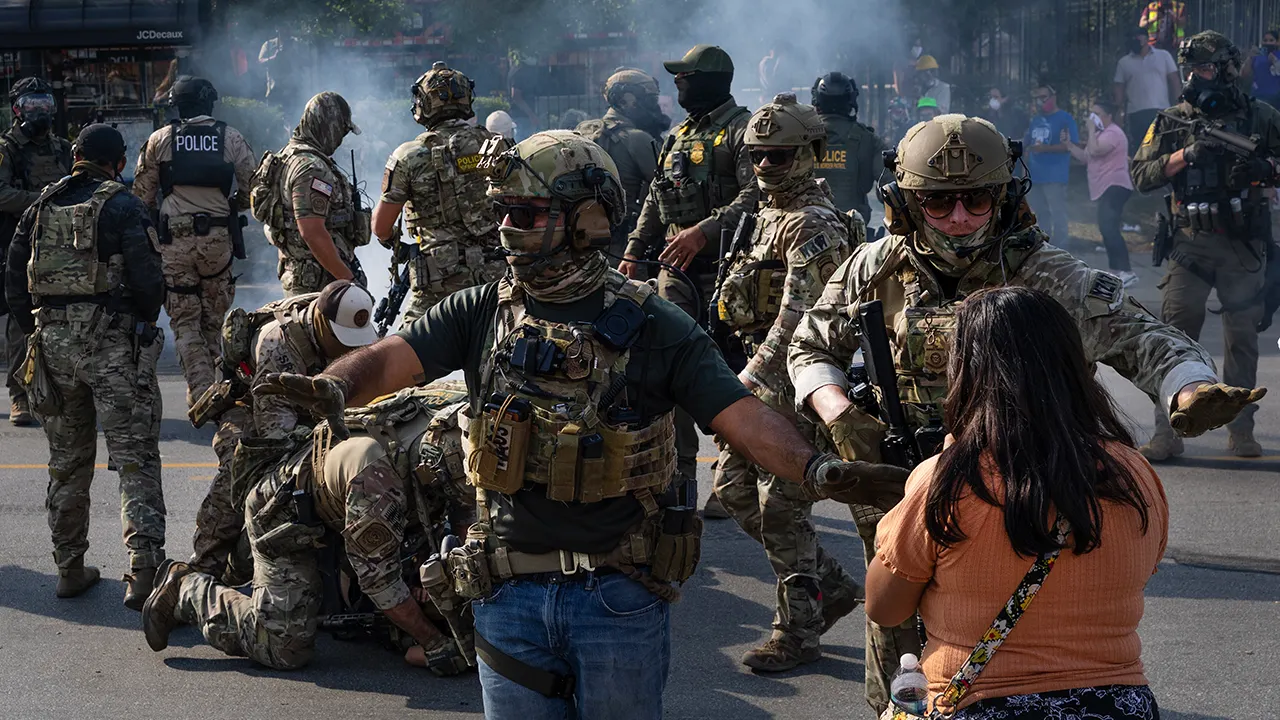
The legal battle stemmed from increased immigration enforcement activities that began last fall in Chicago under Operation Midway Blitz. The operation sparked violent confrontations between federal agents and protesters, drawing national attention to the administration’s immigration policies.
In October, a coalition of protesters and journalists filed a lawsuit against several federal agencies, including Immigration and Customs Enforcement (ICE), Customs and Border Protection (CBP), and the Department of Homeland Security (DHS). The plaintiffs alleged that federal agents violated their First and Fourth Amendment rights by deploying tear gas and other chemical agents to disperse demonstrations.
U.S. District Judge Sara Ellis initially sided with the plaintiffs, imposing restrictions on how federal immigration authorities could conduct enforcement operations. The federal government promptly appealed this decision.
The situation evolved in January when the plaintiffs requested the district court dismiss the case, noting that Operation Midway Blitz had largely concluded. Judge Ellis granted the dismissal but did so “without prejudice,” leaving open the possibility for the case to be refiled in the future.
This particular aspect of the lower court’s decision drew criticism from the appeals court majority. “Because the district court dismissed this case without prejudice—against the plaintiffs’ unopposed request for a dismissal with prejudice—any class members or the lead plaintiffs could refile these claims tomorrow,” the judges wrote. “They could ask the district court to reinstate a near-identical preliminary injunction, adopting the facts and legal reasoning from the district court’s order.”
To prevent this scenario, the 7th Circuit ordered “vacatur,” effectively nullifying Judge Ellis’s prior injunction. The appeals court explained that vacatur is the “best way to wipe the slate clean” and “proper to ensure the district court’s injunction order does not affect future litigation.”
The ruling represents a significant victory for the Trump administration’s immigration enforcement strategy. The Department of Homeland Security has previously claimed that crime rates in Chicago dropped significantly following the implementation of Operation Midway Blitz, which targeted undocumented immigrants with criminal records.
The case highlights ongoing tensions between federal immigration enforcement policies and urban centers with large immigrant populations. Chicago, like many major cities, has at times found itself at odds with federal immigration priorities, especially regarding cooperation between local law enforcement and federal immigration authorities.
As federal agencies now have greater latitude to continue enforcement operations, immigration advocates and civil liberties organizations are likely to monitor the situation closely for potential civil rights concerns.
Fact Checker
Verify the accuracy of this article using The Disinformation Commission analysis and real-time sources.

28 Comments
Exploration results look promising, but permitting will be the key risk.
Good point. Watching costs and grades closely.
Good point. Watching costs and grades closely.
Silver leverage is strong here; beta cuts both ways though.
I like the balance sheet here—less leverage than peers.
Exploration results look promising, but permitting will be the key risk.
Good point. Watching costs and grades closely.
Uranium names keep pushing higher—supply still tight into 2026.
Exploration results look promising, but permitting will be the key risk.
Good point. Watching costs and grades closely.
Interesting update on Appeals Court Allows Trump Administration to Resume Immigration Operations in Chicago. Curious how the grades will trend next quarter.
Good point. Watching costs and grades closely.
Exploration results look promising, but permitting will be the key risk.
I like the balance sheet here—less leverage than peers.
Good point. Watching costs and grades closely.
Nice to see insider buying—usually a good signal in this space.
Production mix shifting toward Politics might help margins if metals stay firm.
Good point. Watching costs and grades closely.
Nice to see insider buying—usually a good signal in this space.
Good point. Watching costs and grades closely.
Good point. Watching costs and grades closely.
The cost guidance is better than expected. If they deliver, the stock could rerate.
Good point. Watching costs and grades closely.
Good point. Watching costs and grades closely.
The cost guidance is better than expected. If they deliver, the stock could rerate.
The cost guidance is better than expected. If they deliver, the stock could rerate.
Good point. Watching costs and grades closely.
Good point. Watching costs and grades closely.