


Listen to the article
Iowa Special Election Could Restore Republican Supermajority in State Senate
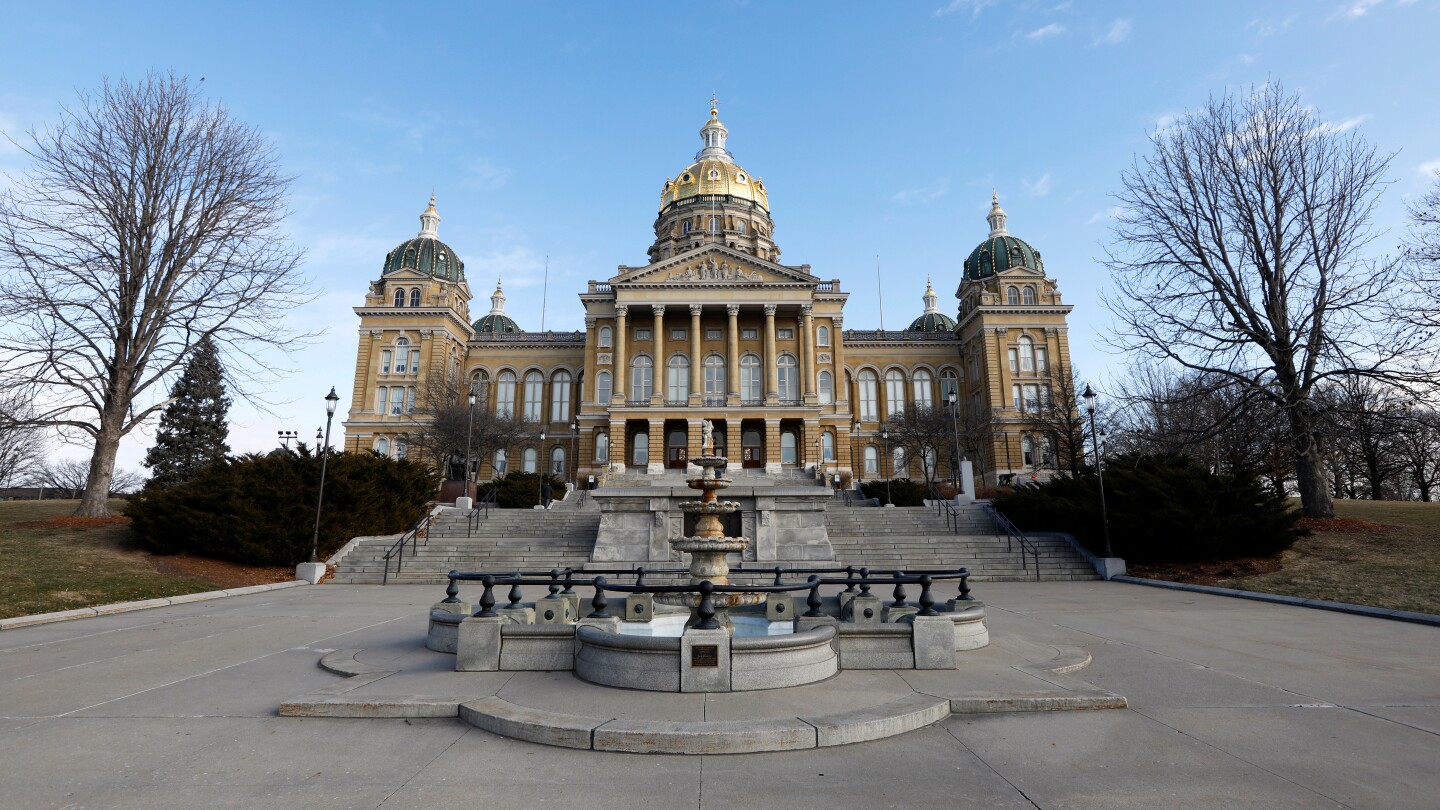
Voters in a Democratic-leaning district near Des Moines will head to the polls Tuesday for a special election that could significantly alter the balance of power in Iowa’s state legislature.
The contest between Democrat Renee Hardman and Republican Lucas Loftin will determine who replaces three-term Democratic state Sen. Claire Celsi, who died on October 6. The outcome has statewide implications, as Republicans need just one more seat to regain a supermajority in the Iowa Senate.
Currently, Republicans hold a commanding 33-16 advantage in the chamber but remain one seat shy of the crucial 34 needed for a two-thirds majority. Iowa Democrats temporarily broke the GOP’s complete control of the chamber during an August special election, but Tuesday’s vote could restore Republicans’ overwhelming legislative advantage.
In Iowa, a supermajority grants significant powers, including the ability to override gubernatorial vetoes, call special sessions, authorize certain payments, and confirm some gubernatorial appointees without Democratic support. Republicans already hold a supermajority in the state House, making Tuesday’s election potentially decisive for consolidated Republican control of Iowa’s government.
The 16th state Senate district encompasses West Des Moines, Windsor Heights, and Clive in southwestern Polk County, plus one precinct in eastern Dallas County. The district has historically favored Democrats, with Celsi winning reelection in 2024 with a commanding 69% of the vote.
Presidential election results further demonstrate the district’s Democratic tilt. Vice President Kamala Harris captured approximately 58% of District 16 votes in the recent presidential election, while former President Donald Trump received about 41% and carried only one of the district’s 23 precincts.
Hardman, the Democratic nominee, currently serves on the West Des Moines City Council as mayor pro tempore, bringing local government experience to her campaign. Republican challenger Loftin works for an environmental and outdoor services company and hopes to flip the seat despite the district’s Democratic voting history.
The special election takes place against a backdrop of Iowa’s rightward political shift in recent years. Though this district remains Democratic-leaning, Republicans have steadily expanded their influence across the state, particularly in rural areas.
Voter registration figures from December 1 show nearly 45,000 registered voters in the district. Democrats make up about 37% of registrants, while Republicans account for approximately 30%. The remaining 32% are unaffiliated with either major party, making independent voters potentially decisive in the outcome.
Turnout will likely be a critical factor. The district saw approximately 67% turnout during the 2024 general election, though that figure was boosted by the presidential race. Special elections typically draw fewer voters, potentially changing the demographic makeup of the electorate compared to a general election.
In the 2024 general election, about 62% of District 16 voters cast their ballots in person on Election Day, while 38% voted absentee. This pattern may differ in a special election, particularly given the winter timing.
Polls will close at 8 p.m. local time (9 p.m. ET) on Tuesday. Based on previous elections in the district, initial results should begin to appear shortly after polls close, with most votes counted by 11 p.m. ET.
Iowa does not have an automatic recount law, though candidates may request and pay for a recount. The cost is waived when the margin is less than 1% of the total vote or fewer than 50 votes, whichever is larger.
While District 16 has historically favored Democrats, special elections often produce unexpected results due to differing turnout patterns. The outcome could have far-reaching implications for Iowa’s legislative agenda and the balance of power in state government for the remainder of the term.
Fact Checker
Verify the accuracy of this article using The Disinformation Commission analysis and real-time sources.

17 Comments
The ability of Republicans to override vetoes and make appointments if they gain a supermajority is certainly significant. I wonder how that would affect the dynamics of governance in Iowa.
A Republican supermajority in the Iowa Senate would certainly give them more leverage in the policymaking process. It will be worth following how this special election plays out and what it means for the state’s politics.
This special election is a good reminder of how local races can have broader implications. The balance of power in the Iowa Senate is clearly a high-stakes issue, so I’m curious to see how the candidates approach the campaign.
Absolutely. Even down-ballot contests can have major ripple effects, so this race will be an important one to follow.
It’s interesting to see how this race in a Democratic-leaning district could potentially shift the balance of power in the Iowa Senate. The outcome will be closely watched by both parties.
You’re right, this race could have far-reaching consequences for the state’s political landscape. I’ll be curious to see how the candidates frame their messages to voters.
This election could have major implications for Iowa’s political landscape. It’s interesting to see how the balance of power in the state Senate could shift with just one seat.
A Republican supermajority would certainly give them more legislative control. It will be worth watching how this race plays out and impacts the state’s politics.
This race is a good example of how local elections can have broader implications. The balance of power in the Iowa Senate is clearly a high-stakes issue, so I’m interested to see how the candidates approach the campaign.
Absolutely. Even small shifts in state legislatures can have significant ramifications, so this special election will be an important one to watch.
A Republican supermajority in the Iowa Senate would certainly change the dynamics of policymaking in the state. It will be worth watching how the candidates address key issues like the economy, education, and healthcare.
The dynamics of this special election remind me of how just a few seats can make a big difference in state legislatures. I’ll be following the results closely to see how it impacts the political landscape in Iowa.
Yes, even small shifts in the partisan makeup of state senates can have significant ramifications. This race will be an interesting test case.
The ability of the GOP to override vetoes and make appointments without Democratic support if they gain a supermajority is quite significant. I wonder how that would affect policymaking in Iowa.
You raise a good point. A supermajority could allow Republicans to push their agenda more aggressively, potentially sidelining the minority party.
It’s interesting that this race in a Democratic-leaning district could have such broad implications for the balance of power in the Iowa Senate. I’ll be curious to see how the candidates position themselves on key issues.
Absolutely. The outcome of this race could have far-reaching effects, so it’s sure to be closely watched by both parties.