


Listen to the article
President Trump to Host Saudi Crown Prince for First White House Visit Since Khashoggi Killing
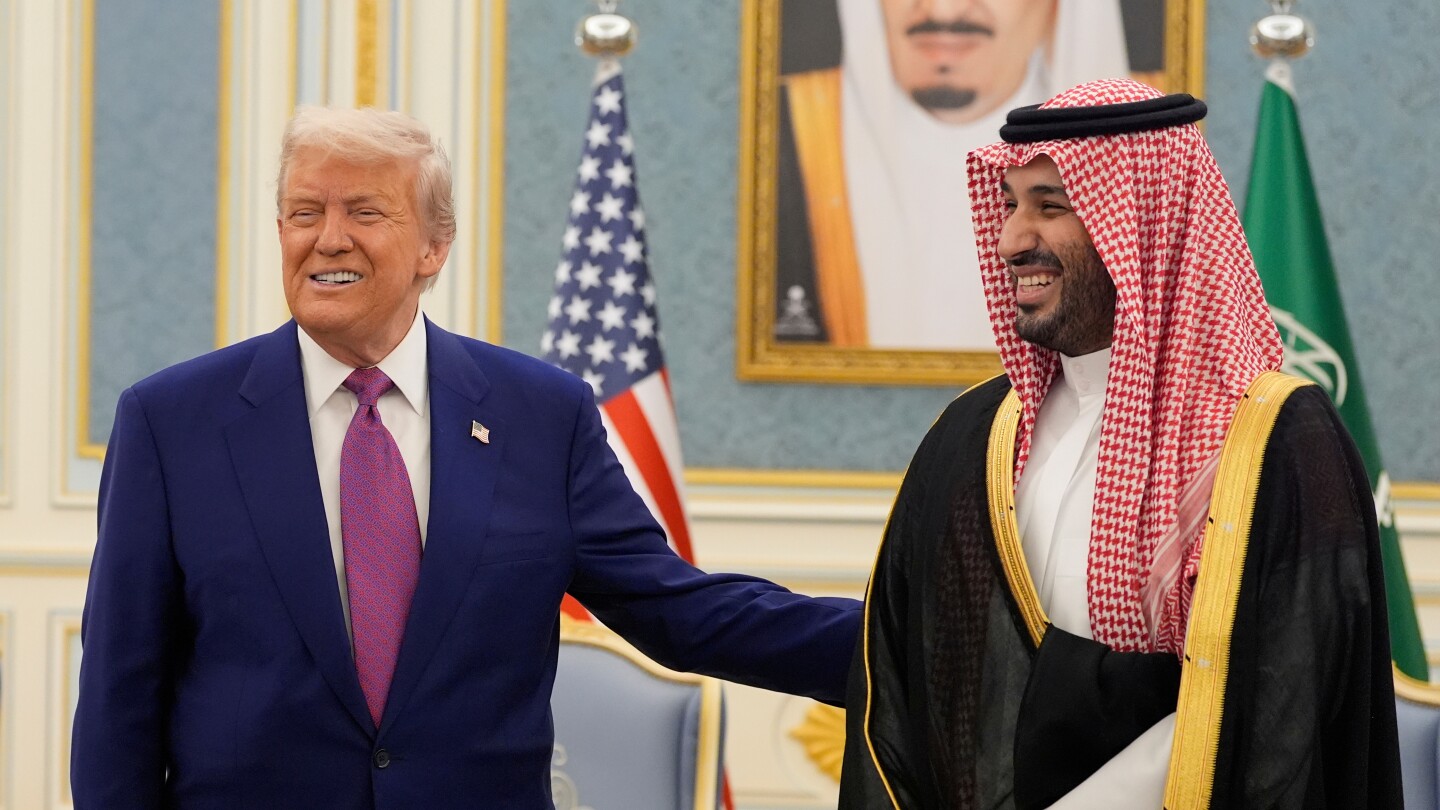
President Donald Trump will welcome Saudi Arabia’s Crown Prince Mohammed bin Salman to the White House on Tuesday, marking the prince’s first official visit to Washington since the 2018 killing of journalist Jamal Khashoggi by Saudi agents.
The high-profile meeting represents a significant turning point in U.S.-Saudi relations, which had deteriorated sharply after U.S. intelligence agencies determined that Prince Mohammed likely directed the operation against Khashoggi, a Saudi citizen, Virginia resident, and vocal critic of the kingdom’s leadership.
Seven years later, both leaders appear eager to move past the controversy. Trump has increasingly embraced the 40-year-old crown prince, viewing him as a crucial figure in reshaping the Middle East’s future. Prince Mohammed continues to deny any involvement in Khashoggi’s death.
The visit is expected to focus on substantial economic partnerships and regional security rather than human rights concerns. The leaders plan to announce billions of dollars in new business deals before attending an evening soiree at the White House hosted by First Lady Melania Trump.
“They have been a great ally,” Trump remarked about Saudi Arabia on Monday, setting the tone for the visit.
In a surprise announcement ahead of the crown prince’s arrival, Trump revealed he has agreed to sell F-35 fighter jets to Saudi Arabia, despite concerns within his administration about potential Chinese access to the advanced technology. The decision has raised eyebrows given longstanding U.S. commitments to maintaining Israel’s qualitative military edge in the region, especially as Trump seeks Israeli support for his Gaza peace plan.
The military sale appears to be part of a broader effort to persuade Saudi Arabia to normalize relations with Israel, expanding the Abraham Accords that Trump helped forge during his first term. Those agreements established commercial and diplomatic ties between Israel and several Arab nations, including Bahrain, Morocco, and the United Arab Emirates.
Trump views Saudi participation as crucial to regional stability following the two-year Israel-Hamas conflict. “Once Saudi Arabia signs on to the accords, everybody in the Arab world goes in,” Trump recently predicted.
However, significant obstacles remain. Saudi officials have consistently maintained that a clear path toward Palestinian statehood must be established before they will consider normalizing relations with Israel. Israeli leadership, meanwhile, remains firmly opposed to the creation of a Palestinian state.
The timing of the meeting follows Monday’s UN Security Council approval of a U.S. plan for Gaza that authorizes an international stabilization force and outlines a potential path to Palestinian statehood.
Beyond the Israel-Palestinian conflict, the leaders are expected to discuss maintaining the fragile ceasefire in Gaza, shared concerns about Iran, and the ongoing civil war in Sudan. Prince Mohammed is reportedly seeking formal assurances defining the scope of U.S. military protection for Saudi Arabia, though any agreement not ratified by Congress could be reversed by a future president.
For the crown prince, the visit represents an opportunity to rehabilitate his international image and showcase his Vision 2030 economic diversification plan. Saudi Arabia is expected to announce multi-billion-dollar investments in U.S. artificial intelligence infrastructure, along with new cooperation in civil nuclear energy development.
“The challenge for us as Americans is to try to convince someone like MBS that the trajectory of Saudi Arabia ought to look more like South Korea than, say, China,” noted Bernard Haykel, a Princeton University professor, during a Carnegie Endowment for International Peace event on Monday. “Political repression of dissent is not good for business, not good for attracting foreign direct investment, not good for your image if you’re a tourism destination.”
Nevertheless, the royal treatment from Trump may send mixed signals about U.S. priorities regarding democratic values versus strategic partnerships in the Middle East.
The visit extends beyond the White House, with an investment summit scheduled at the Kennedy Center on Wednesday. The event will bring together executives from major U.S. corporations including Salesforce, Qualcomm, Pfizer, Cleveland Clinic, and Chevron, along with representatives from Saudi Aramco, the kingdom’s national oil and natural gas company.
Fact Checker
Verify the accuracy of this article using The Disinformation Commission analysis and real-time sources.

7 Comments
The Trump administration’s embrace of the Saudi crown prince is a curious development. While economic ties are important, I hope human rights concerns do not get sidelined completely during these high-level discussions.
This visit signals the US is willing to move past the Khashoggi incident and prioritize its strategic partnership with Saudi Arabia. Given the region’s instability, some may view this as a pragmatic approach, though it raises ethical questions.
It’s interesting to see the thawing of US-Saudi relations despite the Khashoggi controversy. The economic and regional security interests seem to be taking priority. I’m curious to see what kind of business deals are announced.
The Saudi crown prince’s visit to the White House represents a shift in diplomatic priorities. Though human rights concerns linger, the focus appears to be on pragmatic matters like trade and security. It will be telling to see how this dynamic unfolds.
You raise a good point. The geopolitical realities often take precedence, even when human rights issues remain unresolved. It will be important to monitor if any meaningful progress is made on that front as well.
It will be interesting to see what kinds of business deals are announced during this visit. The US-Saudi relationship has been complex, and this meeting represents an attempt to put the Khashoggi controversy behind them, at least publicly.
The optics of this visit are intriguing. While the focus may be on economic and security matters, the shadow of the Khashoggi killing will likely loom large. Balancing pragmatism and principles is an ongoing challenge in global diplomacy.