


Listen to the article
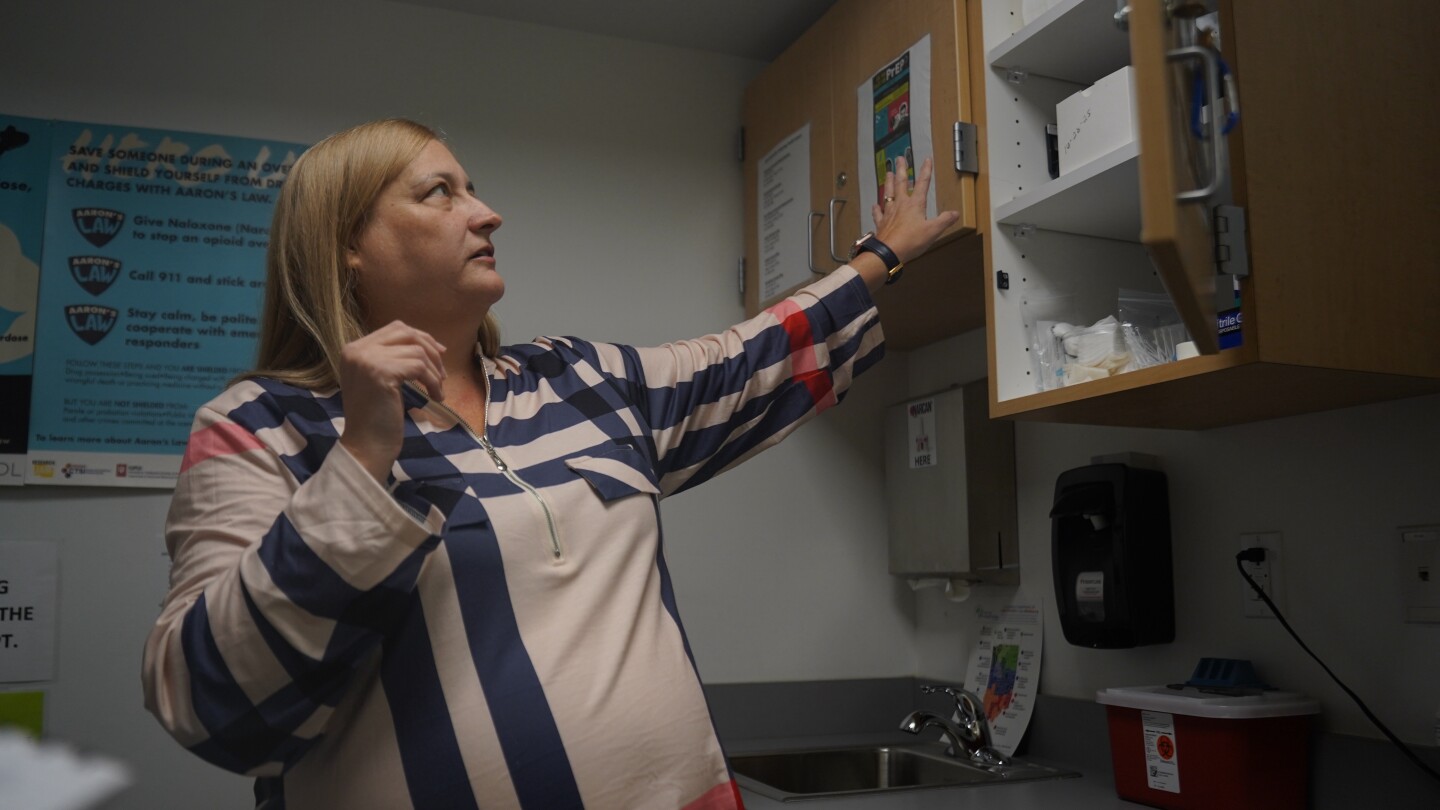
The storage room at the Clark County Health Department in Jeffersonville, Indiana contains boxes marked “DO NOT USE,” filled with supplies that people who inject drugs would normally receive through needle exchange programs. These cookers and sterile water, funded by federal money via state distribution, are now restricted following President Donald Trump’s July executive order that prohibits federal substance abuse grants from paying for items that “only facilitate illegal drug use.”
The controversial order has created a divided response across the country. In some regions, it has strengthened support for syringe exchange programs, which decades of research show effectively prevent disease spread among intravenous drug users while connecting them to treatment. In other areas, particularly conservative states, the order has fueled opposition that threatens these programs’ existence.
Indiana, which passed a law allowing exchanges a decade ago in response to a catastrophic HIV outbreak in the city of Austin, now faces a critical juncture. The law is set to expire next year, and the number of exchanges has already decreased from nine in 2020 to just six currently. State officials have instructed remaining programs to comply with Trump’s order, even directing them to discard federally funded supplies like cookers and tourniquets.
Clark County health workers have found a creative workaround. They now purchase these restricted items with private money and distribute them in “mystery bags” assembled by employees who aren’t paid with state or federal funds. This approach allows them to continue providing comprehensive harm reduction services while technically complying with federal restrictions.
The contrast in approaches nationwide is stark. While Republican-led Indiana struggles to maintain its programs, Democratic-led California continues using state funds for supplies including pipes and syringes. California has seen growth in exchange programs, now hosting 70 of the more than 580 listed by the North American Syringe Exchange Network.
Dr. Eric Yazel, Clark County Health Officer, emphasizes the practical reality that IV drug users will likely inject regardless of whether they have clean supplies. Exchanges prevent needle sharing and disease transmission, he notes, “decreasing the public health risk for the whole population.” Critics, including former Indiana Attorney General Curtis Hill, counter with concerns about potentially “promoting drug use.”
The Clark County exchange program operates discreetly. Participants arrive and request “No. 1” from a service list, then choose from a cart offering needles, bandages, sharps containers, and naloxone. They can also receive HIV and hepatitis C testing, information on drug treatment, and resources for housing, food, and employment. The human connection is vital – staff spend time discussing participants’ situations and treatment readiness.
Joshua Gay, a 44-year-old Austin resident and former methamphetamine user, credits the exchange with saving his life. After receiving encouragement from health workers, he sought treatment at LifeSpring Health Systems and is now sober. Gay also used naloxone from the program to revive a friend who overdosed on heroin, demonstrating the ripple effects of harm reduction services.
The success metrics for Indiana’s exchanges are impressive. Collectively, they’ve made over 27,000 referrals to drug treatment and provided naloxone that reversed nearly 25,000 overdoses. Since its 2017 launch, Clark County’s program alone has distributed over 2,000 naloxone doses, made more than 4,300 treatment referrals, and facilitated over 4,400 referrals for HIV or hepatitis C testing. Their syringe return rate is an exceptional 92%.
Health experts cite research showing exchanges don’t increase syringe litter, crime, or drug use. The CDC estimates these programs are associated with a 50% reduction in HIV and hepatitis C incidence. Scott County, epicenter of Indiana’s historic HIV outbreak that sickened 235 people, saw fewer than five new cases annually in 2020 and 2021, maintaining low numbers even after its program ended.
Nationally, 43 states have syringe services programs, according to KFF. Support remains strong in some areas, with Hawaii recently passing a law allowing unlimited clean needles rather than one-for-one exchanges. However, other states are moving in the opposite direction. Bills in West Virginia propose eliminating such programs, and this month, Cabell-Huntington Health Department stopped distributing needles while continuing other services.
Looking ahead, Yazel expects a difficult legislative battle to extend Indiana’s program beyond its July 1 expiration. Advocates like Alan Witchey of the Damien Center have created resources to contact lawmakers and support legislation that would extend the sunset date to 2036.
“Without these programs,” Witchey warns, “there will be one less tool to address the diseases of substance use disorder, hepatitis C and HIV. And that could lead to a very dangerous place for us. We have seen where this leads.”
Fact Checker
Verify the accuracy of this article using The Disinformation Commission analysis and real-time sources.

12 Comments
It’s concerning to hear that syringe programs are being threatened in some areas. These services play a vital role in public health, regardless of political views. I hope a pragmatic solution can be found.
I agree, these programs should be evaluated based on objective evidence of their impact, not ideology. Keeping people safe and healthy has to be the priority.
This is a sensitive issue with valid arguments on both sides. While syringe programs can help reduce disease transmission, there are concerns about enabling drug use. It’s a complex problem without easy solutions.
I agree, it’s a challenging balance to strike between public health and discouraging drug abuse. Thoughtful policy is needed to address the root causes effectively.
The opioid crisis is devastating communities across the country. While syringe programs are controversial, the data shows they can save lives by reducing disease transmission. This seems like a case where public health should take priority.
I agree, the public health impacts need to be the top consideration here. Harm reduction strategies may not be perfect, but they are often the most pragmatic way to address complex social problems.
This is a really tough situation. I can understand the concerns about these programs enabling drug use, but the public health evidence seems clear that they save lives. I hope policymakers can find a sensible compromise.
You raise a fair point. There are valid arguments on both sides, which is why a nuanced, evidence-based approach is so important. Hopefully cooler heads can prevail and find a workable solution.
The Trump order seems to have had unintended consequences, hampering programs that were making progress in fighting the opioid crisis. I hope policymakers can find a way to support harm reduction efforts.
You raise a fair point. Harm reduction approaches have been shown to save lives, even if they’re not perfect solutions. Hopefully a balanced approach can be found.
This highlights the challenge of addressing complex social issues like addiction. Banning syringe programs may seem like a moral stance, but could backfire and worsen public health outcomes. A nuanced approach is needed.
Well said. Simple solutions often miss the bigger picture. I hope policymakers can work together to find an evidence-based approach that balances different concerns.