


Listen to the article
Senate Candidate’s Tattoo Cover-Up Sparks Controversy in Maine Race
Graham Platner, a Democratic candidate in Maine’s closely watched U.S. Senate race, recently took steps to cover up a tattoo after discovering it was recognized as a Nazi symbol—a decision that has drawn both support and criticism as his campaign faces increased scrutiny.
Nearly two decades ago, Platner, while on leave from the Marines in Croatia, made an impulsive decision to get a skull and crossbones tattoo. According to Platner, it wasn’t until several weeks into his Senate campaign that he learned the design was associated with Nazi symbolism.
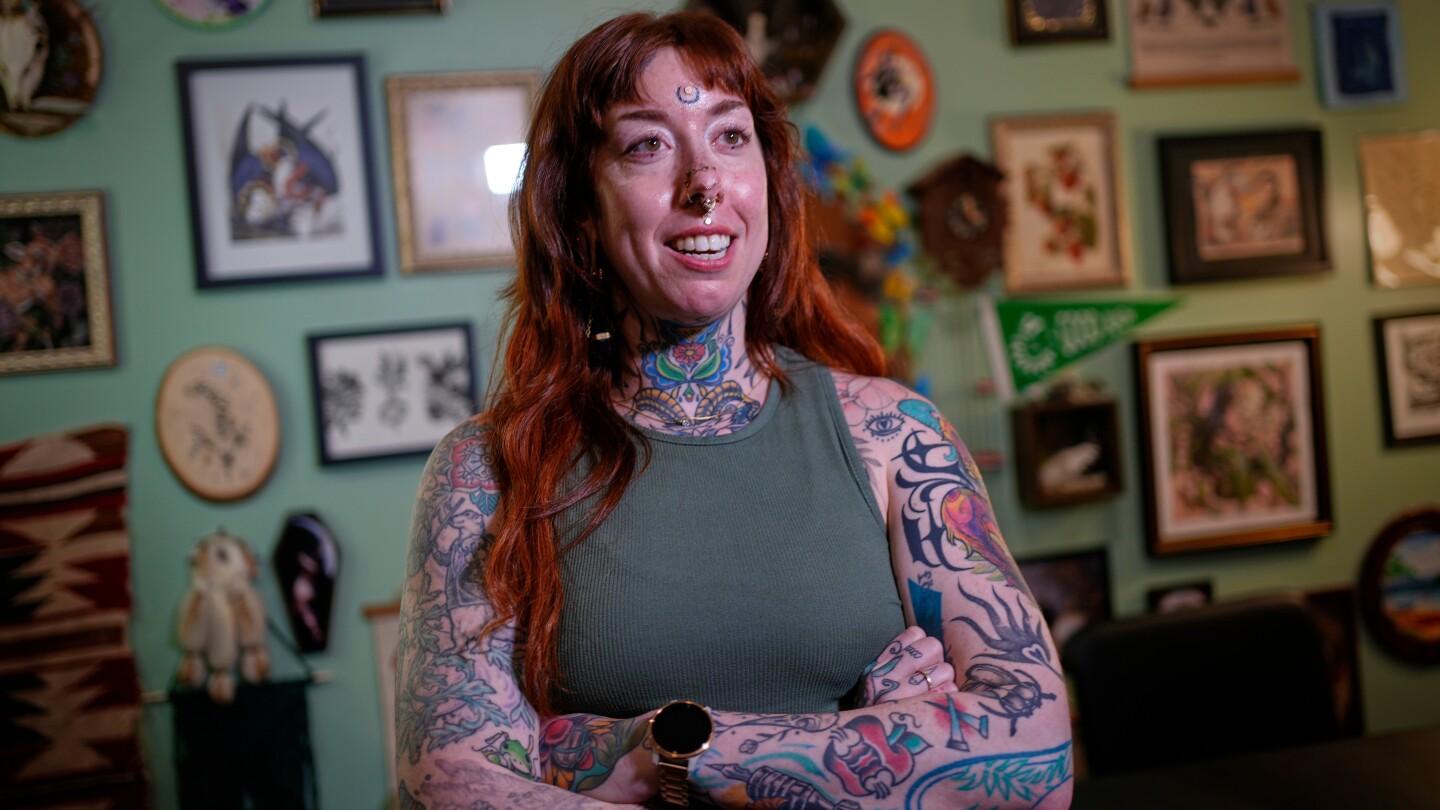
Rather than wait through multiple sessions of laser removal treatment, Platner reached out to his friend, tattoo artist Mischa Ostberg, for a more immediate solution.
“It was a phone call like: ‘Hey, I have a tattoo. I found out it’s something I don’t want, can you help me cover it up?'” Ostberg told The Associated Press. For Ostberg, a relatively new tattoo artist who has been licensed for just two years, the request wasn’t unusual—cover-ups are common in the tattoo industry.
The challenge was considerable. Platner’s left chest area contained substantial black ink, making the redesign particularly difficult. Ostberg spent hours creating a Celtic knot that now obscures most of the original skull and crossbones, with an image of a dog incorporated into the new design—a nod to Platner’s Scottish heritage and his love for his two dogs.
“I know a lot of people have said some honestly pretty brutal stuff. I’m trying not to look at it too much, because it just really hurts the ego and the creative part of you,” Ostberg said. “But I tried. I actually put in a lot of time and effort, even if other people can’t see it.”
The tattoo controversy comes at a challenging time for Platner, who is running to unseat longtime Republican Sen. Susan Collins. As a political newcomer, he must first navigate a competitive Democratic primary that includes established political figure Gov. Janet Mills, who has secured endorsements from Senate Minority Leader Chuck Schumer and influential progressive organizations.
This isn’t the only controversy Platner has faced during his campaign. Recently discovered posts from his Reddit account between 2018 and 2021 show him dismissing military sexual assault allegations, making derogatory comments about Black patrons’ tipping habits, criticizing police officers and rural Americans, and using homophobic language.
Platner maintains that in the 20 years since getting the tattoo, no one had ever questioned its connection to Nazi symbolism. He noted that during his military service, which included three tours as a Marine, he later enlisted in the Army, passing their examination process that screens for hate symbols in tattoos.
For Ostberg, the experience has been bittersweet. The artist supports Platner’s candidacy precisely because the tattoo situation shows “he’s a regular person like all of us” who hasn’t been perfectly vetted by Democratic leadership. This authenticity, Ostberg believes, is part of what makes Platner a compelling candidate.
“I didn’t really want necessarily so many people to be talking about this,” Ostberg said of the tattoo coverage. “The important thing is that people are talking about this movement.”
The incident raises broader questions about candidate vetting in the modern political landscape, where past decisions and social media history can quickly become campaign liabilities. As the Maine Senate race continues to develop, voters will decide whether Platner’s explanation and subsequent actions regarding the tattoo are sufficient to earn their trust, particularly in a race that could have significant implications for the balance of power in the U.S. Senate.
Fact Checker
Verify the accuracy of this article using The Disinformation Commission analysis and real-time sources.

8 Comments
The tattoo cover-up adds an unexpected human element to this Senate race. Voters will likely appreciate the candidate’s willingness to confront and correct a youthful mistake, even if the symbolism is concerning.
This situation raises questions about vetting candidates’ backgrounds more thoroughly. However, the candidate’s response could ultimately help build trust if handled thoughtfully.
While the Nazi symbol association is troubling, the candidate’s transparent approach to addressing it is commendable. Voters will have to weigh this issue against the candidate’s broader platform and qualifications.
It will be interesting to see how this tattoo controversy evolves and impacts the Senate race going forward. Voters should focus on the candidate’s current positions and vision, not just past mistakes.
Interesting to see a tattoo artist playing an unexpected role in a Senate race. Covering up controversial symbols is a common tattoo request, though the timing and circumstances here seem unusual.
I’m curious to learn more about the candidate’s decision-making process and how this issue has impacted the race so far.
This story highlights the challenges politicians can face with past decisions and how they choose to address them. Transparency and owning up to past mistakes is important, even if it’s uncomfortable.
I appreciate the candidate’s proactive approach in addressing the tattoo issue, even if the initial decision was questionable. It takes courage to confront one’s past publicly.