


Listen to the article
President Trump’s decision on Thursday to revoke the 2009 endangerment finding has sparked controversy amid claims that challenge scientific consensus on climate regulation. The endangerment finding has served as the foundation for U.S. climate policy and greenhouse gas regulation for over a decade.
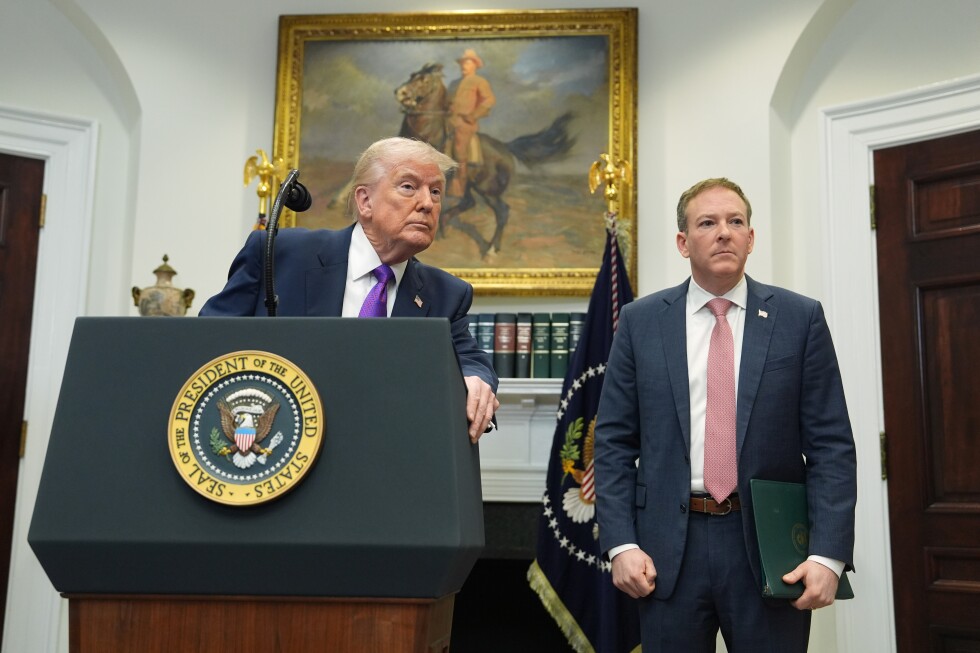
During the announcement, both President Trump and Environmental Protection Agency Administrator Lee Zeldin made several assertions about the finding that conflict with established legal and scientific records.
Trump claimed the endangerment finding had “no basis in fact” and “no basis in law.” However, legal experts point out this statement contradicts established judicial precedent. The finding was adopted following the landmark 2007 Supreme Court ruling in Massachusetts v. EPA, which determined greenhouse gases qualify as air pollutants under the Clean Air Act.
“The idea that the endangerment finding has no basis in law is ludicrous,” said Ann Carlson, environmental law professor at UCLA. “The Supreme Court specifically directed the Environmental Protection Agency to determine whether greenhouse gases endanger public health and welfare. The endangerment finding is the result.”
The EPA had compiled substantial scientific evidence supporting the finding when it was established, documentation that remains accessible on the agency’s website today. Multiple federal courts have upheld the validity of the endangerment finding throughout its 16-year existence.
Trump also made economic claims about renewable energy, stating, “We’ve basically stopped all windmills in this country. It’s the most expensive energy you can get.” This assertion contradicts current energy market data. According to July estimates from the Energy Information Administration, onshore wind ranks among the most cost-effective electricity sources at approximately $30 per megawatt hour.
By comparison, natural gas plants generate electricity at around $65 per megawatt hour, while advanced nuclear reactors exceed $80. Offshore wind does remain relatively expensive at $88 per megawatt hour, but the blanket characterization of wind energy as the costliest option is not supported by industry figures.
When questioned about potential health and environmental impacts of his decision, Trump dismissed concerns entirely, calling climate change “a scam, a giant scam” and “a terrible rip off” initiated by the Obama administration.
This position stands in contrast to extensive scientific research documenting climate change’s health effects. Thousands of peer-reviewed studies link climate change to increased mortality from heat waves, extreme weather events like hurricanes and floods, and deteriorating air quality from intensifying wildfires.
A 2021 study published in Nature Climate Change calculated approximately 9,700 annual global deaths attributable to human-caused climate change heat exposure, based on data from 732 cities, including over 200 in the United States. Another study, using the EPA’s own calculation methods, estimated climate-related health costs at a minimum of $10 billion annually.
Climate science significantly predates the Obama administration, with foundational research tracing back nearly 170 years to Eunice Foote’s pioneering work demonstrating carbon dioxide’s heat-trapping properties. The first national climate assessment, conducted in 2000, concluded that “climate variability and change are likely to increase morbidity and mortality risks.”
Administrator Zeldin claimed the Obama and Biden administrations used the endangerment finding to “steamroll into existence a left-wing wish, including electric vehicle mandates.” This characterization misrepresents federal policy.
“If you looked at some of the tables that were in the Biden rules, you could see that there were a variety of different ways that companies could comply with the standards,” explained Carrie Jenks, executive director of Harvard Law School’s environmental and energy law program. “The endangerment finding nor the regulations mandated a shift from one type of vehicle to another.”
While Biden established a non-binding goal for electric vehicles to represent half of new car sales by 2030, no federal mandate required EV purchases. The Biden administration did implement stricter pollution standards for gasoline-powered vehicles, which indirectly encouraged electric vehicle adoption.
Trump revoked Biden’s electric vehicle target on his first day in office via executive order.
Fact Checker
Verify the accuracy of this article using The Disinformation Commission analysis and real-time sources.

14 Comments
The Trump administration’s claims about the endangerment finding seem to contradict expert legal and scientific analysis. This move could have far-reaching consequences for climate policy.
Overturning this key policy foundation without strong justification is a worrying development. It’s crucial that policy decisions are grounded in facts and the rule of law.
Revoking the endangerment finding appears to be a politically motivated decision that disregards established legal precedent and scientific consensus on climate change. This is a concerning development.
The Supreme Court has already ruled that the EPA must regulate greenhouse gases. Challenging this core legal foundation seems ill-advised and could undermine progress on climate action.
The Trump administration’s claims about the lack of legal and scientific basis for the endangerment finding are highly questionable. This decision risks rolling back critical environmental protections.
Overturning this key policy without strong justification is troubling. It’s crucial that policymaking is grounded in facts and the rule of law, not political interests.
The Trump administration’s claims about the lack of legal or scientific basis for the endangerment finding are highly questionable. This appears to be a political move that disregards established facts.
Legal experts have clearly refuted the administration’s assertions. Revoking this key policy could undermine years of climate progress.
This decision seems to ignore established legal precedent and scientific consensus around climate change. Revoking the endangerment finding could have significant implications for future climate policy and regulation.
The Supreme Court has already ruled that greenhouse gases qualify as pollutants. Challenging this core legal foundation seems misguided.
It’s concerning to see the administration make inaccurate statements about the legal and scientific basis for climate regulation. This decision risks rolling back important environmental protections.
The Supreme Court has already affirmed the EPA’s authority to regulate greenhouse gases. Challenging this established precedent is deeply troubling.
This decision to revoke the endangerment finding appears to disregard established legal precedent and scientific consensus around climate change. It’s a concerning development with potentially far-reaching implications.
The Supreme Court has already affirmed the EPA’s authority to regulate greenhouse gases. Challenging this core legal foundation seems misguided and could undermine progress on climate action.