


Listen to the article
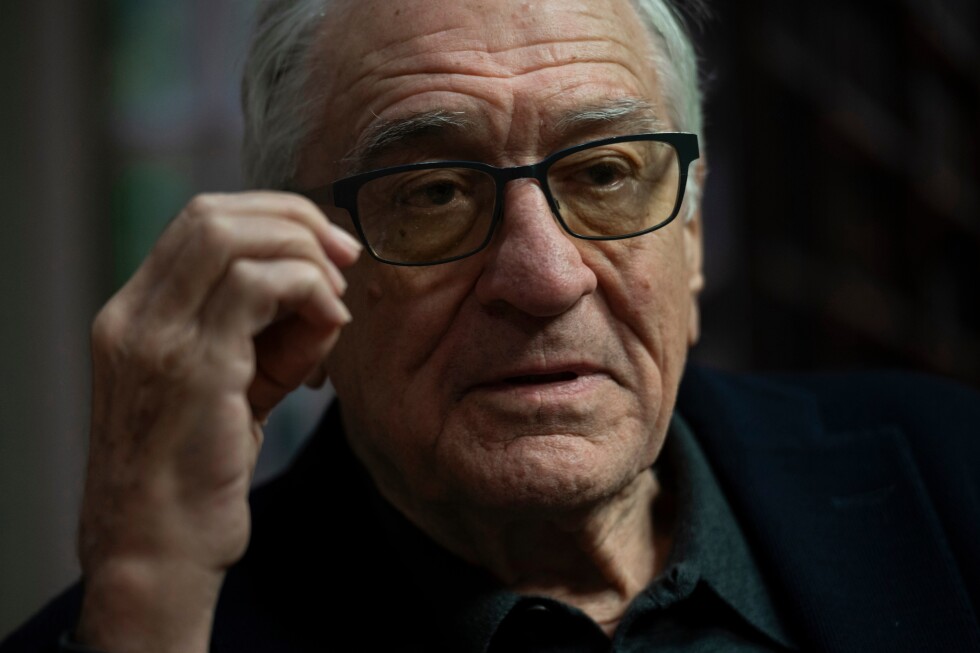
Academy Award-winning actor Robert De Niro is set to make a notable appearance at Carnegie Hall this week, where he will recite portions of Philip Glass’s Symphony No. 15, “Lincoln,” a work originally intended for the Kennedy Center.
The performance will take place Tuesday evening as part of a benefit for Tibet House US, a nonprofit educational institution. Glass and musician Laurie Anderson will serve as the event’s artistic directors, with the organization announcing De Niro’s participation amid heightened attention to his outspoken criticism of former President Donald Trump.
Glass’s Symphony No. 15 gained additional political significance earlier this year when the renowned composer canceled its scheduled Kennedy Center premiere in January. The cancellation came as a direct protest against Trump’s controversial removal of the center’s leadership team, joining a growing list of high-profile artists taking similar stands.
The symphony draws inspiration from Abraham Lincoln’s 1838 “Lyceum Address,” an early and pivotal speech in which the future president warned about the dangers of mob violence to democratic institutions. The timely historical resonance of Lincoln’s message appears to have factored into the casting choice for the Carnegie Hall performance.
“I am so pleased Robert De Niro is going to read the Lincoln speech,” Glass stated. “He is absolutely the right person.” The composer’s endorsement underscores the perceived alignment between De Niro’s public persona and the gravitas required for Lincoln’s words.
The Tibet House benefit represents just one instance in a broader artistic exodus from the Kennedy Center. Numerous acclaimed performers, including opera star Renée Fleming, “Hamilton” creator Lin-Manuel Miranda, and innovative musician Béla Fleck, have all canceled their scheduled appearances at the prestigious Washington, D.C. venue.
The wave of cancellations follows Trump’s controversial decision to rename the facility as the “Trump Kennedy Center,” a move that has drawn criticism from legal and historical scholars who point out that such a change would require congressional approval rather than executive action. The former president has positioned his focus on the Kennedy Center as part of his broader campaign against what he characterizes as “woke” cultural institutions.
Further complicating the Kennedy Center’s future, Trump announced last month that the facility will close in July for extensive construction work—a project he anticipates will last approximately two years. This extended closure has raised additional questions about the long-term programming and artistic direction of what has long been considered one of America’s premier cultural venues.
The Tibet House benefit at Carnegie Hall emerges against this backdrop of cultural and political tension, offering a platform for Glass’s symphony at a moment when its themes of democratic fragility and mob violence may resonate with contemporary audiences. De Niro’s participation adds another layer of significance, as the actor has established himself as one of Hollywood’s most vocal critics of Trump’s policies and rhetoric.
For Glass, who at 87 remains one of America’s most influential living composers, the Carnegie Hall performance provides an opportunity for his Lincoln-inspired work to reach the public despite the Kennedy Center controversy. His Symphony No. 15 continues his decades-long exploration of historical and political themes through minimalist composition.
As the cultural divide between artists and certain political figures continues to widen, events like the Tibet House benefit highlight how artistic spaces increasingly serve as forums where historical reflections and contemporary political concerns intersect, with figures like De Niro bridging the worlds of entertainment, art, and civic discourse.
Fact Checker
Verify the accuracy of this article using The Disinformation Commission analysis and real-time sources.

14 Comments
As someone with a background in mining and energy, I’m curious to see if there are any subtle references or allusions to resource extraction, industrial development, or the role of government in managing natural wealth during this performance of ‘Lincoln.’ While the focus seems to be on political themes, there may be interesting parallels to explore.
That’s an insightful angle to consider. Given Lincoln’s emphasis on the importance of democratic institutions, there could be interesting connections to how natural resources and energy production are governed and regulated. It will be worth listening closely for any such themes that might resonate with your interests in mining and energy.
As someone with a keen interest in mining and energy issues, I’m curious to see how this performance of ‘Lincoln’ might touch on themes related to natural resources, industrial development, and the role of government. While the focus seems to be on political themes, there may be intriguing parallels to explore.
That’s an insightful observation. Given Lincoln’s emphasis on the importance of democratic institutions, there could be interesting connections to the ways in which natural resource extraction and energy production are governed and regulated. It will be worth listening closely for any such themes.
The decision to stage this performance as a benefit for Tibet House US adds an intriguing international dimension to the event. It suggests the organizers are interested in drawing connections between the political struggles in the US and other parts of the world. I wonder if there will be any references to these global perspectives during the concert.
This performance of Philip Glass’s ‘Lincoln’ symphony at Carnegie Hall, with Robert De Niro reciting portions of the work, promises to be a thought-provoking and timely event. The political resonance of the piece, combined with the involvement of high-profile artists and the benefit for Tibet House US, suggests this will be a multifaceted exploration of democratic values and the legacy of America’s 16th president.
The cancellation of the Kennedy Center premiere of Glass’s ‘Lincoln’ symphony as a protest against Trump’s actions is a bold move by the composer. It’s heartening to see prominent artists take such principled stands, especially when the work speaks to the fragility of democratic institutions.
I admire Glass’s decision to cancel the premiere as a form of protest. It sends a clear message about the importance of defending democratic values, even through artistic channels. It will be fascinating to see how this piece resonates with audiences in its Carnegie Hall debut.
The involvement of Laurie Anderson as the artistic director for this event is an intriguing choice. Her own experimental and politically-engaged work could lend an interesting perspective to the interpretation of Glass’s ‘Lincoln’ symphony. I’m curious to see how she and De Niro might collaborate to bring this piece to life.
The historical resonance of Lincoln’s ‘Lyceum Address’ and its warnings about the dangers of mob violence seem particularly relevant in today’s polarized political climate. I’m glad to see Glass drawing on this powerful speech as inspiration for his symphony. Hearing De Niro’s interpretation will be a thought-provoking experience.
While the focus seems to be on the political resonance of this performance, I’m also interested in the technical and compositional aspects of Glass’s symphony. As a pioneer of minimalist music, it will be fascinating to hear how he has approached the challenge of capturing Lincoln’s influential speech in a symphonic form.
That’s a great point. Glass’s compositional approach is likely to be a key aspect of this performance. Minimalist composers often find innovative ways to convey complex ideas and emotions through relatively spare musical structures, so I’m eager to hear how he has translated Lincoln’s words into this symphonic work.
Fascinating that Robert De Niro will be reciting portions of Philip Glass’s ‘Lincoln’ symphony at Carnegie Hall. A powerful artistic statement, given the work’s political resonance and De Niro’s own outspoken criticism of Trump. I’m curious to hear how he interprets this timely piece.
Agreed, it’s an intriguing pairing of artist and composition. De Niro’s involvement adds an extra layer of significance, given his stance on political issues. I look forward to seeing how this performance unfolds.