


Listen to the article
Wind Farm Farmer Counters Misinformation with Lived Experience
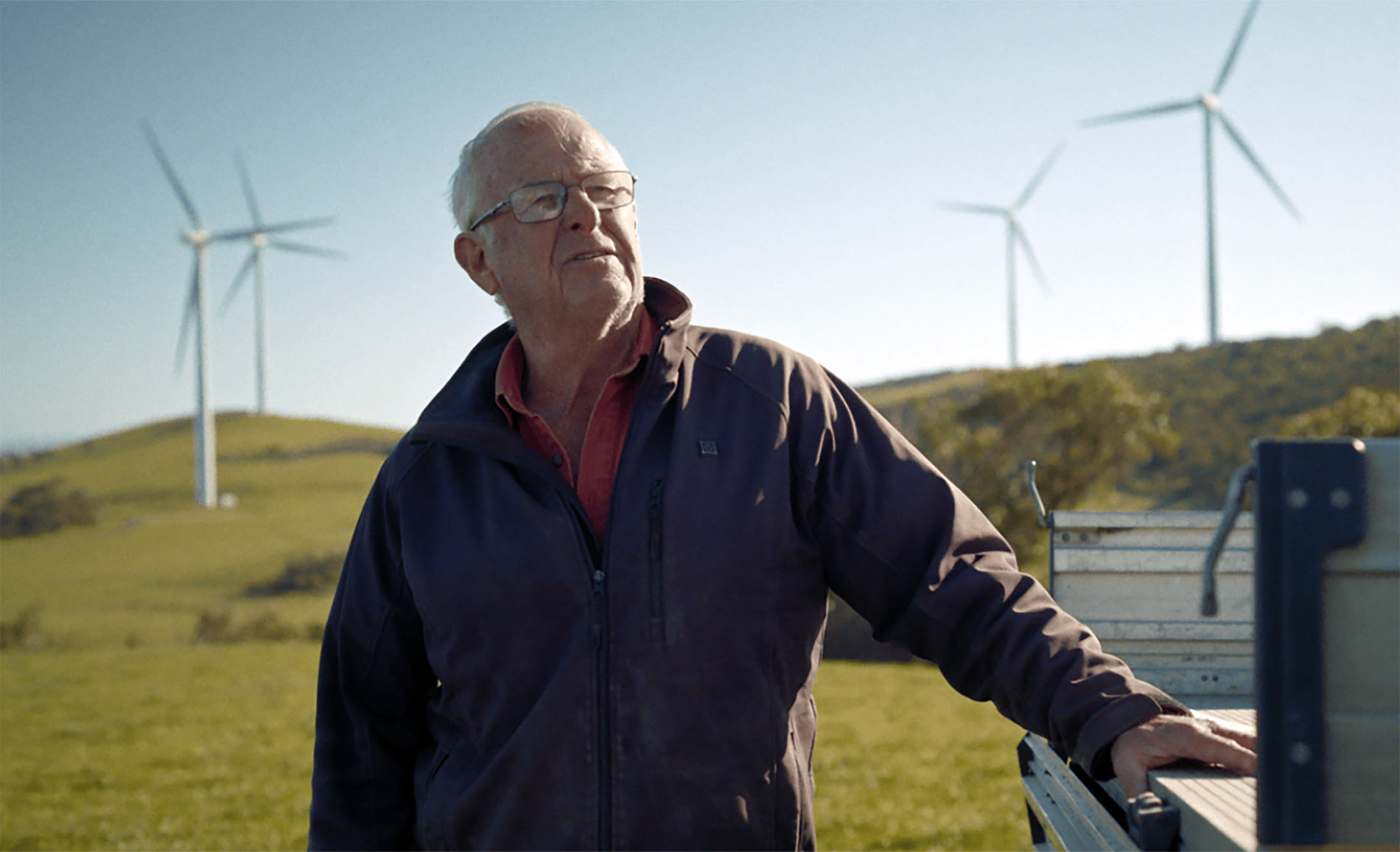
When sheep and cattle farmer Lindsay Marriott addressed the Senate committee on information integrity on climate and energy, he brought something crucial to the table: reality. His testimony painted a stark picture of how misinformation about renewable energy can tear apart rural communities and the significant personal cost it exacts on those caught in the crossfire.
Marriott and his family moved to their South Gippsland farm in 1983, taking on what he described as an “incredibly run-down” property with “some hills on it that were no good for anything.” Two decades later, a small Melbourne developer approached him about hosting wind turbines on those otherwise unproductive hills. What followed was a community division that still haunts him today.
“I went through a pretty intensive anti movement 20 years ago,” Marriott told senators. “Anti programs can’t be happy. They demand unhappiness, and they demand anger, and the anger develops into hatred and they can inspire people that otherwise would never think of doing the things they did.”
The opposition wasn’t just passionate disagreement, but a well-orchestrated campaign backed by “amazingly powerful people… very, very, very connected people.” Marriott recalled a “very high powered Victorian politician” telling him to “take a nip off,” while a “very high ranking federal Senator” assured him the project “would never happen.”
The social toll was devastating. “Every component of my life was attacked,” he testified. At the local store, “anyone who had anything to do with me was attacked verbally.” Even his livestock carrier “was told to ditch me.” Marriott characterizes the most aggressive activists as “suicide bombers” who “went out in the community, and then they would tackle anyone.”
Andrew Bray, National Director of RE-Alliance who also testified, confirmed this pattern is widespread. His organization’s submission warned of “coordinated misinformation campaigns… eroding public confidence in renewable energy across the country.” The impact goes beyond heated debate, with some farmers reportedly receiving death threats.
“Misinformation and disinformation… muddies and corrodes the fabric of community life,” the RE-Alliance submission states. “Constructive neighbourly disagreements… become impossible in this situation.”
Despite fierce opposition, the Bald Hills Wind Farm was ultimately built. Today, Marriott lives 600 meters from the nearest turbine, with ten turbines within two kilometers of his home and his bedroom facing the closest tower. The wind farm substation operates from the middle of his property, with workers coming and going daily.
His verdict after years of operation contradicts the dire predictions of opponents: “I can guarantee you 100% there is no negative impact of a wind farm. There’s no negative impact on the neighbours. There’s no negative impact on my farm.”
In fact, Marriott reports substantial benefits. “I’ve increased productivity, probably by 20% or more,” he said. “The income has totally helped me get through some very hard, difficult weather events and commodity price crashes.” The steady lease payments allowed him to hire a permanent worker, upgrade infrastructure, and invest in drought resilience measures crucial in an era of increasing climate volatility.
Concerned about wildlife impacts, Marriott began keeping a detailed diary of bird movements in 2015. His observations reveal a thriving ecosystem. “Each spring, there’s hundreds of Ibis that fly through my farm… They will fly under the turbines, around the turbines, over the turbines.” His property hosts “three or four hundred swans” grazing his pastures in winter, along with numerous other bird species.
He directly addressed one of the most common anti-wind claims: “I can look at you and say, we do not have birds killed regularly on the wind farm.” Marriott describes his property as a successful integration of native habitat, commercial agriculture, and renewable energy, noting that European turbine manufacturers have pointed to his farm as exemplifying “the three elements of a good environment.”
The wind farm has brought unexpected advantages beyond lease payments. Trained workers on site daily often spot calving issues with his livestock, local tradespeople have developed skills in turbine maintenance, and there’s been a positive economic ripple effect through the region.
RE-Alliance told the committee that while public support for renewables in regional Australia remains strong at 61%, this support is “fragile,” with many people wanting more trusted, local information about impacts. To counter misinformation, they propose establishing 50 independent regional energy hubs that could provide communities with reliable information and help them navigate renewable energy development.
Marriott’s closing message to senators was simple but powerful: “My lived experience is the opposite to the majority of talk. And I find it unbelievable that after all this time with so many wind farms operating, there’s still the nastiness and the anti and the absolute nonsense said about wind farms.”
His testimony underscores a critical reality for Australia’s energy transition: the gap between fearful rhetoric and lived experience on the ground is vast, and bridging that gap with factual information delivered by trusted local sources will be essential for rural communities navigating change.
Fact Checker
Verify the accuracy of this article using The Disinformation Commission analysis and real-time sources.

11 Comments
Sad to see misinformation causing such division in rural communities. Farmers like Lindsay Marriott provide valuable first-hand perspectives on the benefits and challenges of renewable energy projects. Open and honest dialogue is crucial to finding balanced solutions.
Agreed, the personal attacks on residents are particularly concerning. Maintaining civility and facts-based discussion is key, even on sensitive issues like this.
This is a tough situation. Renewable energy is important, but the human cost of divisiveness and personal attacks is concerning. Communities need to find ways to have open, respectful dialogues on these complex issues.
The Senate testimony from farmer Lindsay Marriott highlights the real human impact of misinformation campaigns around renewable energy projects. Communities need balanced, fact-based dialogue to navigate these complex issues.
Agreed. Developers and opponents alike have a responsibility to engage constructively, not resort to personal attacks and inflammatory rhetoric.
This is a complex issue without easy answers. It’s troubling to hear about the divisiveness and harassment in this rural community. Maintaining open and respectful dialogue is crucial as renewable energy projects move forward.
Interesting to see how a project like this wind farm can divide a community. Farmers like Marriott provide important on-the-ground perspectives that shouldn’t be dismissed or attacked.
It’s concerning to hear about the ‘anti-movement’ tactics that have emerged around this wind farm project. Misinformation and harassment campaigns can really undermine important community conversations.
Absolutely. Rural residents deserve to have their voices heard without fear of backlash. Developers need to engage transparently and address concerns thoughtfully.
The challenges described in this article underscore the need for balanced, fact-based approaches to renewable energy projects. Farmers like Marriott offer valuable on-the-ground perspectives that shouldn’t be dismissed or attacked.
Absolutely. Rural residents deserve to have their voices heard without fear of backlash. Developers and opponents must engage transparently and find common ground.