


Listen to the article
In a week marked by global events and political tensions, several misleading narratives gained traction on social media platforms, requiring fact-checking interventions from media organizations.
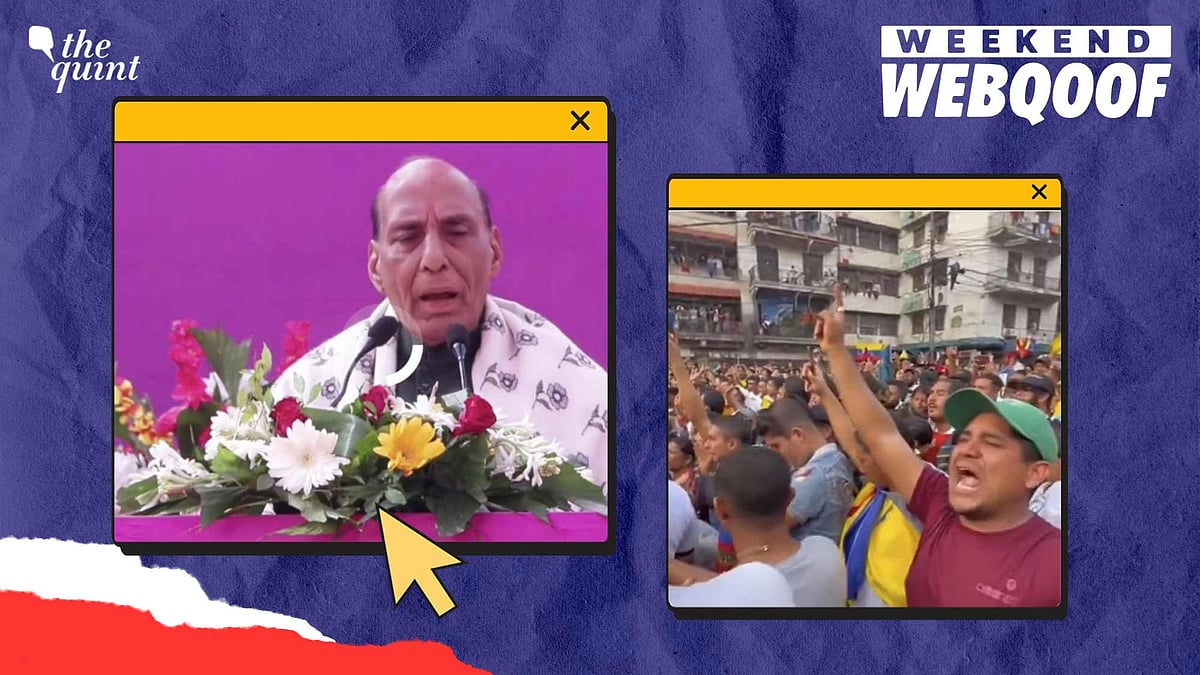
Among the most prominent fabricated content was an AI-generated image purporting to show Indian Defence Minister Rajnath Singh bowing before a portrait of Mughal Emperor Aurangzeb. The manipulated image spread rapidly across social media channels, particularly on X (formerly Twitter), where it sparked heated debates along religious and political lines.
Fact-checkers quickly identified telltale signs of AI manipulation in the image, including inconsistencies in lighting, unnatural proportions, and digital artifacts characteristic of generative AI technologies. The Defence Ministry subsequently issued a statement condemning the circulation of the doctored image, calling it “a malicious attempt to create discord and mislead the public.”
Meanwhile, international misinformation flourished around Venezuela’s political situation, with false claims regarding the country’s recent presidential election spreading widely. Social media platforms saw numerous posts alleging external interference and voting irregularities, many using outdated or completely unrelated images from other Latin American countries.
The misinformation spike coincided with heightened tensions in Venezuela following the contested election results, with both incumbent Nicolás Maduro and opposition leader María Corina Machado claiming victory. International observers and fact-checking organizations worked to separate legitimate concerns from fabricated narratives.
In the health sector, debunked claims about miracle cures and vaccine conspiracies continued to circulate, with particular focus on a video allegedly showing a “cancer cure” suppressed by pharmaceutical companies. The video, which accumulated millions of views across platforms, featured a speaker making unsubstantiated claims about a natural compound supposedly 10,000 times more effective than chemotherapy.
Medical experts and health authorities quickly refuted these claims, pointing out that the supposed treatment lacks any clinical evidence and has never passed rigorous scientific testing requirements. The World Health Organization issued a statement warning about the dangers of such misinformation, noting it could lead vulnerable patients to abandon proven treatments.
Technology-related misinformation also featured prominently, with false claims about smartphone security vulnerabilities causing alarm. One widely shared post suggested that a specific combination of keystrokes could trigger unauthorized access to banking applications, prompting cybersecurity experts to issue clarifications.
“These types of technologically implausible rumors emerge periodically and exploit public anxieties about digital privacy,” explained Dr. Aisha Rahman, a cybersecurity specialist at the Digital Rights Foundation. “The described ‘vulnerability’ contradicts basic principles of modern smartphone operating system architecture.”
The persistence of misinformation highlights the ongoing challenges faced by platforms, fact-checkers, and the public in navigating an increasingly complex information ecosystem. Social media companies continue to refine their approaches to content moderation, with mixed results.
Media literacy experts emphasize the importance of critical information consumption habits. “The sophistication of AI-generated content means we’re entering a new phase where visual verification becomes increasingly difficult for the average user,” noted Professor James Liu of the Media Studies Department at Northeastern University.
As AI technologies become more accessible and sophisticated, the boundary between authentic and manipulated content continues to blur, creating new challenges for maintaining information integrity in the digital public sphere.
Authorities have renewed calls for platform accountability and greater transparency in content amplification algorithms, as legislators in several countries consider regulatory frameworks to address the growing problem of synthetic media and coordinated misinformation campaigns.
Fact Checker
Verify the accuracy of this article using The Disinformation Commission analysis and real-time sources.

7 Comments
The political tensions and misinformation surrounding the Venezuelan election are a reminder of the complexity of global events. It’s important to seek out reliable sources and fact-based reporting to better understand the nuances of these situations.
As technology continues to evolve, the potential for abuse and the spread of misinformation also grows. Fact-checking and media literacy will be crucial going forward to ensure the public has access to accurate and trustworthy information.
The use of AI-generated imagery to create false narratives is quite concerning. It’s a good sign that the authorities are taking steps to address this issue and call out the manipulation. Maintaining vigilance and fact-checking will be key to combating the spread of misinformation.
The Venezuela election situation seems complicated, with claims of external interference. It’s important to rely on authoritative and impartial sources when trying to understand the nuances of these types of political events and tensions.
Agreed, navigating the landscape of information around events like the Venezuelan election can be challenging. Maintaining a critical eye and cross-referencing credible reporting is essential to cut through the noise of misinformation.
Interesting to see the use of AI-generated imagery being used to spread misinformation. While the technology is advancing, it’s important to be vigilant and fact-check content, especially anything politically charged. Glad to see the authorities quickly addressing the doctored image of the Indian defence minister.
Absolutely, the proliferation of AI-generated deepfakes is a real concern that needs to be addressed. Proactive fact-checking and public awareness are key to combating the spread of this type of manipulated content.