


Listen to the article
Sectarian Violence Fuels Online Hate and Misinformation in Southern Syria
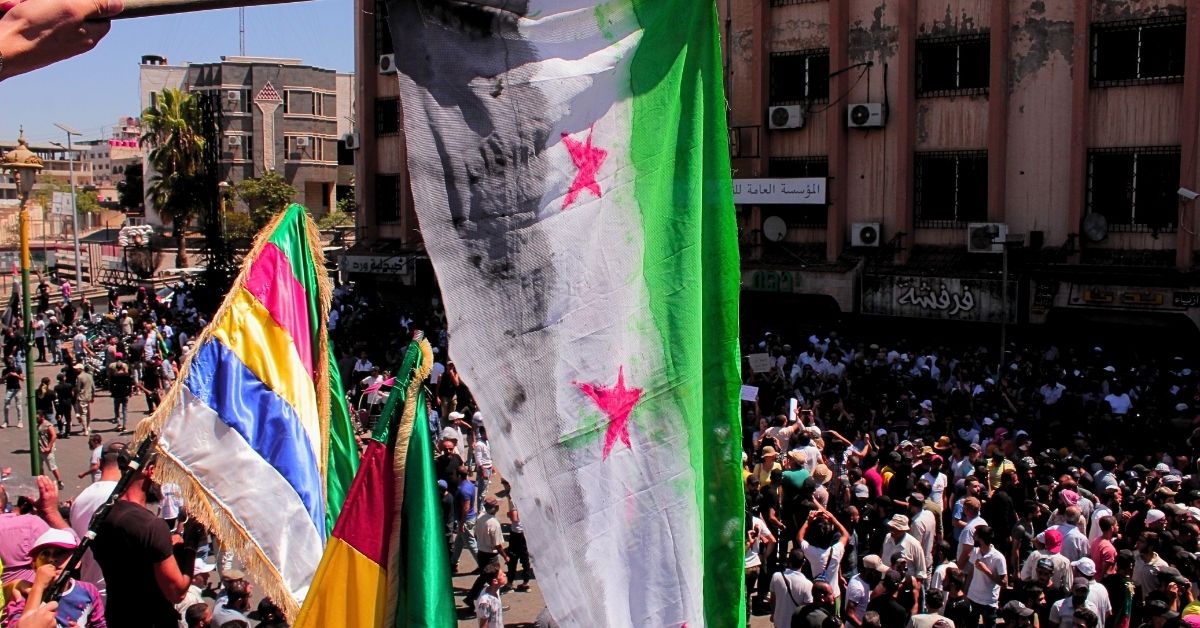
Clashes between local militias and state-affiliated militants in the southern Syrian city of Suweyda have triggered a surge in sectarian hatred and misinformation online, according to a new analysis by the Institute for Strategic Dialogue (ISD).
The violence, which erupted in July 2025, has been accompanied by a flood of hate speech targeting the Druze community, an Arabic-speaking ethnoreligious minority that forms the majority in the Suweyda region. Researchers found that online hate speech has directly contributed to real-world violence in several documented instances.
“What we’re seeing is a dangerous cycle where online rhetoric is fueling offline violence, which then generates more inflammatory content,” said a spokesperson from the ISD research team. “International actors are playing a significant role in amplifying these divisive narratives.”
Despite a roadmap toward peace signed in September by the US envoy to Syria alongside Syrian and Jordanian foreign ministers, the ceasefire established in July remains fragile. Ongoing clashes continue to spark hatred and false information online.
According to the ISD’s analysis of 34,030 posts on X (formerly Twitter) between March and September 2025, spikes in anti-Druze rhetoric consistently correlated with major events such as the ceasefire agreement and Israeli strikes in Syria. Of the 100 most reshared posts analyzed, 68% contained outright hate or broader anti-Druze narratives.
The most prevalent accusation portrayed the Druze as “foreign agents” of Israel, followed by claims labeling them as traitors, non-Muslims, or non-indigenous to Syria. Some posts called for boycotting all Druze, while others used dehumanizing language comparing them to animals.
Surprisingly, accounts outside Syria generated much of this hate speech. Users geolocated in Saudi Arabia accounted for 24% of anti-Druze mentions, followed by Syria at 15% and the United States at 7%. This indicates that international Arabic-language voices played a more significant role in driving anti-Druze hatred than local Syrian accounts.
Local fact-checking organizations have documented numerous instances of misinformation polluting online discourse about the violence. Misleading videos and photos often include images from other conflicts, such as the Syrian civil war or Israeli military actions following the October 7 attacks. Many such posts remain online months later with thousands of likes.
The violence itself has had devastating consequences. According to the Syrian Observatory for Human Rights, more than 2,000 people have died, including at least 817 executions. Several hundred civilians, both Druze and Bedouin, have been kidnapped, with most reportedly still in captivity. An estimated 192,000 people remain displaced amid frequent electricity outages and water shortages.
Suweyda has been largely autonomous during Syria’s civil war, which began in 2011 and ended when a coalition led by Hayat Tahrir al-Sham toppled Bashar Assad’s regime in 2024. The recent clashes have amplified mistrust of the Syrian government among the Druze population, with many now preferring autonomy in a federal system, while a minority call for separatism.
Artificial intelligence has further complicated the information landscape. Local fact-checkers identified AI-generated disinformation targeting Druze populations, including a fabricated video featuring Druze spiritual leader Hikmat al-Hijri supposedly calling on gunmen to surrender their weapons and apologizing for his actions.
International organizations, including the UN, have expressed concern about social media’s role in stoking tensions. A UN report from August claimed that “hateful rhetoric on social media portraying Druze as traitors and infidels to be killed, and calling for the abduction and enslavement of Druze women” had contributed to violence.
The ISD recommends educational campaigns to help the public recognize extremist rhetoric and misinformation, as well as engagement with local civil society actors to build community resilience. They also stress the importance of sustained funding for independent fact-checking organizations that play a crucial role in this complex information environment.
As Syria continues its difficult post-war transition, distinguishing fact from fiction—and rejecting hateful narratives, particularly calls for violence—remains essential for safeguarding the rights and dignity of all Syrian citizens and preserving the unity of the Syrian state.
Fact Checker
Verify the accuracy of this article using The Disinformation Commission analysis and real-time sources.

35 Comments
Interesting update on Violence in Southern Syria Sparks Anti-Druze Sentiment and Online Misinformation. Curious how the grades will trend next quarter.
Good point. Watching costs and grades closely.
Good point. Watching costs and grades closely.
Nice to see insider buying—usually a good signal in this space.
Good point. Watching costs and grades closely.
Good point. Watching costs and grades closely.
Interesting update on Violence in Southern Syria Sparks Anti-Druze Sentiment and Online Misinformation. Curious how the grades will trend next quarter.
Good point. Watching costs and grades closely.
Good point. Watching costs and grades closely.
If AISC keeps dropping, this becomes investable for me.
Good point. Watching costs and grades closely.
Exploration results look promising, but permitting will be the key risk.
Good point. Watching costs and grades closely.
Good point. Watching costs and grades closely.
Exploration results look promising, but permitting will be the key risk.
Good point. Watching costs and grades closely.
Production mix shifting toward News might help margins if metals stay firm.
Good point. Watching costs and grades closely.
Good point. Watching costs and grades closely.
Uranium names keep pushing higher—supply still tight into 2026.
Good point. Watching costs and grades closely.
Good point. Watching costs and grades closely.
The cost guidance is better than expected. If they deliver, the stock could rerate.
Silver leverage is strong here; beta cuts both ways though.
Good point. Watching costs and grades closely.
If AISC keeps dropping, this becomes investable for me.
Good point. Watching costs and grades closely.
Good point. Watching costs and grades closely.
Production mix shifting toward News might help margins if metals stay firm.
Good point. Watching costs and grades closely.
Nice to see insider buying—usually a good signal in this space.
The cost guidance is better than expected. If they deliver, the stock could rerate.
Good point. Watching costs and grades closely.
Good point. Watching costs and grades closely.
Interesting update on Violence in Southern Syria Sparks Anti-Druze Sentiment and Online Misinformation. Curious how the grades will trend next quarter.