


Listen to the article
CDC’s Shift Away from Universal Flu Vaccines for Children Sparks Public Health Debate
A significant revision to the U.S. childhood immunization schedule has ignited intense debate among medical professionals, with influenza vaccination for children being downgraded from a universal recommendation to a shared clinical decision-making approach.
The change, recently announced by the Department of Health and Human Services (HHS), represents an attempt to align American vaccination policies with Denmark’s approach—a move that has left many public health experts concerned about potential consequences for children’s health.
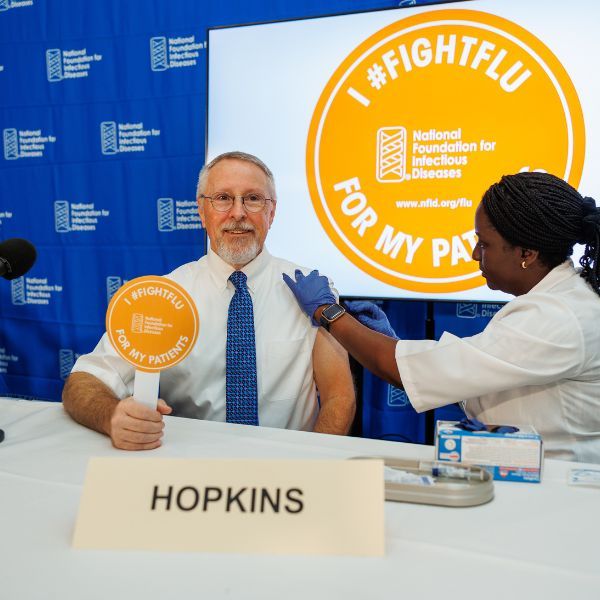
Dr. Robert H. Hopkins, Jr., medical director of the National Foundation for Infectious Diseases, expressed serious reservations about the policy shift in an interview with Infection Control Today.
“My initial reaction is, ‘Oh, my goodness,'” Hopkins said. “It wasn’t entirely unexpected. This was telegraphed just before the holidays.”
Hopkins emphasized that comparing the U.S. to Denmark overlooks crucial differences between the two countries. “Denmark, a small country about the size of Maryland, has universal health care, guaranteed parental leave when they have new children, guaranteed leave when children are sick, and very robust disease surveillance systems,” he explained. “Which of those do we have in the United States? Zero.”
The policy shift raises questions about why Denmark was chosen as a model. Hopkins speculated that officials likely selected Denmark because it has good health outcomes despite having fewer recommended vaccines. However, he stressed that the U.S. vaccination schedule was previously designed based on specific risks facing American children.
Critics of the change worry that reducing routine influenza vaccination recommendations could send the wrong message to families about prevention importance. This comes at a particularly concerning time, as the 2023-2024 flu season was especially severe.
“In 2023-2024, we had a severe influenza season. We had more pediatric deaths from influenza than we’ve had since the H1N1 swine flu in 2009,” Hopkins noted. “Why take a chance?”
The policy change has already sparked public misinformation. When asked about common misconceptions, Hopkins addressed several myths circulating on social media. Regarding claims that flu vaccines don’t work for current strains, he explained: “Even if the match is imperfect, as we know the H3N2 is this year, you get some degree of protection. Some protection is better than zero.”
He also rejected the notion that healthy people don’t need flu shots. “Healthy people are hospitalized every day with influenza. Healthy people die from influenza, not just elderly. You may have heard of the 16-year-old young lady that passed away over the weekend. I believe it was in Ohio. She was a healthy, active teenager and died from the flu.”
Hopkins expressed particular concern about the broader pattern of reducing vaccine recommendations. Beyond influenza, changes affect recommendations for meningococcal vaccines, hepatitis B neonatal vaccination, hepatitis A vaccine, and RSV protection for newborns.
“Why remove the RSV monoclonal antibody from newborns, which has reduced the hospitalization rate of children in the first complete season by 28 to 43%? And why put more children at risk from influenza and COVID-19?” he asked. “Because families are now hearing, ‘Well, this must not be important.’ If it’s not routine, we’re putting children at risk.”
Public health experts worry these changes could have far-reaching consequences for disease prevention. From a cost perspective, Hopkins also challenged the notion that vaccines represent a “money grab” by pharmaceutical companies. “Is it more expensive for your health insurer to pay $20 for your flu vaccine or $10,000 for an ICU stay?”
As the debate continues, Hopkins urged health professionals to maintain respectful conversations with patients and advocate for public health. “Our motivation is very much like most people’s—a healthy life,” he said. “We have to be advocates for the health of our patients, and that’s where all of our efforts need to be aligned.”
Fact Checker
Verify the accuracy of this article using The Disinformation Commission analysis and real-time sources.

7 Comments
Interesting development on vaccine policies. I can see valid concerns about potential unintended consequences, like increased misinformation. Aligning with Denmark’s approach may work for them, but the US healthcare system is quite different. Curious to see how this plays out.
You raise a good point. Differences between healthcare systems and policies can make direct comparisons tricky. Hopefully the policy shift is well-researched and implemented to prioritize public health.
Vaccine policies are always a sensitive topic. While harmonizing with Denmark’s approach may seem logical, the vastly different healthcare systems and contexts need to be carefully weighed. Hopefully the decision-makers have thoroughly analyzed the potential impacts, both positive and negative, on public health.
The shift away from universal flu vaccines for children is a notable policy change. While it may align with Denmark’s approach, the public health implications need to be carefully considered given the distinct healthcare systems and contexts. I hope the decision is backed by strong evidence.
Agreed, the potential consequences for children’s health are concerning. Robust public health data and analysis should guide these types of policy decisions, especially when they involve vulnerable populations.
The shift away from universal flu vaccines for children is certainly thought-provoking. I can understand the desire to align with Denmark’s policies, but the public health implications in the US context need to be the top priority. Curious to see how this plays out and what the real-world impacts are.
Hmm, this feels like a delicate balance between aligning with international best practices and accounting for domestic realities. I can see valid arguments on both sides. Hoping the final policy prioritizes science-based public health outcomes over political considerations.