


Listen to the article
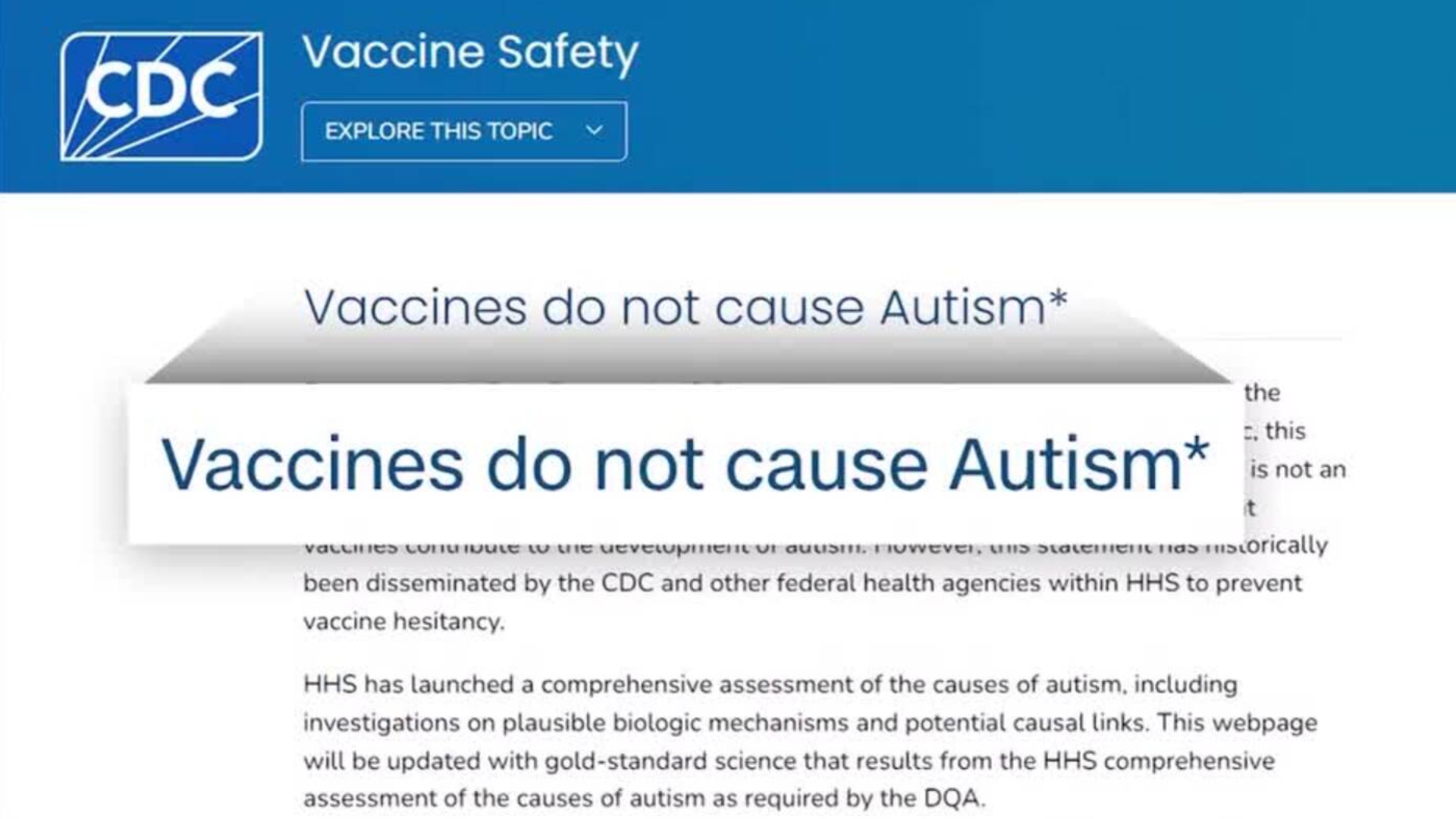
The U.S. Centers for Disease Control and Prevention (CDC) has come under scrutiny after scientifically validated information on its website was reportedly replaced with content promoting anti-vaccine viewpoints, specifically regarding the debunked theory linking vaccines to autism.
The alteration of content on the CDC’s official website represents a significant departure from the agency’s long-standing position that is backed by extensive scientific research. For decades, the CDC has maintained that vaccines do not cause autism, a conclusion supported by numerous large-scale, peer-reviewed studies conducted across the globe.
Public health experts express concern that such misinformation appearing on an authoritative government health platform could undermine vaccination efforts nationwide. The CDC serves as America’s premier public health agency, and information published on its website is widely referenced by healthcare providers, policymakers, and the general public seeking reliable medical guidance.
“The scientific consensus on vaccine safety is exceptionally strong,” said Dr. Angela Rasmussen, a virologist at the Georgetown Center for Global Health Science and Security, when asked about the situation. “Introducing debunked theories on an official government platform creates unnecessary confusion and puts public health at risk.”
The controversy emerges amid already heightened vaccine hesitancy in the United States. Childhood vaccination rates have declined in recent years, with the COVID-19 pandemic further disrupting routine immunization schedules. Public health officials worry that misinformation on official channels could accelerate this troubling trend.
The alleged website changes touch upon a particularly sensitive topic in vaccine discourse. The supposed vaccine-autism link gained prominence in 1998 following a study published by Andrew Wakefield in The Lancet. That research was later retracted after being found fraudulent, and Wakefield was stripped of his medical license. Despite this, the debunked theory continues to circulate in anti-vaccine communities.
Since then, multiple comprehensive studies involving millions of children have found no connection between vaccines and autism spectrum disorders. A particularly definitive 2014 meta-analysis published in Vaccine examined data from studies covering more than 1.2 million children and found no relationship between vaccination and autism.
The website alteration raises questions about oversight and content management at federal health agencies. The CDC typically maintains rigorous review processes for public-facing information, with content vetted by multiple scientific experts before publication.
Health communication experts emphasize that public trust in health authorities depends on consistent, evidence-based messaging. When official sources appear to contradict established scientific consensus, it can create lasting damage to institutional credibility.
“Government health websites serve as critical infrastructure during public health emergencies,” noted Dr. Michelle Williams, Dean of the Harvard T.H. Chan School of Public Health. “They must remain steadfast in their commitment to evidence-based information.”
The timing of these content changes is particularly consequential as the U.S. approaches the annual flu vaccination season and continues efforts to increase COVID-19 vaccination rates. Public health campaigns rely heavily on clear, consistent messaging from authorities like the CDC.
Congressional oversight committees have historically taken interest in ensuring that federal agencies maintain scientific integrity in their public communications. It remains to be seen whether this incident will prompt formal investigation or hearings.
The CDC has not yet issued an official statement addressing the reported website changes or explaining how anti-vaccine content appeared on their platform. Health advocacy groups are calling for immediate restoration of the scientifically accurate information and an investigation into how the alterations occurred.
For parents and the public seeking reliable information on vaccine safety, health experts recommend consulting with healthcare providers and referring to peer-reviewed scientific literature that consistently supports the safety and efficacy of vaccines in preventing serious diseases without increasing autism risk.
Fact Checker
Verify the accuracy of this article using The Disinformation Commission analysis and real-time sources.

18 Comments
This is a very worrying development. The CDC’s website must provide accurate, evidence-based information to the public. Allowing vaccine misinformation to be published undermines the public’s trust in a critical public health institution. Urgent action is needed.
I agree, the CDC cannot afford to lose credibility on vaccine safety. They must act quickly to remove any misleading content and reaffirm their commitment to science-based public health guidance.
Vaccines are one of the most important public health innovations, saving millions of lives. It’s deeply concerning to see the CDC’s website hosting content that contradicts the overwhelming scientific consensus on vaccine safety. This must be addressed swiftly.
As a trusted government health agency, the CDC should be a bastion of scientific integrity. Seeing vaccine misinformation on their website is very alarming and could have dangerous consequences for public health. They need to rectify this issue immediately.
This is a deeply concerning development. The CDC is a trusted authority on public health, and their website should be a bastion of scientifically validated information, not a platform for vaccine misinformation. Urgent action is required to address this issue and restore public confidence.
As a leading public health agency, the CDC has a responsibility to uphold the highest standards of scientific integrity. Hosting vaccine misinformation on their official website is a serious breach of public trust and could undermine critical vaccination efforts. Urgent action is needed to rectify this issue.
I completely agree. The CDC must act swiftly to remove any misleading content and reaffirm their commitment to evidence-based public health guidance. Allowing vaccine misinformation to spread on their platform is unacceptable.
It is deeply troubling that the CDC’s website, a trusted source of medical information, is hosting content promoting the debunked vaccine-autism link. This is a serious breach of public trust and could have far-reaching negative impacts on vaccination rates and public health.
This is deeply concerning. The CDC’s website should be a bastion of evidence-based, scientifically validated information, not a platform for vaccine misinformation. Allowing such content to be published undermines public confidence and could jeopardize vaccination efforts. Urgent action is required.
I agree, the CDC needs to act swiftly to remove any misleading vaccine information from their website and reaffirm their commitment to providing the public with accurate, science-based health guidance.
This is troubling. The CDC should be a reliable source of factual, science-based information on vaccines, not a platform for misinformation. Promoting anti-vaccine views on their official website is very worrying.
Absolutely. The CDC needs to urgently correct this and reinforce their commitment to evidence-based public health guidance. Allowing vaccine misinformation to spread undermines critical vaccination efforts.
Vaccines are one of the most important public health tools we have, and the CDC’s website should be a reliable source of factual information on their safety and efficacy. Seeing vaccine misinformation on their platform is extremely worrying and must be addressed immediately.
Concerning to see vaccine misinformation on the CDC website, a trusted public health authority. Robust scientific evidence has consistently shown vaccines are safe and effective. Undermining public confidence in vaccines could have serious public health consequences.
I agree, the CDC must maintain the highest standards of scientific integrity on their website. Spreading vaccine misinformation, even unintentionally, is a serious breach of public trust.
The spread of vaccine misinformation, even on official government health websites, is a major concern. The CDC must uphold the highest standards of scientific integrity and ensure their online content aligns with the overwhelming evidence on vaccine safety and efficacy.
Absolutely. The CDC has a responsibility to the public to provide reliable, fact-based guidance on vaccines. Allowing anti-vaccine views to be published on their website is unacceptable and needs to be addressed urgently.
As a leading public health authority, the CDC must be vigilant in maintaining the scientific accuracy of the information on their website. Vaccine misinformation, even inadvertently published, can have severe public health consequences and erode trust in critical institutions.