


Listen to the article
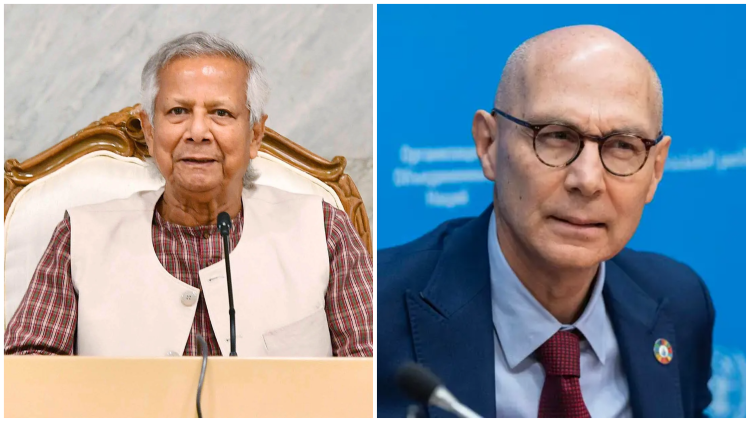
UN human rights chief Volker Türk has pledged his office’s support to combat the “flood of misinformation” threatening Bangladesh’s upcoming February 12 elections, following concerns raised by Chief Adviser Professor Muhammad Yunus during a recent phone conversation.
“There has been a flood of misinformation surrounding the elections. It is coming from both foreign media and local sources,” Prof Yunus told the UN High Commissioner, according to a statement from the Chief Adviser’s Press Wing. “They have flooded social media with fake news, rumors and speculation. We are concerned about the impact this may have on the elections.”
Türk acknowledged the severity of the problem, responding that his office was aware of these challenges. “There is a lot of misinformation. We will do whatever is needed,” he assured, committing that the UN rights agency would collaborate closely with Bangladesh to address the issue.
The conversation between the two leaders came at a critical juncture for Bangladesh, which is preparing for crucial elections following a period of significant political transition. The interim government led by Prof Yunus has been working to establish democratic reforms after the fall of what many critics described as the autocratic regime of former Prime Minister Sheikh Hasina, which governed from 2009 until mid-2024.
During their discussion, the leaders addressed several key governance issues beyond election misinformation, including the upcoming referendum, institutional reform initiatives, and the work of the Enforced Disappearance Commission, which has been investigating alleged human rights abuses under the previous administration.
Türk emphasized the importance of establishing “a truly independent” National Human Rights Commission (NHRC) to continue addressing cases of enforced disappearances, a persistent human rights concern in Bangladesh that has drawn international attention in recent years.
Prof Yunus assured the High Commissioner that the NHRC ordinance has already been promulgated and that a new commission would be established before the February elections. “We will do it before we leave,” the Chief Adviser affirmed, underscoring his interim government’s commitment to institutional reform before the transition to an elected government.
The Chief Adviser also revealed that he had shared the final report of the Enforced Disappearance Commission with Türk, describing it as a “crucial document” for ensuring accountability and justice for victims of enforced disappearances during the previous administration’s tenure.
The UN human rights chief commended Prof Yunus for his leadership over the past eighteen months, noting that his office had supported the work of the Enforced Disappearance Commission and would continue to provide assistance moving forward.
Election misinformation has become an increasingly troubling phenomenon globally, with social media platforms often serving as vehicles for the rapid spread of false information that can undermine electoral processes. Bangladesh’s situation reflects a broader international trend of digital disinformation targeting democratic institutions.
The collaboration between Bangladesh’s interim government and the UN human rights office represents an important step in addressing this challenge, particularly in a nation still navigating its path toward democratic consolidation after a prolonged period of authoritarian rule.
SDG Coordinator and Senior Secretary Lamiya Morshed was also present during the conversation, highlighting the continued engagement between Bangladesh and international organizations on governance and human rights issues.
As the February 12 election date approaches, the effectiveness of these anti-misinformation efforts will likely play a significant role in determining whether Bangladesh can conduct a free, fair, and credible electoral process that reflects the genuine will of its citizens.
Fact Checker
Verify the accuracy of this article using The Disinformation Commission analysis and real-time sources.

10 Comments
This is a concerning situation. Election misinformation is a growing global challenge that requires a coordinated response. I hope the UN can work effectively with Bangladesh to address the specific issues they are facing.
Absolutely. Tackling election misinformation should be a top priority to protect the will of the people. The UN’s support could make a real difference.
Combating misinformation around elections is a critical issue. The UN’s support could help ensure a fair and transparent process in Bangladesh. Fact-checking and public awareness campaigns will be key to countering false narratives.
I agree, misinformation can seriously undermine the integrity of elections. The UN’s involvement is a positive step towards safeguarding the democratic process in Bangladesh.
It’s good to see the UN rights chief taking this issue seriously. Ensuring the credibility of elections is vital for Bangladesh’s democratic development. I’m curious to learn more about the specific tactics they plan to employ.
This is an important issue that goes beyond Bangladesh. Election misinformation is a threat to democracy worldwide. I hope the UN’s efforts in Bangladesh can serve as a model for addressing this problem in other countries.
Combating election misinformation is a complex challenge, but the UN’s support could make a real difference in Bangladesh. I’m curious to see what specific strategies and tools they plan to employ.
Absolutely. Maintaining public trust in the electoral process is critical. The UN’s expertise and resources could be invaluable in helping Bangladesh tackle this issue effectively.
The flood of misinformation around elections is a worrying trend globally. I’m glad to see the UN taking action to support Bangladesh in combating this challenge. Fact-based reporting and public education will be crucial.
Agreed. Safeguarding the integrity of elections should be a top priority. The UN’s involvement could help strengthen democratic institutions in Bangladesh.