


Listen to the article
Journalists Equipped with Digital Verification Skills to Combat AI-Driven Misinformation
In response to the growing challenge of AI-driven fake news, the University of Education, Winneba (UEW), in collaboration with Penplusbytes and the Centre for Communication Education Research, has trained journalists on advanced fact-checking and digital verification techniques.
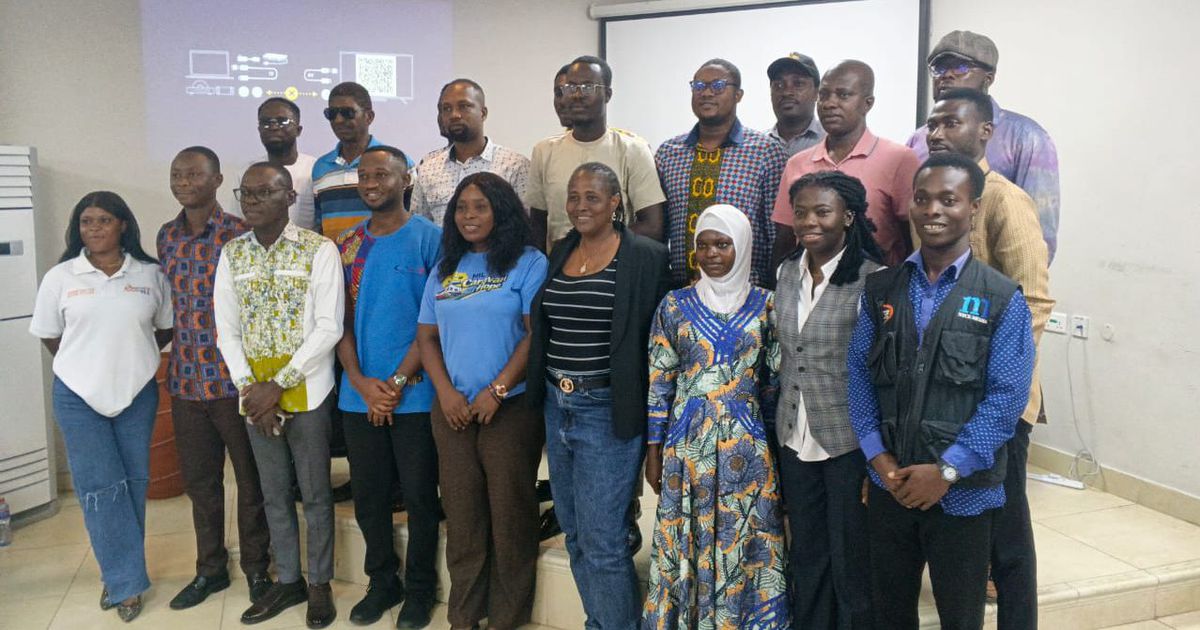
The capacity-building workshop, held on May 7, 2026, brought together approximately 30 media practitioners from across the Central Region of Ghana, representing 12 different media outlets. The event focused on equipping journalists with essential skills to identify and counter the increasing spread of misinformation and manipulated content online.
“Society has evolved and journalists must also evolve in the way they work,” said Emmanuel Koranteng Asomani, Programme Manager at Penplusbytes, during the training session. “It is important that media practitioners equip themselves with digital tools that will help them verify information and do their work effectively.”
The workshop, themed “Tackling Information Disorder, AI-Driven Fake News, and Ethical Journalism through Media and Information Literacy Skills,” addressed the growing challenge of distinguishing between authentic and manipulated information in today’s digital landscape. Participants received hands-on training in using various verification tools including Google Reverse Image Search, TinEye, and Yandex, which can help journalists authenticate images and online content before publication.
Professor Gifty Appiah-Adjei, Head of Journalism and Media Studies at UEW, emphasized the importance of developing stronger information literacy skills among journalists. “We want participants to assess information responsibly, verify sources before using information and evaluate the credibility of content before creating stories for audiences to consume,” she stated.
The initiative comes at a critical time when artificial intelligence technologies have made it increasingly difficult to differentiate between real and fake content. Deepfakes, manipulated videos, and AI-generated text have created new challenges for media professionals striving to deliver accurate information to the public.
Dr. Rainbow Sackey, one of the organizers, expressed concern about how some journalists rely on unverified social media content as sources for news stories. “Today, when you go online or even listen to traditional media, it is becoming difficult to determine whether information is true or false,” he noted.
The decision to host the workshop in the Central Region was strategic, according to organizers, who wanted to strengthen local media capacity outside of Accra, Ghana’s capital. This decentralized approach aims to build a nationwide network of journalists equipped with the necessary skills to combat misinformation.
Penplusbytes, a leading digital rights and media development organization, has spent more than two decades promoting media and information literacy as a strategy to combat misinformation across different segments of Ghanaian society. The organization’s work has become increasingly relevant as social media platforms and digital technologies continue to reshape how people consume and interact with information.
The Dean of the School of Communication and Media Studies, Professor Albert A. Wornyo, hosted the event, highlighting the role of academic institutions in promoting credible journalism and professional media development. The training featured practical sessions on fact-checking, digital verification, ethical reporting, and responsible content creation.
Participants were encouraged to extend the knowledge gained by training other journalists within their respective newsrooms to collectively combat misinformation in Ghana. Many described the workshop as timely and relevant, calling for more such capacity-building programs to strengthen fact-checking, digital verification, and ethical reporting skills among media practitioners.
As Ghana approaches various electoral cycles and public discourse intensifies on social media platforms, the ability of journalists to verify information and identify manipulated content becomes increasingly crucial for maintaining public trust in the media. The collaboration between UEW, Penplusbytes, and the Centre for Communication Education Research represents a significant step toward building a more resilient media ecosystem capable of withstanding the challenges posed by AI-driven misinformation.
The workshop reflects growing efforts by academic institutions and media development organizations to strengthen ethical journalism practices in an era when distinguishing between truth and falsehood requires increasingly sophisticated technical skills and professional diligence.
Fact Checker
Verify the accuracy of this article using The Disinformation Commission analysis and real-time sources.

9 Comments
This is a much-needed initiative to equip journalists with the skills to combat the growing problem of AI-generated misinformation. Verifying digital content and fact-checking are crucial in today’s media landscape.
Training journalists on advanced digital verification techniques is a smart move. AI-driven fake news is a major challenge, and building media literacy is key to tackling it.
Agreed. Journalists need these tools to cut through the noise and deliver reliable, factual reporting to the public.
Combating AI-generated misinformation is a growing challenge for the media industry. I’m glad to see UEW and Penplusbytes taking action to equip journalists with the necessary skills.
It’s great to see UEW and Penplusbytes collaborating on this important initiative. Combating misinformation should be a top priority for the media industry.
This training program comes at a critical time. As AI capabilities advance, the spread of manipulated content online poses a serious threat to public discourse. Kudos to the organizers for addressing this head-on.
The rise of AI-driven fake news is a worrying trend. This training program seems like a proactive step to empower journalists and protect the public from the spread of misinformation.
Equipping journalists with digital verification skills is a smart investment. Misinformation can have serious societal impacts, so this capacity-building effort is much needed.
Absolutely. Journalists play a vital role in maintaining the integrity of information, and this training will strengthen their ability to do so.