


Listen to the article
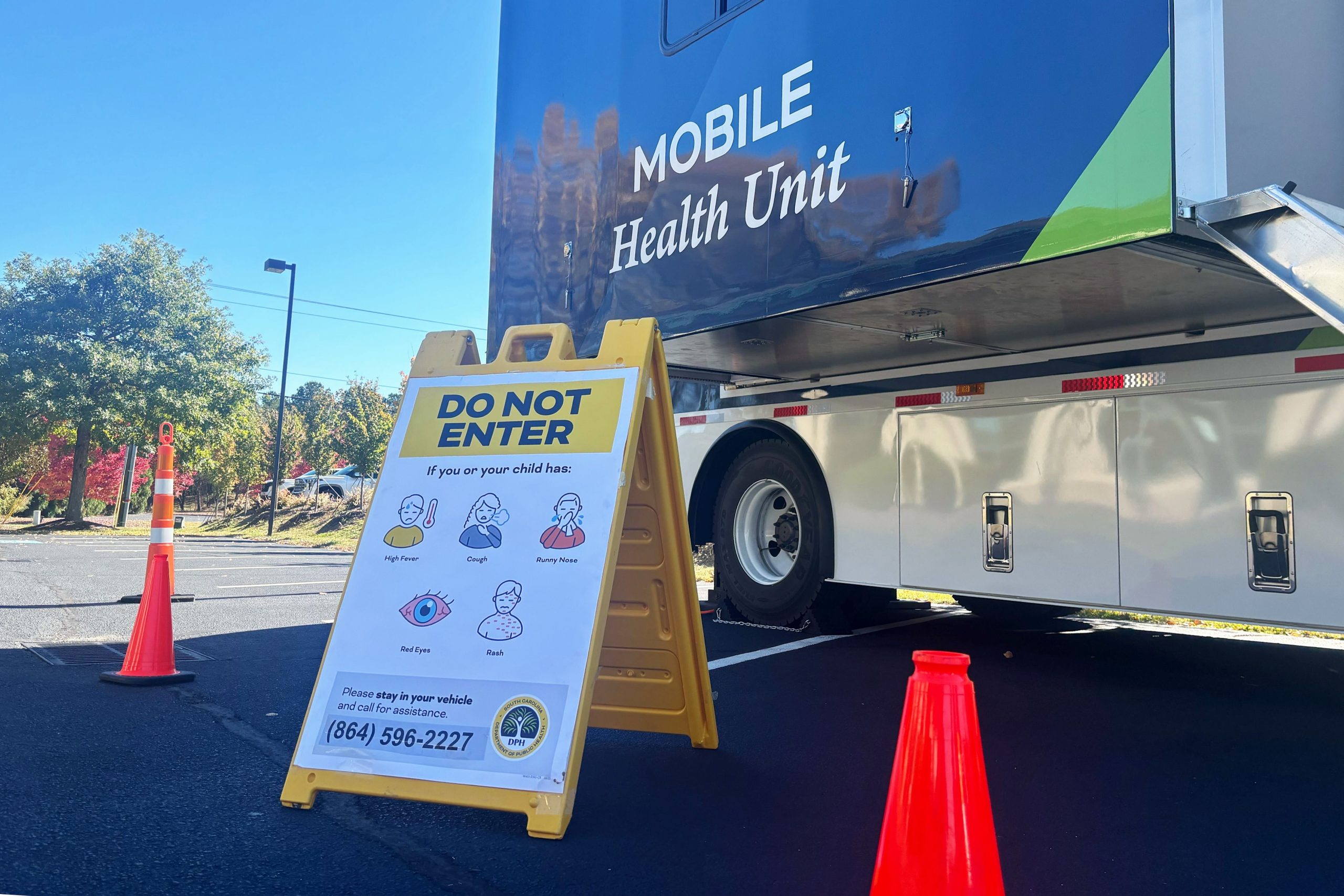
In early November, South Carolina’s Department of Public Health set up a pop-up clinic in a library parking lot in Boiling Springs, offering free measles vaccines amid an outbreak that has infected more than 50 people since October. Despite the growing crisis, only one person showed up that Monday afternoon.
“It’s progress. That progress is slow,” said Linda Bell, the state epidemiologist. “We had hoped to see a more robust uptake than that in our mobile health units.”
South Carolina’s outbreak represents a troubling national trend. The Centers for Disease Control and Prevention has recorded more than 1,700 measles cases and 45 outbreaks in 2025, with the largest occurring in Texas, where hundreds were infected and two children died. Other significant outbreaks have emerged in New Mexico, Arizona, and Kansas.
For the first time in over two decades, the United States is on track to lose its measles “elimination status,” a designation indicating that outbreaks are rare and quickly contained.
Spartanburg County, located in South Carolina’s Upstate region, has historically maintained one of the state’s lowest vaccination rates. Nearly 6,000 children in the county’s schools—10% of total enrollment—either received exemptions from required vaccinations or failed to meet vaccine requirements last year.
“This was true even before COVID,” noted Chris Lombardozzi, senior vice president with Spartanburg Regional Healthcare System. He attributes the county’s low vaccination rate to misinformation spread on social media and by “a variety of nonmedical leaders over the years.”
The pandemic exacerbated existing skepticism. Josh Michaud, associate director for global and public health policy at KFF, explained that fear and misinformation surrounding COVID vaccines “threw gasoline on the fire of people’s vaccine skepticism,” with that wariness spreading to childhood vaccines that historically faced less controversy.
In Spartanburg, the percentage of students with required immunizations fell from 95.1% to 90% between the 2020-21 and 2024-25 academic years. Public health officials maintain that a minimum 95% vaccination rate is necessary to prevent significant measles spread.
South Carolina’s outbreak has been largely linked to Global Academy of South Carolina, a public charter school where only 17% of the 605 enrolled students provided documentation showing they had received required vaccinations this school year.
Religious exemptions for vaccines have increased dramatically across South Carolina, particularly in the Upstate region, where they’ve grown sixfold over the past decade. During the 2013-14 school year, 2,044 students in the Upstate received religious exemptions. By fall 2024, that number had jumped to more than 13,000.
The state’s religious exemption process requires only a notarized form without needing a doctor’s note or disclosure of specific religious beliefs.
The resurgence of measles coincides with the rise of “health freedom” ideology among conservative politicians. Health and Human Services Secretary Robert F. Kennedy Jr. has sent mixed messages, occasionally endorsing the MMR vaccine while also making statements that cast doubt on vaccine safety and falsely linking vaccines to autism.
“What would I do if I could go back in time and I could avoid giving my children the vaccines that I gave them?” Kennedy said in a 2020 podcast. “I would do anything for that. I would pay anything to be able to do that.”
HHS spokesperson Emily Hilliard told reporters that Kennedy is “pro-safety, pro-transparency, and pro-accountability” and that the department is working with state and local partners in South Carolina to provide support during the outbreak.
The political climate has created what Michaud describes as a “chilling effect” on public health messaging. South Carolina Governor Henry McMaster, a Republican, has downplayed concerns, stating that measles “is a dangerous disease, but in terms of diseases, it’s not one that we should panic about.” He has also firmly stated, “We’re not going to have mandates.”
The state’s public health response to measles has been notably more subdued compared to its COVID vaccine outreach efforts. In 2021, the agency partnered with breweries for a “Shot and a Chaser” campaign offering free beer or soda to those who received COVID vaccines. By contrast, the measles vaccine clinic at Boiling Springs Library featured minimal signage and no incentives.
Edward Simmer, interim director of the Department of Public Health, has faced political obstacles. In April, Republican lawmakers voted against his permanent confirmation partly due to his past support for COVID vaccines and masking policies. One lawmaker specifically criticized the agency for the “Shot and a Chaser” campaign.
Despite these challenges, health officials note some positive signs. The agency’s tracking system shows that providers across Spartanburg County administered more than twice as many measles vaccines in October as they did a year ago. Through mid-November, the Department of Public Health had administered 44 doses through its mobile health unit.
As of mid-November, more than 130 people remained in quarantine, mostly students at local elementary and middle schools. Cases have also been linked to a church and the Greenville-Spartanburg International Airport.
“We’re reminding people that travel for the upcoming holidays increases the risk of exposures greatly,” Bell warned. “Due to that risk, we’re encouraging people to consider getting vaccinated now.”
Fact Checker
Verify the accuracy of this article using The Disinformation Commission analysis and real-time sources.

10 Comments
The fact that two children died in the Texas outbreak is truly tragic. This underscores the need for robust vaccination programs to protect vulnerable populations.
This outbreak is a stark reminder of the importance of maintaining high vaccination rates. Complacency and misinformation can quickly unravel public health progress.
It’s alarming that some areas of the country still have such low vaccination rates. This outbreak shows the real-world consequences of vaccine misinformation and hesitancy.
The low vaccine turnout in this mobile clinic is really concerning. More must be done to address vaccine hesitancy and ensure equitable access to immunization services.
Agreed. Accessibility and affordability barriers can’t be allowed to undermine vaccination efforts. Public health must find creative ways to reach unvaccinated populations.
Vaccine-preventable diseases like measles can spread rapidly when vaccination rates drop. This outbreak is a wake-up call that more must be done to promote vaccination.
This is a concerning outbreak that highlights the dangers of vaccine misinformation. Public health officials need to do more to educate and encourage vaccination, especially in areas with low uptake.
Agreed. Vaccines are safe and effective, and the public health benefits far outweigh any perceived risks. We can’t let misinformation jeopardize public health.
It’s troubling to see measles cases rising in the US after decades of progress. Vaccination is critical to protect vulnerable populations and maintain herd immunity.
Absolutely. Losing the measles elimination status would be a significant public health setback. Stronger vaccine education and outreach efforts are needed.