


Listen to the article
South Africa Rebukes Trump Over G20 Summit Exclusion, Cites “Misinformation”
South Africa has forcefully responded to President Donald Trump after he declared the country would be barred from attending next year’s G20 summit at his golf club in Doral, Florida. The dispute centers on Trump’s repeated claims about persecution of white farmers in South Africa, allegations that South African officials have consistently rejected as false.
On Wednesday, Trump announced via his Truth Social platform that South Africa would not receive an invitation to the 2026 G20 gathering, citing what he described as the South African government’s persecution of white farmers. He also stated he would halt all payments and subsidies to the country.
President Cyril Ramaphosa’s office quickly issued a statement condemning Trump’s decision, characterizing it as “vindictive” and based on “misinformation and distortions” about South Africa.
“It is regrettable that despite the efforts and numerous attempts by President Ramaphosa and his administration to reset the diplomatic relationship with the US, President Trump continues to be vindictive and seek to apply punitive measures against South Africa,” the statement read.
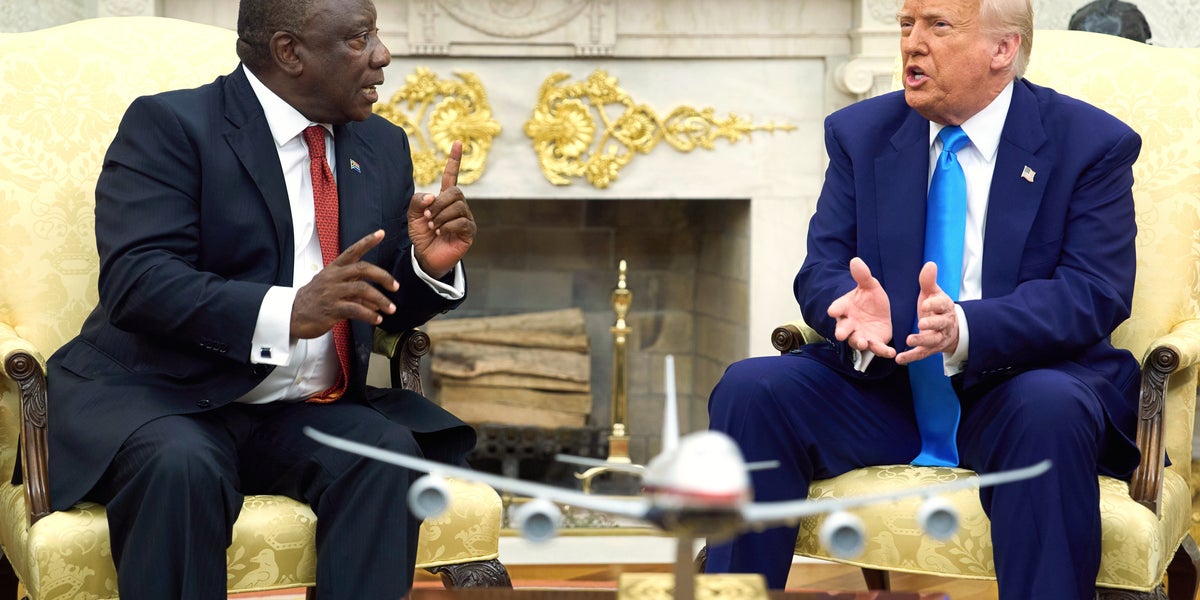
The confrontation follows a contentious history between Trump and South Africa on this issue. During a remarkable White House meeting in May, Trump blindsided Ramaphosa by showing a video allegedly depicting violence against white farmers in South Africa, describing scenes of “death, death, death, horrible death.” When Trump claimed white farmers were being “executed,” Ramaphosa directly contradicted him, stating firmly that “they’re not.”
South Africa has long grappled with its racial history following decades of apartheid rule that ended in 1994. While land reform remains a sensitive political issue in the country, officials have consistently rejected narratives of systematic targeting of white farmers as false and misleading.
The conflict intensified after Trump declined to send an American government delegation to the most recent G20 summit held in Johannesburg last weekend. Despite the boycott, Trump took offense when South Africa refused to transfer its G20 hosting responsibilities to a U.S. Embassy representative at the conclusion of the summit.
Trump’s interest in the issue appears to have heightened since he brought Tesla CEO Elon Musk, a South African-born businessman, into his inner circle at the beginning of his second term. Musk, who left South Africa as a young man, has occasionally commented on South African politics but has not been publicly involved in this particular dispute.
The Trump administration’s policies have reflected this focus in other ways. While Trump suspended the broader U.S. refugee program in January, reports indicate that white South Africans make up a disproportionate share of the few refugees currently being admitted to the United States.
In its response to Trump’s G20 exclusion announcement, South African officials specifically referenced the U.S. decision to send only a local embassy official to the G20 handover ceremony. The statement emphasized that South Africa “does not appreciate insults from another country about its membership and worth in participating in global platforms.”
The G20, comprising the world’s largest economies, traditionally serves as a forum for international economic cooperation. Trump announced in September that the 2026 summit would be hosted in Miami, Florida, marking a return to in-person international diplomacy after his election victory.
This diplomatic row adds to growing tensions between the United States and several African nations under Trump’s second administration, potentially complicating U.S. strategic interests on the continent at a time when China and Russia continue to expand their influence across Africa.
Fact Checker
Verify the accuracy of this article using The Disinformation Commission analysis and real-time sources.

7 Comments
This dispute demonstrates the need for diplomacy and nuance in foreign policy, rather than inflammatory rhetoric and threats. I hope cooler heads can prevail and find a constructive resolution.
Interesting situation with the G20 dispute. Seems like a lot of political posturing and misinformation flying around. I wonder what the real story is behind the scenes.
The exclusion of South Africa from the G20 summit could have broader implications for global cooperation on issues like climate change, trade, and economic development. Carefully managing these geopolitical tensions is crucial.
As an investor in mining and commodities, I’ll be watching this situation closely. South Africa is an important player in the global resources market, so any escalation could impact supply chains and prices.
This dispute highlights the tensions and complexities of international relations. It’s concerning to see Trump making claims that South Africa says are false. More transparency and open dialogue would be helpful.
Allegations of persecution of white farmers in South Africa are controversial and politically charged. It would be good to see independent verification of the facts before making such strong accusations.
Agreed, the facts seem murky. Reliable information from trusted sources would be helpful to understand the reality of the situation.