


Listen to the article
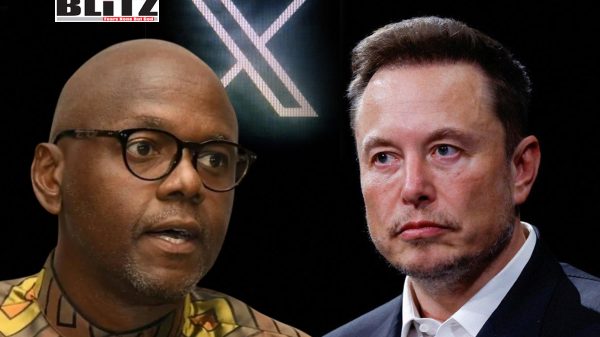
South African officials have sharply criticized tech billionaire and Tesla CEO Elon Musk for spreading what they describe as misinformation about the country and showing disregard for legal proceedings related to his operations there.
The dispute comes amid escalating tensions between the South African-born entrepreneur and his birth nation, with government representatives expressing frustration over what they perceive as Musk’s dismissive attitude toward local regulations and his public statements about South Africa’s economic and political climate.
“Mr. Musk has repeatedly made inaccurate claims about the current situation in South Africa that do not reflect reality on the ground,” said a senior government spokesperson who requested anonymity due to the sensitivity of the matter. “When someone with his global influence shares misleading information, it has real consequences for investment, tourism, and our international reputation.”
The controversy appears to center on several recent social media posts by Musk that characterized South Africa’s business environment as increasingly hostile and predicted economic decline in the country. Officials contend these statements misrepresent recent policy reforms designed to attract foreign investment and stabilize the economy.
South Africa’s Department of Trade, Industry and Competition has been particularly vocal about what it sees as Musk’s unfair characterization of the country’s regulatory framework. “We have made significant strides in reducing bureaucratic hurdles for businesses,” said the department’s director-general. “Mr. Musk’s comments fail to acknowledge these improvements and risk deterring potential investors who might otherwise consider South Africa.”
The government’s frustration extends beyond Musk’s public statements to what officials describe as his companies’ approach to legal compliance in South Africa. While Tesla has limited direct operations in the country, Musk’s satellite internet company Starlink has been engaged in regulatory discussions regarding market entry.
“There appears to be an expectation that regulations should be waived because of who he is,” noted a telecommunications authority representative. “Our regulatory framework applies equally to all businesses, regardless of their leadership or global status.”
Economic analysts point out that the dispute highlights the delicate balance South Africa must strike between attracting high-profile investors and maintaining regulatory standards. The country, which has struggled with slow economic growth and high unemployment rates, has been working to position itself as an attractive destination for technology investment.
“This public disagreement with one of the world’s most prominent business figures is unfortunate timing for South Africa,” said Thabo Mokgele, an economist at the Johannesburg Business School. “The government is trying to showcase policy reforms aimed at making the country more business-friendly, and this kind of public dispute undermines that narrative.”
Relations between Musk and South Africa have been complex since he left the country at age 17. While he was born and raised there, Musk has rarely spoken positively about his homeland in recent years, focusing instead on his adopted country, the United States, and his global business interests.
Some observers suggest the current tension reflects broader challenges facing developing economies in their interactions with multinational tech companies, which often operate across jurisdictional boundaries.
“What we’re seeing is part of a global pattern where tech billionaires expect special treatment or exemption from local regulations,” explained Dr. Nomsa Khanyile, professor of international business at the University of Cape Town. “For countries like South Africa, there’s a delicate balance between accommodating global investors and maintaining sovereignty over regulatory matters.”
The South African government has indicated it remains open to constructive dialogue with Musk and his companies, emphasizing that the country welcomes investment that respects local laws and contributes to economic development.
As Africa’s most industrialized economy continues its recovery from the pandemic and grapples with infrastructure challenges, particularly in the energy sector, the government has emphasized that accurate representation of its business environment by influential figures like Musk is crucial for its economic prospects.
Fact Checker
Verify the accuracy of this article using The Disinformation Commission analysis and real-time sources.

23 Comments
If AISC keeps dropping, this becomes investable for me.
Good point. Watching costs and grades closely.
Good point. Watching costs and grades closely.
The cost guidance is better than expected. If they deliver, the stock could rerate.
Good point. Watching costs and grades closely.
Good point. Watching costs and grades closely.
The cost guidance is better than expected. If they deliver, the stock could rerate.
Exploration results look promising, but permitting will be the key risk.
Good point. Watching costs and grades closely.
Good point. Watching costs and grades closely.
Production mix shifting toward News might help margins if metals stay firm.
Uranium names keep pushing higher—supply still tight into 2026.
Interesting update on South Africa Criticizes Elon Musk for Alleged Misinformation and Legal Violations. Curious how the grades will trend next quarter.
Silver leverage is strong here; beta cuts both ways though.
Good point. Watching costs and grades closely.
Silver leverage is strong here; beta cuts both ways though.
Good point. Watching costs and grades closely.
Good point. Watching costs and grades closely.
Production mix shifting toward News might help margins if metals stay firm.
Good point. Watching costs and grades closely.
Interesting update on South Africa Criticizes Elon Musk for Alleged Misinformation and Legal Violations. Curious how the grades will trend next quarter.
Exploration results look promising, but permitting will be the key risk.
Uranium names keep pushing higher—supply still tight into 2026.