


Listen to the article
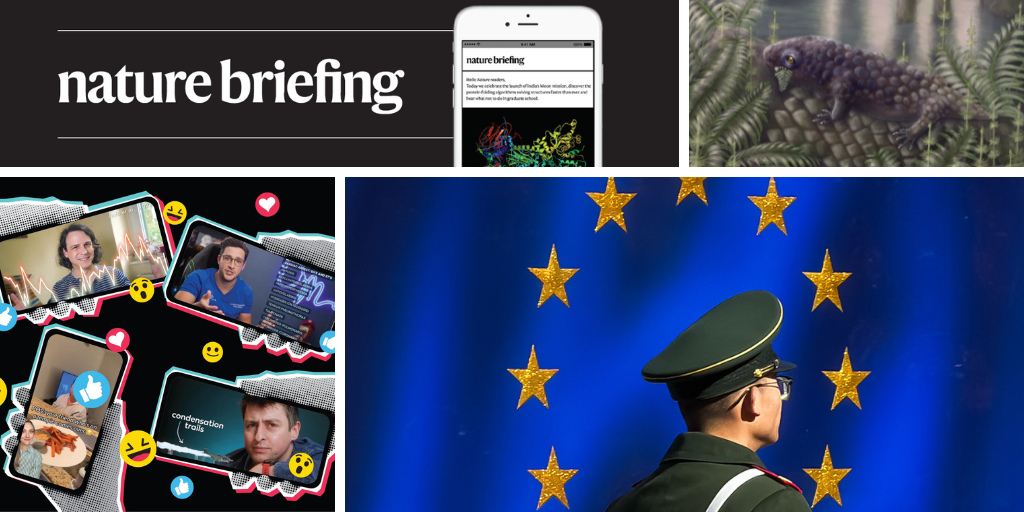
A groundbreaking fossil discovery has pushed back the timeline of vertebrate herbivory by several million years, according to new research published in Nature Ecology & Evolution. Scientists have identified a 300-million-year-old fossilized skull belonging to Tyrannoroter heberti, a newly described species that represents one of the earliest known plant-eating vertebrates.
The fossil, classified as a “microsaur” – a group of small, reptile-like animals from the Late Carboniferous Period – has provided remarkable insights into early herbivory evolution. Using 3D reconstruction techniques, researchers examined the skull’s specialized teeth, finding wear patterns consistent with a grinding motion typically associated with plant consumption. The creature was likely around 30 centimeters long with a stocky build.
“This discovery fundamentally changes our understanding of when vertebrates first began adopting plant-based diets,” explained one of the study’s lead researchers. “Previous estimates have now been revised back by several million years.”
In other scientific developments, the European Union has implemented significant restrictions on Chinese participation in its €93.5-billion Horizon Europe research program. Starting this year, organizations based in or controlled by China can no longer apply for grants in fields including artificial intelligence, telecommunications, health, semiconductors, biotechnology, and quantum technologies.
The EU cited security concerns about sharing sensitive technologies that could potentially jeopardize the union’s interests. Only select projects related to climate, biodiversity, food, and agriculture remain open to Chinese participation. This decision reflects growing tensions in international scientific collaboration amid geopolitical concerns.
Meanwhile, a fascinating study on brain connectivity has revealed that sex differences in neural networks become more pronounced with age. Researchers analyzing brain-imaging data found minimal sex differences in early life, but these distinctions increase dramatically from puberty onward and continue to evolve throughout adulthood.
These findings could help explain why men and women experience different likelihoods of developing certain mental health disorders such as anxiety and depression. However, some experts caution that these differences might not solely reflect biological sex but could also be influenced by social factors such as education and gender roles that affect brain development.
The scientific community is also actively combating misinformation on social media platforms like TikTok. Researchers and medical experts are adopting influencer strategies to communicate accurate scientific information. Some content creators focus on “pre-bunking” misinformation by sharing peer-reviewed evidence on topics like climate change, while others directly challenge false claims.
“It’s important to meet audiences where they are,” notes science communicator Simon Clark. Research indicates these efforts can positively impact public understanding on issues like vaccine hesitancy, though individual creators often face personal backlash when addressing controversial topics.
In the literary realm, Maria Popova’s new book “Traversal” explores the human thirst for knowledge through stories of notable figures from crystallographer Dorothy Hodgkin to novelist Mary Shelley. Nature editor Urmila Chadayammuri praised the ambitious work for successfully connecting disciplines and examining what drives scientific curiosity.
For scientists looking to engage with science writers, experts recommend keeping explanations simple, avoiding jargon, meeting in person when possible, focusing on areas of expertise, and conveying enthusiasm for research. These approaches can make complex scientific concepts more accessible to broader audiences.
As scientific publishing continues to evolve, some researchers are calling for academic journals to develop clearer policies for handling manuscripts with deceased authors. This comes after increasing instances of researchers passing away during the publication process, highlighting a need for respectful protocols in such situations.
These developments collectively illustrate the dynamic nature of scientific research and communication in addressing both ancient evolutionary questions and contemporary challenges in knowledge dissemination.
Fact Checker
Verify the accuracy of this article using The Disinformation Commission analysis and real-time sources.

9 Comments
Glad to see scientists combating online misinformation through their research and outreach. Fostering public trust in science is crucial, especially when it comes to important findings that could shift our understanding of evolutionary timelines.
Agreed. Proactive engagement by researchers as social media influencers is a smart strategy to counter the spread of misinformation and educate the public on cutting-edge scientific discoveries.
This is an important finding that challenges our previous understanding of early herbivory evolution. I appreciate the researchers’ use of 3D reconstruction techniques to gain insights into the skull and feeding adaptations of this ancient plant-eating vertebrate.
It will be interesting to see how this discovery impacts our broader knowledge of Carboniferous-era ecosystems and the rise of herbivory among vertebrates.
This fossil discovery provides a fascinating window into the early evolution of herbivory among vertebrates. I’m eager to see how further study of Tyrannoroter heberti’s anatomy and ecological role can inform our broader understanding of Carboniferous ecosystems.
It’s great to see scientists taking an active role as social media influencers to combat online misinformation. Building public trust in science is crucial, especially for groundbreaking discoveries that challenge existing paradigms.
Fascinating fossil discovery! Pushing back the timeline of vertebrate herbivory by millions of years is a significant scientific breakthrough. I’m curious to learn more about the specialized teeth and feeding mechanisms of this newly described species.
The new EU restrictions on Chinese participation in the €93.5-billion Horizon Europe program are notable. I wonder how this will impact international scientific collaboration and the overall funding landscape for research in mining, energy, and related fields.
Impressive work by the research team in using 3D reconstruction to analyze the specialized dentition of this ancient plant-eating vertebrate. Such advanced techniques are key to uncovering valuable insights from the fossil record.