


Listen to the article
Australians are being urged to remain vigilant as misleading information about non-existent Centrelink “bonus payments” circulates online, potentially putting vulnerable citizens at risk.
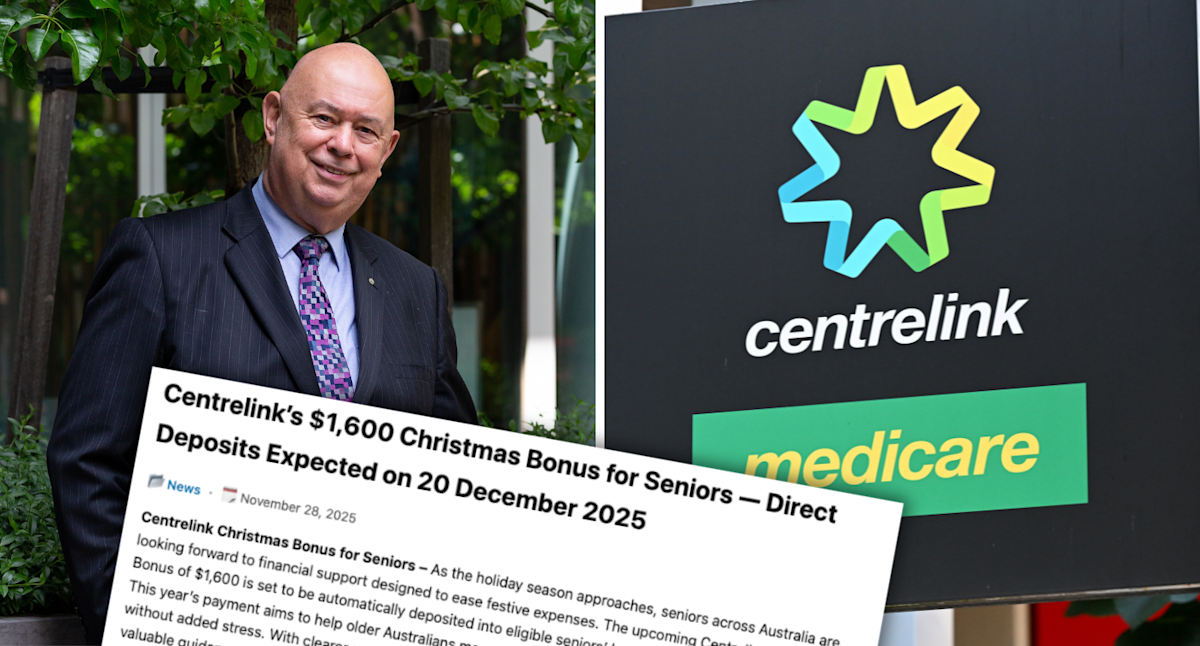
Services Australia general manager Hank Jongen has confirmed that various claims about special Christmas payments for welfare recipients are entirely false, describing them as “pure misinformation” designed to exploit those already struggling with financial hardship.
“We know scammers can be opportunistic, so this Christmas we’d like to remind people to be vigilant,” Jongen said. “There are unofficial websites sharing misinformation about ‘Christmas bonus’ payments for Centrelink customers. You may also see this being shared across social media.”
The fake news articles, which have appeared prominently in Google search results and even in Google’s AI Overview feature, claim that Centrelink recipients are entitled to various special payments in December. One fabricated story states that a $1,600 Christmas bonus would be automatically paid to seniors on December 20, while others mention a one-time $800 pension boost for older Australians.
These deceptive websites often target those receiving the Age Pension, Carer Payment, Carer Allowance, or those with concession cards. The fictitious payments are typically framed as cost of living relief, with claimed amounts ranging from $750 to $4,100.
Digital misinformation experts note that these tactics are increasingly common during times of economic pressure, when vulnerable populations are more susceptible to messages offering financial relief. The prevalence of such misleading content has increased significantly over the past year, coinciding with Australia’s ongoing cost of living crisis.
The scam websites operate using a sophisticated clickbait model that generates revenue through advertising and site visits. They create urgent, attention-grabbing headlines that promise financial windfalls, particularly targeting older Australians who may be less familiar with common online scam techniques.
Complicating matters further, many of these fake news articles are being produced using artificial intelligence, making them harder to detect and faster to produce at scale. Their professional appearance can make them difficult to distinguish from legitimate news sources at first glance.
Services Australia has acknowledged that these websites can be challenging to shut down because they are easy for scammers to create and can quickly reappear under different domains if removed.
“The best thing people can do to protect themselves from this misinformation is to ignore the clickbait headlines and only trust information online about our payments and services from our genuine websites,” Jongen advised.
Digital literacy advocates recommend that Australians verify any claims about government payments directly through official channels, including the Services Australia website or by calling their official helplines. They also suggest being particularly skeptical of headlines that seem too good to be true or that promise unexpected financial windfalls.
This surge in misinformation comes at a particularly vulnerable time for many Australians, with inflation and interest rate pressures continuing to strain household budgets heading into the holiday season.
Consumer protection agencies have noted an overall increase in financial scams targeting welfare recipients over the past year, with sophisticated approaches that blend misinformation with phishing attempts designed to steal personal information.
Authorities continue to monitor the situation and are working with digital platforms to limit the spread of these false claims, but emphasize that public awareness remains the most effective defense against such scams.
Fact Checker
Verify the accuracy of this article using The Disinformation Commission analysis and real-time sources.

8 Comments
This is a concerning scam targeting vulnerable older Australians. Preying on seniors with fake welfare bonuses is truly despicable. I hope the authorities can swiftly crack down on these deceptive websites and schemes.
Absolutely, these scams can have devastating impacts on those living on fixed incomes. It’s crucial that the public remains vigilant and doesn’t fall for these false claims.
Scammers have no shame, exploiting seniors in financial hardship with fake Centrelink bonuses. I’m glad the government is warning people about this misinformation. Older Australians deserve protection from these predatory tactics.
Agreed, the scale and persistence of these scams is alarming. Vigilance and public awareness campaigns are essential to prevent vulnerable people from losing money to these deceptive schemes.
It’s unfortunate that scammers are taking advantage of seniors during a difficult time. I hope the authorities are able to quickly shut down these fake websites and protect vulnerable Australians from financial exploitation.
Absolutely, these predatory tactics targeting the elderly are abhorrent. Raising public awareness and enforcing strong penalties against the perpetrators is vital to combating this problem.
Deceptive claims about Centrelink bonuses are clearly an attempt to defraud vulnerable people. I’m glad the government is actively warning the public about this scam. Older Australians deserve to feel secure, not preyed upon.
This is a timely reminder for everyone to be extremely cautious about unsolicited offers or claims of special government payments, especially around the holidays. Verifying information directly with official sources is crucial.