


Listen to the article
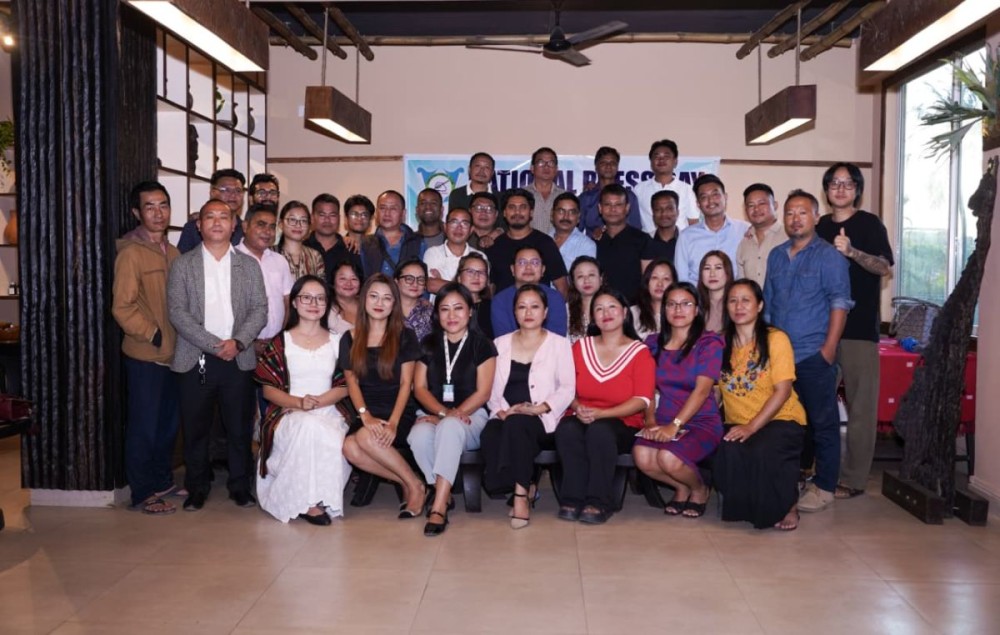
Media experts gathered on National Press Day to address a critical issue facing journalism today: safeguarding credibility in an era of rampant misinformation. The event centered on how traditional media can maintain public trust when content of all kinds competes for attention on the same digital platforms.
“Credibility is the anchor of our profession,” declared Moa Jamir, Associate Editor of The Morung Express, in his keynote address. “It is what allows the public to trust us even when the truth is difficult, even when the facts are uncomfortable.”
Jamir highlighted several internal challenges confronting the media industry, particularly in the Nagaland region, before addressing external threats. Chief among these is what he called “a crisis of transparency” where many outlets fail to clearly identify their ownership, editorial structure, or accountability mechanisms.
“Today, anyone can create a page that looks like a news outlet,” Jamir noted. “The result is visibility without transparency: platforms with no editorial structure, no accountability or websites without even an ‘About Us’ section.”
The discussion also tackled the sensitive issue of “money-for-coverage” practices, where organizations pay media outlets for event coverage. Jamir described this as “structural misinformation” that misleads audiences about why certain stories are published. Without proper disclosure of paid content, readers assume a story was selected for its newsworthiness rather than as a commercial transaction.
“When basic journalistic duty becomes, even unintentionally, a service-for-hire, it undermines public trust,” he explained.
The rise of artificial intelligence poses another significant threat to media credibility. AI-generated content—including realistic images, videos, voice clones, and fabricated texts—can now be created within minutes. This technology is particularly dangerous in regions where issues of identity and land ownership are sensitive topics, as false information can spread rapidly and cause substantial harm.
“AI is not the enemy, but it magnifies weaknesses,” Jamir cautioned. “If verification is weak, AI will amplify the damage.”
Other issues affecting media credibility include unregulated digital platforms operating without oversight, the pressure to publish quickly at the expense of verification, sensationalist reporting that prioritizes emotion over context, and ethical lapses such as unlabeled sponsored content and delayed corrections.
To address these challenges, Jamir outlined several practical recommendations. First, news organizations must strengthen transparency by clearly presenting ownership information and editorial leadership. This includes acknowledging and correcting mistakes promptly rather than quietly moving on.
Second, media outlets should adopt clear ethical guidelines for coverage, including proper labeling of paid content as “Advertisement,” “Sponsored Feature,” or “Advertorial.” Jamir emphasized the importance of maintaining firm boundaries between editorial judgment and commercial interests, suggesting that outlets apply a “public interest test” when deciding what to cover.
Additional recommendations included reinforcing verification processes, strengthening internal ethics through clear codes of conduct, fostering collaboration among media organizations, and engaging with the public through media literacy initiatives.
“Credibility is not preserved through slogans,” Jamir concluded. “It is preserved through daily practice via the stories we verify; the lines we refuse to cross; the disclosures we make, and the corrections we issue.”
The National Press Day event served as a reminder that journalism’s strength lies not just in its reach or speed, but in its commitment to accuracy and transparency. In an information landscape increasingly cluttered with misinformation, maintaining these standards has never been more crucial for the future of the profession.
Fact Checker
Verify the accuracy of this article using The Disinformation Commission analysis and real-time sources.

10 Comments
The point about ‘visibility without transparency’ is concerning. When anyone can create a page that looks like a news outlet, it undermines the entire industry. Strengthening accountability mechanisms seems crucial to safeguarding credibility.
Restoring public trust in the media is a daunting but vital task. The suggestions around transparency and accountability sound like a good starting point. I’m curious to see what other concrete steps emerge from this discussion to address the misinformation crisis.
Safeguarding press credibility is crucial in these times of rampant misinformation. Transparency and accountability are key for media outlets to maintain public trust. I hope industry leaders can find effective ways to combat the rise of questionable content online.
As someone with a keen interest in the mining, energy, and commodities sectors, I appreciate the media’s role in providing accurate, unbiased information. Safeguarding that credibility is essential, so I’m glad to see industry leaders tackling this head-on.
This is an important issue for the media industry. Lack of transparency, fake news sites, and paid coverage practices are all threats to journalistic integrity. It’s good to see experts come together to address these challenges head-on.
Agreed. Restoring public trust in the media will require concerted efforts on multiple fronts. I’m curious to hear more about the specific solutions and strategies discussed at this event.
This is a complex challenge with no easy answers. But the media must find ways to rebuild trust, even as digital platforms make it easier than ever to spread misinformation. Transparency, accountability, and high ethical standards will be key.
Credibility is the foundation of journalism. In an era of information overload, it’s crucial that the public can reliably distinguish fact from fiction. This discussion seems timely and important for the future of the press.
As someone who relies on the media for information, I’m glad to see this issue being tackled. Maintaining credibility is vital, especially when it comes to reporting on sensitive topics like mining, energy, and commodities. I hope meaningful reforms emerge from this discussion.
The ‘money-for-coverage’ issue is particularly troubling. Paid content that masquerades as objective journalism is a serious breach of public trust. I hope the industry can develop robust guidelines to prevent these kinds of practices.