


Listen to the article
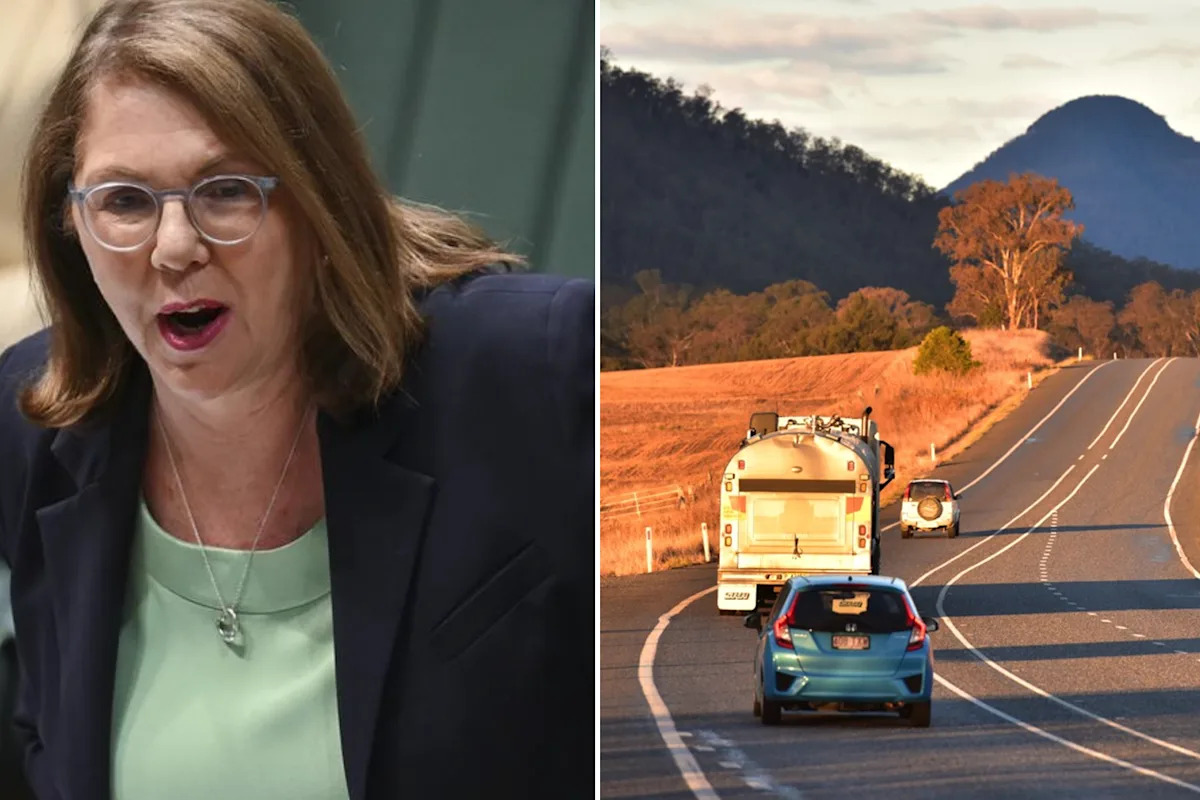
The federal government has launched a scathing attack on the National Party, accusing it of orchestrating a “targeted campaign” of misinformation regarding rural speed limit changes. Government officials claim the Nationals deliberately fabricated a narrative about federal plans to reduce speed limits on country roads, sparking unnecessary public outrage.
For several weeks, media outlets reported that the government was considering lowering default speed limits on non-signposted regional roads from the current 100-110km/h to somewhere between 70-90km/h. However, a spokesperson for Infrastructure Minister Catherine King told Yahoo News Australia on Tuesday that these reports misrepresented the situation.
The spokesperson clarified that the department had merely been consulting communities on road safety matters, not actively drafting policy to implement lower speed limits. They pointed out that discussions around national approaches to speed limits have been ongoing since 2018, when the portfolio was actually held by the National Party.
“The last few weeks have seen a deliberate and targeted misinformation campaign conducted by Dr Anne Webster and the National Party,” the spokesperson said, singling out the Shadow Minister for Regional Communications. “Dr Webster knows full well that the Commonwealth does not set road speed limits in any jurisdiction.”
The government representative added that the initial work to develop a national approach to lowering speed limits was introduced by former Infrastructure Minister Michael McCormack during his time as deputy prime minister in the Turnbull Government—a fact they claim undermines the National Party’s current position.
Road safety has become an increasingly pressing issue in Australia, with the national road death toll steadily climbing. Safety advocates have consistently called for federal action to address this growing crisis, with speed management being one potential measure among many.
At the recent Infrastructure and Transport Ministers’ Meeting, state and territory representatives expressed concerns about implementing a blanket approach to speed limits. They emphasized their constitutional responsibility for setting speed limits within their own jurisdictions.
“All Ministers agreed to ensure no further work would be done to progress it,” the spokesperson confirmed, effectively ending speculation about imminent changes to rural speed limits at the federal level. They stressed that the consultation process was routine governmental procedure designed to gather diverse perspectives from road safety experts, industry stakeholders, and community members.
Australia’s default speed limits are among the highest globally, and research consistently shows that higher limits correlate with increased road trauma. Safety studies indicate higher-speed crashes tend to result in more severe injuries, higher fatality rates, and provide less margin for driver error or reaction time.
While public consultations on the matter had been open until recently, responses were mixed. Road safety experts generally supported potential reductions, arguing they would save lives, particularly on rural roads where a significant proportion of fatal accidents occur. However, rural communities and their representatives expressed strong opposition.
Jenny Aitchison, New South Wales’ Regional Transport and Roads Minister, recently confirmed that NSW Labor did not support reducing rural speed limits. Similarly, Liberal MP Melissa Price from Western Australia’s Durack electorate called on the federal government to abandon what she termed a “misguided proposal.”
The dispute highlights the complex balance between road safety imperatives and the practical needs of rural communities, who often rely on higher speed limits to navigate vast distances between towns and services. It also underscores the political sensitivity of traffic management in regional Australia, where changes to road rules can become lightning rods for broader rural grievances.
With ministers now agreeing to halt further work on national speed limit reductions, the immediate controversy appears resolved. However, with Australia’s road toll continuing to rise, pressure for effective safety measures is likely to remain a significant policy challenge for governments at all levels.
Fact Checker
Verify the accuracy of this article using The Disinformation Commission analysis and real-time sources.

6 Comments
Interesting to see the political debate around rural speed limits. Safety should be the top priority, but the proposed changes seem to have sparked some controversy. I’m curious to learn more about the different perspectives on this issue.
The government’s accusation of a ‘misinformation campaign’ by the Nationals is quite serious. I wonder if there’s more nuance to the story than the headlines suggest.
As someone who drives on rural roads regularly, I can understand the concerns about safety. However, the government’s approach to consulting communities and not rushing into policy changes seems sensible. Balancing safety and practicality will be key.
It’s good that discussions around national speed limit approaches have been ongoing since 2018. This suggests it’s a complex issue without easy solutions.
The mining and energy sectors have a big stake in rural infrastructure, so I’ll be following this story closely. Clarity on the government’s plans and an open dialogue with affected communities is important.
Accusations of ‘misinformation campaigns’ can often muddy the waters. Hopefully all sides will engage constructively to find the best path forward for rural road safety.