


Listen to the article
South African President Ramaphosa Rebuffs Trump’s G20 Exclusion, Citing “Blatant Misinformation”
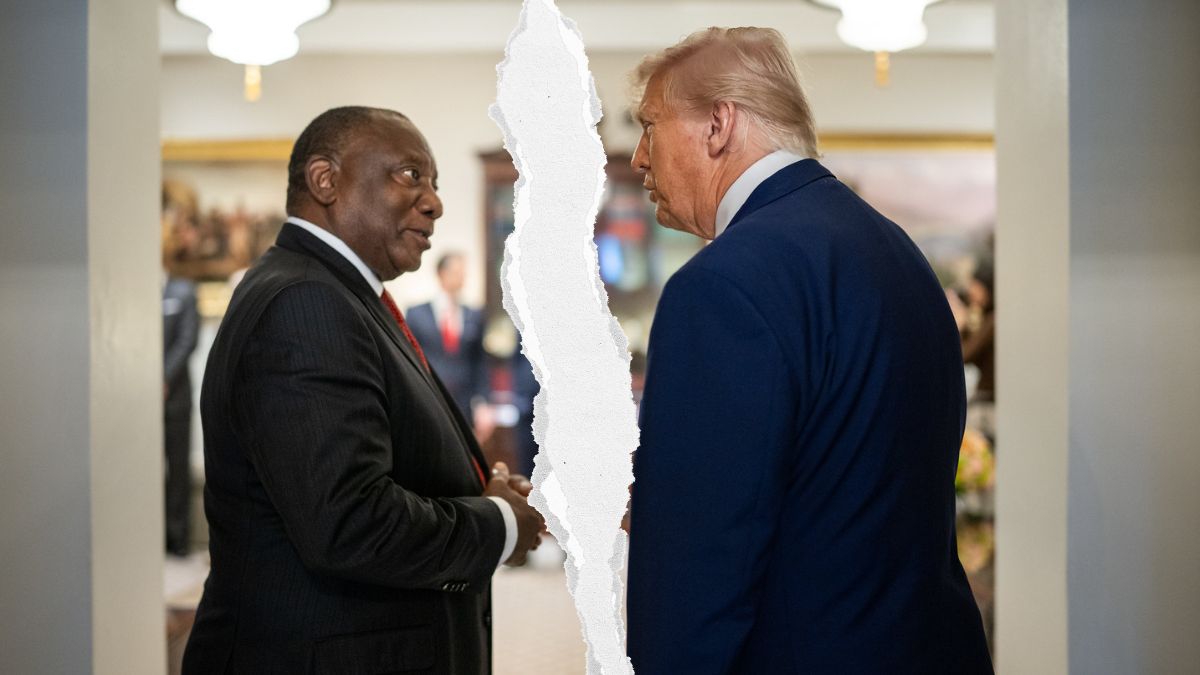
South African President Cyril Ramaphosa has strongly rejected United States President Donald Trump’s decision to exclude South Africa from the 2026 G20 Leaders’ Summit, characterizing the move as based on “blatant misinformation” about conditions in the country.
In a televised address to the nation on November 30, Ramaphosa expressed regret over the U.S. decision to withdraw from South Africa’s upcoming G20 meetings and summit.
“It is even more unfortunate that the reasons the US gave for its non-participation were based on baseless and false allegations that South Africa is perpetrating genocide against Afrikaners and the confiscation of land from white people,” Ramaphosa stated.
Trump has repeatedly cited alleged persecution of white South Africans as justification for a range of punitive measures, including imposing tariffs, reducing aid, and supporting refugee applications for Afrikaners seeking to relocate to the United States. Most recently, he referenced these claims in a social media post announcing South Africa would not be invited to the 2026 G20 summit.
South African officials have consistently denied these allegations, emphasizing that while violent crime remains problematically high in the country, it affects citizens of all races. Africa Check, an independent fact-checking organization, has debunked several of Trump’s claims about an alleged genocide in South Africa, with researcher Keegan Leech noting: “There is no evidence that white farmers in South Africa are more likely to be murdered than other groups.”
Ramaphosa attributed the U.S. administration’s stance to “a sustained campaign of disinformation by groups and individuals within our country, in the US and elsewhere,” warning that those spreading such misinformation are “endangering and undermining South Africa’s national interests, destroying South African jobs and weakening our country’s relations with one of our most important partners.”
Regarding G20 participation, Ramaphosa reaffirmed South Africa’s status as one of the forum’s founding members. “We are a member of the G20 in our own name and right,” he stated. “We will continue to participate as a full, active and constructive member of the G20.”
Despite growing tensions, Ramaphosa emphasized the importance of the U.S.-South Africa relationship, noting that America remains the country’s second-largest trading partner. “We offer the people of the United States nothing but goodwill and friendship. We affirm our commitment to continue to engage in dialogue with the United States government,” he said.
The diplomatic rift comes amid deteriorating bilateral relations over the past year, with tensions stemming from South Africa’s case against Israel at the International Court of Justice in 2024 and the country’s strengthening ties with BRICS partners, particularly Russia and China.
Three significant legislative proposals in the U.S. Congress now threaten to impose serious penalties on South Africa. Congressman Ronny Jackson’s U.S.-South Africa Bilateral Relations Review Act of 2025, which recently advanced through the House Foreign Affairs Committee with a 34-13 vote, would authorize targeted sanctions against selected South African government officials and African National Congress (ANC) leaders.
Jackson has criticized factions within the ANC for undermining South Africa’s stated non-aligned foreign policy by aligning with what he terms “malign actors,” citing the party’s positions on Hamas and closer ties with China and Russia.
A parallel Senate bill introduced by Senator John Kennedy goes further by proposing South Africa’s removal from both the African Growth and Opportunity Act (AGOA) and the Trade Act of 1974. These frameworks currently grant duty-free access to over 1,800 U.S.-bound products from South Africa, representing a significant economic relationship.
Kennedy has also put forward the Extension and Bilateral Engagement Act of 2025, which would renew AGOA beyond its 2025 expiration but enable South Africa’s exclusion. The bill proposes strengthening trade ties with at least five other African countries that meet AGOA criteria and demonstrate strong democratic governance.
The potential economic impact of these measures could be substantial for South Africa, which has benefited significantly from preferential access to U.S. markets through AGOA. Losing these trade privileges would likely affect various sectors of the South African economy and potentially exacerbate existing economic challenges in the country.
Fact Checker
Verify the accuracy of this article using The Disinformation Commission analysis and real-time sources.

6 Comments
This is unfortunate. The U.S. decision to exclude South Africa from the G20 summit seems to be based on unfounded allegations. As a major economy, South Africa’s participation is important for global cooperation.
I’m curious to learn more about the specific claims made by President Trump regarding the persecution of white South Africans. It’s important to have an objective understanding of the situation before jumping to conclusions.
While I understand the desire to address human rights concerns, excluding South Africa from the G20 seems like an overly punitive measure based on unproven claims. I hope the two leaders can find a more constructive way to engage on this issue.
This seems like a complex and sensitive issue. I appreciate President Ramaphosa’s direct refutation of the claims made by President Trump. Maintaining open dialogue and cooperation is important, even when there are disagreements.
As a mining and commodities enthusiast, I’m concerned about the potential impact this diplomatic dispute could have on South Africa’s role in global supply chains. Maintaining stability and cooperation is crucial for the sector.
While concerns about human rights should be taken seriously, it’s concerning to see this issue being used for political posturing. I hope the leaders can find a constructive way to address any legitimate issues in South Africa.