


Listen to the article
South African President Cyril Ramaphosa has firmly rejected recent criticisms from the United States regarding South Africa’s stance on international relations, describing them as “misinformation” aimed at undermining the country’s sovereign foreign policy decisions.
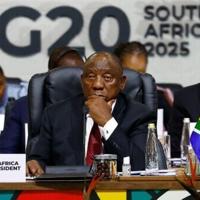
Speaking at a press briefing in Pretoria yesterday, Ramaphosa addressed mounting tensions between the two nations following accusations from several U.S. lawmakers that South Africa has been providing military support to Russia in its conflict with Ukraine, a claim the South African government categorically denies.
“These allegations are not just incorrect, they represent a dangerous form of misinformation that threatens to damage the long-standing relationship between our nations,” Ramaphosa stated. “South Africa maintains its position of non-alignment in global conflicts and reserves the right to determine its own foreign policy without external pressure.”
The diplomatic strain has intensified in recent months after South Africa hosted joint naval exercises with Russia and China earlier this year, a move that raised concerns in Washington. The U.S. ambassador to South Africa, Reuben Brigety, subsequently alleged that a Russian vessel had loaded weapons at a South African naval base in December – claims that South African officials have repeatedly refuted.
The controversy comes at a delicate time for South Africa’s economy, which relies significantly on trade benefits from the U.S. under the African Growth and Opportunity Act (AGOA). This preferential trade agreement, which provides duty-free access to the U.S. market for eligible sub-Saharan African countries, is currently under review, with some American legislators suggesting South Africa should be excluded from future renewals.
Trade analysts note that removal from AGOA would have substantial implications for South Africa’s export sectors, particularly manufacturing and agriculture. The country exported approximately $2.7 billion worth of goods to the United States under AGOA provisions last year, supporting thousands of jobs across multiple industries.
“The economic partnership between South Africa and the United States transcends political disagreements,” said Dr. Elizabeth Sidiropoulos, Director of the South African Institute of International Affairs. “Both nations stand to lose if trade relations deteriorate, particularly as the global economy faces multiple challenges.”
South Africa’s position reflects its historical ties with Russia dating back to the Soviet Union’s support for the anti-apartheid movement. The ruling African National Congress (ANC) has maintained these relationships while attempting to balance them against Western partnerships.
The diplomatic tension also reveals broader geopolitical shifts as South Africa strengthens its ties with fellow BRICS nations (Brazil, Russia, India, China, and South Africa), positioning itself as part of an emerging multipolar world order less dominated by Western powers.
Minister of International Relations and Cooperation Naledi Pandor reinforced this position in a separate statement: “South Africa’s foreign policy is independent and based on our national interests. We engage with all nations on the principles of mutual respect and sovereignty.”
Regional analysts point out that South Africa’s stance is representative of many African nations’ reluctance to take sides in conflicts between major powers, instead preferring to maintain diplomatic and economic relations with both Western and Eastern blocs.
The disagreement highlights the challenges facing U.S.-Africa relations as Washington seeks to counter growing Russian and Chinese influence on the continent. The Biden administration has intensified diplomatic engagements with African nations, but many countries on the continent remain wary of being drawn into great power competitions.
For South Africa, navigating these complex international waters while addressing pressing domestic challenges of unemployment, inequality, and energy shortages presents a significant policy challenge as President Ramaphosa’s government approaches national elections next year.
As both nations work to manage these tensions, economic and security cooperation continues in other areas, underscoring the multifaceted nature of the relationship between Africa’s most industrialized economy and the world’s largest superpower.
Fact Checker
Verify the accuracy of this article using The Disinformation Commission analysis and real-time sources.

16 Comments
Ramaphosa’s rejection of the US accusations as ‘misinformation’ suggests there may be more to the story than is being reported. It will be interesting to see how this diplomatic dispute unfolds and whether the two countries can find a way to move forward constructively.
The mining and energy sectors are so crucial to both the US and South African economies that this dispute cannot be allowed to escalate. I hope the leaders on both sides can find a way to de-escalate tensions and focus on areas of mutual economic interest.
Agreed. Maintaining stable supply chains and investment flows in these strategic industries should be a top priority for policymakers in both countries.
The mining and energy sectors in both countries have a lot at stake in maintaining stable bilateral relations. I hope the political leaders can put aside their differences and focus on the shared economic interests that bind the US and South Africa together.
Agreed. Any disruption to the mining and energy supply chains would have far-reaching consequences. Pragmatic cooperation in these strategic industries should be a priority for both sides.
South Africa’s stance of non-alignment is understandable, but the US allegations around military support for Russia are concerning. Ramaphosa will need to tread carefully to maintain his country’s independence while also addressing the security concerns of its partners.
This dispute underscores the complex geopolitical dynamics at play in the mining and energy sectors. South Africa’s stance of non-alignment is understandable, but the US allegations around military support for Russia cannot be ignored. Resolving this will require careful diplomacy on both sides.
Absolutely. With so much at stake in terms of supply chains, investment, and global influence, it’s crucial that the US and South Africa find a way to work together constructively, despite their differences.
The US-South Africa relationship is an important one, and it’s concerning to see it strained over allegations and misinformation. I hope the two governments can work to rebuild trust and find common ground on foreign policy matters.
Maintaining neutrality in global conflicts is a delicate balance. South Africa will need to navigate this carefully to preserve its sovereignty while also addressing the legitimate security concerns of its allies.
This dispute highlights the complex geopolitical dynamics at play in the mining and energy sectors. Both the US and South Africa have important interests to protect, and finding the right balance will require nuanced diplomacy on both sides.
Absolutely. With global supply chains and commodity markets so interconnected, it’s crucial that these two major players find a way to work together constructively, despite their differences.
It’s concerning to see this level of diplomatic tension between the US and South Africa, two important players in the global mining and energy landscape. Ramaphosa’s rejection of the US allegations as ‘misinformation’ suggests there may be more to this story than is being reported.
Ramaphosa’s strong rejection of the US allegations suggests he is determined to defend South Africa’s sovereignty and independent foreign policy. However, the US concerns about Russia’s influence in the region are also understandable. Navigating this dispute will require careful diplomacy.
It’s a complex geopolitical situation with valid concerns on both sides. Ramaphosa’s emphasis on South Africa’s sovereignty and non-alignment is understandable, but the US allegations of military support for Russia merit closer examination.
Agreed, the diplomatic tensions need to be handled carefully. Both countries would benefit from open and constructive dialogue to address the underlying issues.