


Listen to the article
In a media landscape increasingly defined by distrust, a new perspective is emerging: public skepticism toward journalism might actually strengthen democratic institutions rather than weaken them.
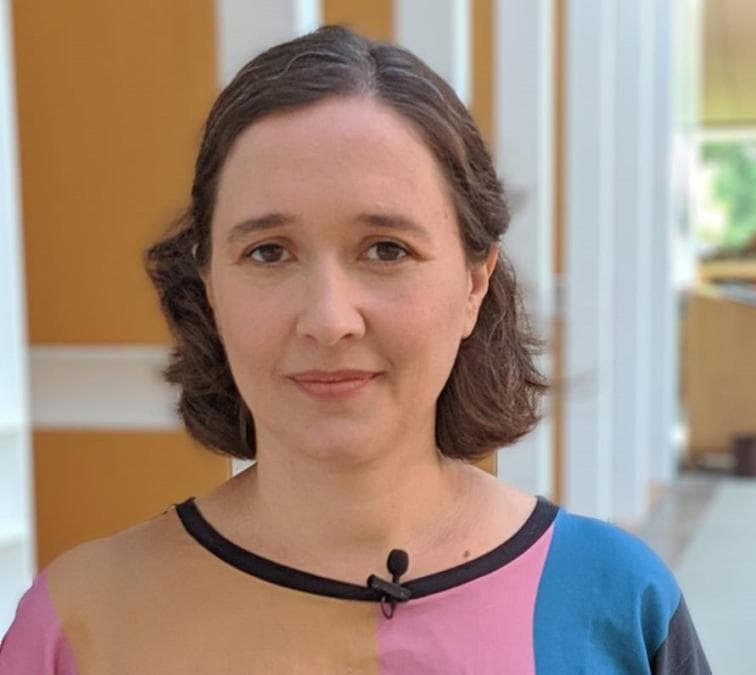
Eugenia Mitchelstein, a media scholar and researcher, suggests that the growing questioning of news sources and journalistic practices could serve as a catalyst for improved democratic discourse, contrary to conventional wisdom that views media distrust as inherently dangerous.
“When people engage critically with news, they’re actually exercising an essential democratic muscle,” Mitchelstein explains. “Healthy skepticism encourages citizens to seek multiple sources, verify claims, and hold media institutions accountable.”
This view challenges the prevailing narrative among journalism professionals that declining trust in media represents an existential crisis for democracy. Instead, Mitchelstein argues, it reflects a maturing relationship between citizens and information sources in the digital age.
Research shows that trust in traditional media has declined steadily over the past decade across most democratic nations. In the United States, a recent Gallup poll indicated that only 34% of Americans express “a great deal” or “quite a lot” of confidence in newspapers, down from nearly 50% in the early 2000s.
This trend has typically been framed as alarming by media watchdogs and journalism associations. However, Mitchelstein’s analysis suggests that blanket trust in any institution – including the press – may not be ideal for democratic functioning.
“The problem isn’t skepticism itself,” she notes. “It’s when skepticism transforms into cynicism or when distrust becomes so pervasive that citizens disengage completely from the information ecosystem.”
Media analysts point to several factors driving the trust deficit: the rise of partisan news outlets, social media’s amplification of misinformation, economic pressures leading to sensationalized coverage, and high-profile journalistic failures that damaged credibility.
However, Mitchelstein’s research indicates that discerning news consumers are developing more sophisticated media literacy skills in response. Many now regularly cross-reference information across multiple sources, check primary documents, and pay closer attention to journalistic methods and transparency.
News organizations have responded to this scrutiny by implementing more rigorous fact-checking operations, increasing transparency about reporting methods, and engaging more directly with audience questions and concerns. Major outlets like The Washington Post, The New York Times, and Reuters have expanded their fact-checking departments and created detailed explanations of their journalistic standards.
“What we’re seeing is an evolution in the relationship between journalism and its audience,” says media ethics professor Damon Phillips. “The old model of journalists simply declaring ‘trust us’ is giving way to a more accountable approach where trust must be continuously earned through transparency and quality.”
Critics of Mitchelstein’s perspective argue that declining trust has opened the door to dangerous information voids that are filled by fringe sources, conspiracy theories, and deliberate disinformation campaigns. They point to evidence that many citizens have not replaced traditional media with more rigorous information-seeking but have instead retreated to echo chambers that reinforce existing beliefs.
The impact of this shifting landscape varies significantly across demographic groups. Research indicates that younger news consumers tend to approach all information sources with inherent skepticism, while older generations may struggle more with distinguishing between credible and non-credible sources online.
Media organizations in countries with historically strong public broadcasting systems, such as the United Kingdom, Germany, and the Nordic nations, have maintained somewhat higher trust levels than their American counterparts, suggesting institutional factors play an important role.
As the information ecosystem continues to evolve, Mitchelstein emphasizes that the goal shouldn’t be returning to an era of unquestioning trust in journalism, but rather developing a more mature relationship where accountability flows in both directions.
“Democracy benefits when citizens approach information critically but constructively,” she concludes. “The challenge for journalism is not to demand blind trust, but to earn informed trust through commitment to accuracy, fairness, and public service – and to welcome rather than fear the scrutiny that comes with it.”
Fact Checker
Verify the accuracy of this article using The Disinformation Commission analysis and real-time sources.

12 Comments
As someone who follows the mining and energy sectors closely, I’ve definitely noticed a growing distrust of mainstream media coverage. But I agree that this isn’t necessarily a bad thing if it leads to more critical engagement with news sources. The key is finding the right balance.
Agreed. Robust public debate and fact-checking is healthy for democracy. But it’s a delicate balance to strike – we don’t want to end up in a ‘post-truth’ world where facts become irrelevant.
Interesting perspective on media distrust. I can see how healthy skepticism could actually strengthen democracy if it leads to people seeking out diverse sources and holding the media accountable. But it’s a fine line between constructive skepticism and outright dismissal of factual reporting.
Agreed. Responsible citizens should question and verify claims, not just blindly accept or reject everything they read. Maintaining that balance is crucial.
This is a complex issue without easy answers. While public skepticism can spur needed reforms in journalism, it also risks undermining trust in core democratic institutions if taken too far. Restoring faith in media will require a collaborative effort between journalists, policymakers and the public.
Well said. Rebuilding public trust in media is crucial, but it has to be done in a way that empowers citizens without completely delegitimizing the free press.
This is a thought-provoking perspective. While I can see the potential benefits of public skepticism towards the media, I’m concerned about the broader societal implications. A wholesale rejection of journalism could undermine our ability to have a shared, factual basis for political discourse.
That’s a fair point. A complete breakdown of trust in media would be extremely damaging. We need to find ways to improve journalism and media literacy, not just give up on it entirely.
As a mining investor, I’m always cautious about how the industry is portrayed in the media. There’s often an oversimplified, sensationalized narrative. But I agree that thoughtful, critical engagement with news sources is important, not just knee-jerk cynicism.
Absolutely. Mining is a complex topic that deserves nuanced coverage. Healthy skepticism can push journalists to do better, not just dismiss their reporting outright.
This is an interesting analysis, but I worry that the line between healthy skepticism and outright distrust of media is becoming increasingly blurred. We need to be careful not to let a general sense of cynicism towards institutions undermine the role of a free and independent press.
That’s a valid concern. An overly cynical public could create an environment where misinformation and propaganda thrive. Maintaining trust in credible journalism is crucial for democracy.