


Listen to the article
In a contentious development that has gripped the city for months, the dispute over the Providence mural dedicated to Iryna Zarutska has largely subsided, though ripples of controversy continue to affect local media coverage and public discourse.
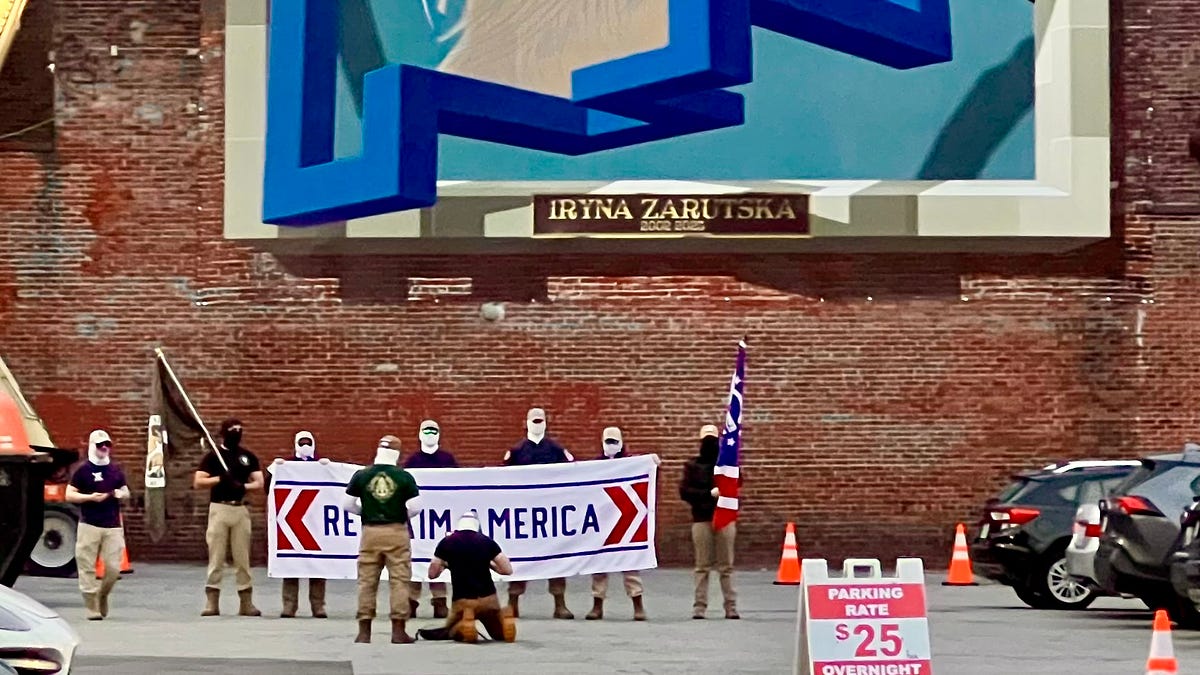
The original mural, which was being painted on the wall of The Dark Lady, an LGBTQIA-friendly establishment in downtown Providence, has been permanently halted. The bar’s owners issued a public apology for their involvement in the project, expressing that they were “deeply and sincerely sorry” for the controversy it sparked. In its place, a smaller tribute to Zarutska has been completed at Opa, a Lebanese restaurant on Atwells Avenue.
The controversy gained national attention earlier this year when it was revealed that the mural project received funding from tech billionaire Elon Musk. Comprehensive coverage of the incident has appeared in several publications, including detailed analyses in the Boston Art Review and The Providence Eye.
However, the aftermath of the controversy continues to generate problematic coverage. On April 25, the Providence Journal published a letter from Charlestown resident James Mageau, who expressed outrage over the halting of the original mural project. The letter contained a significant factual error that has raised concerns about editorial oversight at the publication.
Mageau incorrectly claimed that Zarutska was killed by an “undocumented immigrant,” a statement that has been definitively debunked. According to a fact-check by the Charlotte Observer, Zarutska’s killer was actually born and raised in Charlotte, North Carolina. This misinformation mirrors claims made by President Trump during his 2026 State of the Union address, when he falsely stated that the perpetrator “came in through open borders.”
The publication of such erroneous information comes at a particularly sensitive time. The current administration has been implementing what Human Rights Watch has described as anti-immigrant policies at a “dizzying pace,” creating an environment where xenophobic rhetoric can have real-world consequences for vulnerable communities.
Media experts point to research from the American Immigration Council that consistently shows immigrants—including undocumented immigrants—have lower rates of felony arrests than U.S.-born citizens. Studies have also demonstrated that growing immigrant populations are associated with reductions in both violent and property crimes across the United States.
The Providence Journal, owned by media conglomerate USA Today Co. (formerly Gannett), has faced significant staff reductions in recent years. While these constraints may contribute to editorial oversights, critics argue this doesn’t excuse the publication of false information that could fuel xenophobia and discrimination.
Media ethics experts often cite the approach taken by the Los Angeles Times, which established a policy against publishing letters containing factual errors, particularly regarding scientific consensus on issues like climate change. As L.A. Times Letters editor Paul Thornton wrote in 2013, “Simply put, I do my best to keep errors of fact off the letters page; when one does run, a correction is published.”
Critics have called for the Providence Journal to add a corrective note to Mageau’s published letter and to implement stronger fact-checking protocols, even with limited staffing resources, to prevent the spread of misinformation that could harm vulnerable communities.
The mural controversy reflects broader tensions in American society regarding immigration, free speech, and the role of wealth in public art. As cities like Providence navigate these complex issues, the responsibility of local media to provide accurate information becomes increasingly vital to fostering informed public discourse.
Fact Checker
Verify the accuracy of this article using The Disinformation Commission analysis and real-time sources.

6 Comments
The mural controversy highlights the challenges local media face in navigating divisive issues in their communities. Giving a platform to all perspectives is important, but vetting claims and maintaining journalistic integrity is essential. It will be a delicate balance.
Absolutely. The Providence Journal has a responsibility to its readers to provide factual, responsible coverage, even if that means pushing back on certain letters or opinions. Upholding standards of journalism is critical in these situations.
This seems like a complex issue with a lot of moving parts. I appreciate the Providence Journal’s effort to cover it, but they’ll need to be very careful in how they handle letters to the editor on such a sensitive topic. Maintaining factual, balanced reporting will be crucial.
Agreed. With charged topics like this, it’s easy for misinformation and agenda-driven narratives to spread through letters and opinion pieces. The editorial team will have to scrutinize submissions thoroughly.
This sounds like a tricky situation for the Providence Journal. On one hand, they want to give voice to all views in the community. But on the other, they have to be vigilant against the spread of misinformation, especially on such a divisive and high-profile topic. Careful curation of the letters section will be key.
Agreed. The editors will really have to walk a fine line here. Maintaining open discourse is important, but ensuring factual accuracy and preventing the amplification of falsehoods should be the top priority.