


Listen to the article
Social media posts containing false information significantly complicated the investigation of a reported shooting at Brown University, according to Providence Police Chief Oscar Perez.
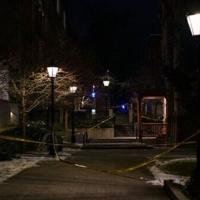
The incident unfolded late Monday when authorities received reports of an active shooter on the Ivy League campus. The call, which came in around 11 p.m., prompted a massive emergency response involving multiple law enforcement agencies. Police officers rushed to the scene, instructing students and faculty to shelter in place as they conducted a building-by-building search.
However, after an extensive five-hour search that lasted until about 4 a.m. Tuesday, investigators found no evidence of a shooting. No victims, no suspect, and no physical evidence such as shell casings were discovered, leading authorities to conclude that the initial report was unfounded.
“We received calls about shots being fired, and we responded accordingly,” Chief Perez explained during a press conference on Tuesday. “But what complicated our efforts was the spread of misinformation on social media platforms.”
According to Perez, as police were methodically searching campus buildings, social media became flooded with unverified claims and speculation. Some posts incorrectly identified locations of alleged shootings, while others reported multiple victims when none had been found. This misinformation created confusion not only among the public but also for the responding officers.
“In situations like these, accurate information is crucial for public safety,” Perez emphasized. “When false information spreads, it diverts resources and can potentially put more people in danger.”
Brown University officials worked closely with law enforcement throughout the incident. University President Christina Paxson issued a statement Tuesday thanking police for their swift response and expressing relief that no one was harmed.
“The safety of our campus community is our highest priority,” Paxson stated. “While we are grateful this was not an actual shooting, we take every threat seriously and will continue to work with law enforcement to ensure our emergency response protocols are effective.”
This incident highlights the growing challenge law enforcement faces with social media’s role during crisis situations. In recent years, several high-profile cases have been complicated by the rapid spread of unverified information online, creating what experts call “digital fog” during emergencies.
Dr. Sarah Wilkins, a professor of crisis communication at Northeastern University, noted that this phenomenon is increasingly common. “When an emergency occurs, people naturally seek information and share what they hear, often without verification,” Wilkins said. “This creates an echo chamber that can amplify false information exponentially within minutes.”
Police departments nationwide have been developing strategies to combat misinformation during critical incidents. Many now dedicate personnel specifically to monitor social media during emergencies and provide regular, authoritative updates to counter false narratives.
The Brown University case also underscores the heightened sensitivity to potential campus violence following numerous actual school shootings across the country in recent years. Educational institutions have implemented increasingly sophisticated alert systems and emergency response protocols, with many conducting regular active shooter drills.
Providence Mayor Samuel Turner praised the coordination between city police, campus security, and other responding agencies. “The response demonstrated that our emergency preparedness planning works,” Turner said. “While thankfully this was a false alarm, it served as a real-world test of our systems.”
Chief Perez indicated that an investigation into the source of the initial report remains ongoing. Authorities are working to determine whether the call was a deliberate hoax or the result of a misunderstanding.
The incident also prompted discussion about the psychological impact of such scares on campus communities. Brown’s counseling services reported an increase in students seeking support following the lockdown, even after it was determined to be a false alarm.
“These situations, even when they turn out to be unfounded, create real trauma and anxiety,” said Dr. Lisa Chen, director of Brown’s student health services. “The fear experienced during those uncertain hours doesn’t simply disappear once the all-clear is given.”
Fact Checker
Verify the accuracy of this article using The Disinformation Commission analysis and real-time sources.

14 Comments
The police response to the reported shooting at Brown University was clearly hampered by the spread of misinformation on social media. Authorities need to find ways to quickly identify and address false claims to ensure effective crisis management.
Absolutely. Improved communication and collaboration between law enforcement, social media platforms, and the public is crucial to combating the rapid spread of unverified information during emergency situations.
It’s frustrating to see how misinformation can complicate police investigations and emergency responses. Authorities need to find ways to combat the spread of false information on social media during critical incidents.
Absolutely. Clear and transparent communication from officials is crucial to counter misinformation and maintain public trust. Social media platforms also need to do more to curb the rapid spread of unverified claims.
This is a prime example of how social media can hinder effective crisis response. The police acted appropriately by searching the campus thoroughly, but the influx of unverified information made their job much more difficult.
Social media has become a double-edged sword when it comes to emergency response. While it can be a useful tool for sharing information, the spread of unverified claims can seriously hamper law enforcement efforts, as seen in this case.
It’s concerning to see how misinformation on social media can hinder police investigations and emergency response efforts. This is a growing challenge that requires innovative solutions to protect public safety.
Concerning that misinformation complicated the police investigation of the reported shooting at Brown University. Rapid spread of unverified claims on social media can undermine emergency response efforts and put public safety at risk.
Absolutely. Authorities need to find ways to quickly identify and dispel false information during crisis situations. Improved coordination with social media platforms could help mitigate the impact of misinformation.
Quite concerning that misinformation on social media hampered the police response to the reported shooting. Spreading unverified information during an emergency can have serious consequences and make it harder for authorities to investigate and ensure public safety.
Agreed. Social media users need to be more responsible and verify information before sharing, especially in crisis situations. Spreading rumors can cause panic and obstruct law enforcement’s efforts.
This incident highlights the need for better strategies to combat misinformation on social media, especially during critical events. Authorities must find ways to quickly identify and refute false claims to ensure effective emergency response.
Agreed. Improved coordination between law enforcement and social media platforms could help curb the rapid spread of unverified information and ensure clear, reliable communication with the public during crisis situations.
This incident highlights the need for better strategies to combat misinformation on social media, especially during critical events. Authorities must find ways to quickly identify and refute false claims to ensure effective emergency response.