


Listen to the article
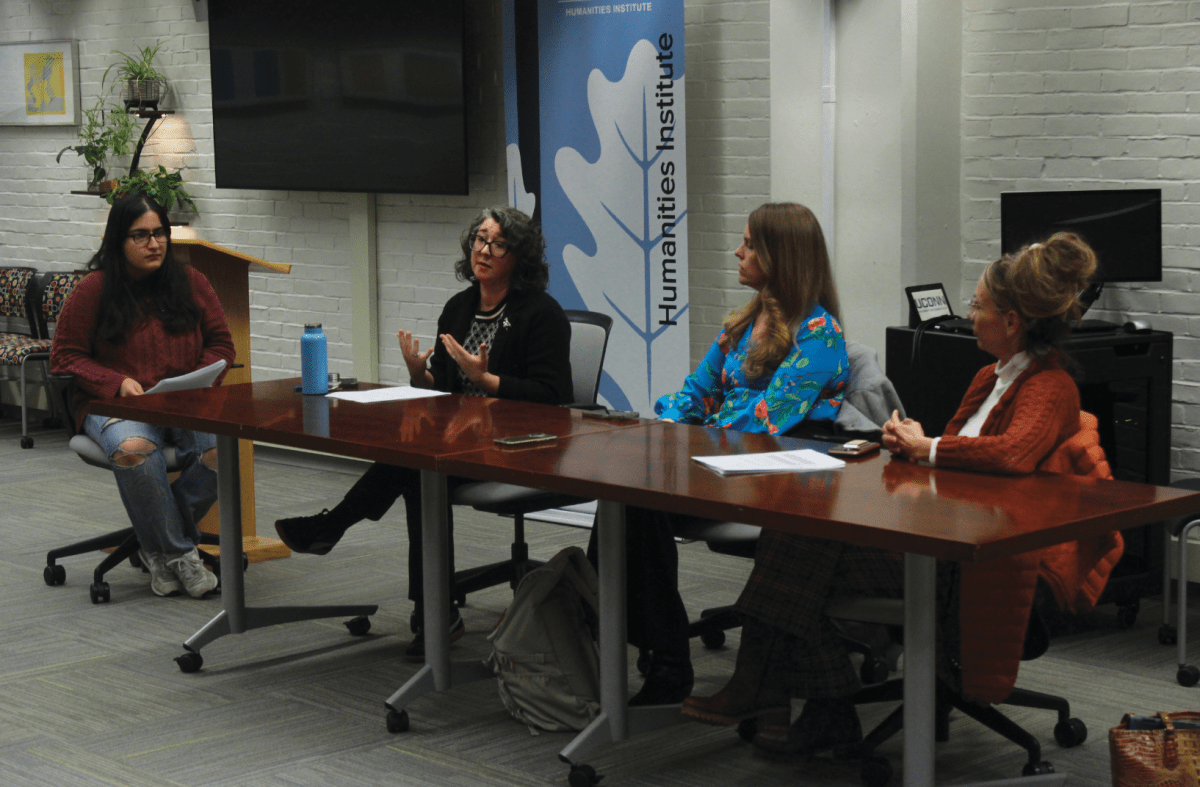
A panel of experts at the University of Connecticut recently delved into the complex interplay of psychology, journalism, and social media algorithms that drive online misinformation. The event, titled “The Spread of Misinformation and the Rise of Social Media Advocacy,” brought together three specialists from different disciplines to examine how false information proliferates in today’s digital landscape.
Hosted by the UConn Humanities Institute in collaboration with Student Activities on October 28, the panel featured clinical psychologist Dr. Sherry Pagoto, journalist Professor Amanda J. Crawford, and communication researcher Dr. Anne Oeldorf-Hirsch, each offering unique perspectives on the problem.
Dr. Pagoto, whose research focuses on leveraging technology for behavioral health interventions, highlighted the psychological factors underpinning viral misinformation. She explained that content triggering strong emotional responses—particularly shock, anger, and fear—consistently generates higher engagement on social platforms than factual information. This creates a troubling dynamic where emotional content, regardless of accuracy, often receives greater visibility.
“Many professionals lack digital literacy skills to effectively share credible information on social platforms and build an audience,” Dr. Pagoto noted, pointing to a knowledge gap that hampers accurate information dissemination.
Professor Crawford, whose expertise spans journalism ethics and conspiracy theories, addressed how media outlets can inadvertently amplify falsehoods. She identified “journalistic amplification”—when reporters spread misinformation while attempting to debunk it—as a significant concern in news coverage. Crawford emphasized that while emotional storytelling might boost audience engagement, journalistic integrity must remain paramount.
Dr. Oeldorf-Hirsch, who studies social media communication patterns across platforms like Facebook, Instagram, TikTok, and X (formerly Twitter), examined how algorithms and influencers shape perceptions of credibility online. She highlighted the growing influence of “nano-influencers”—users with smaller but highly engaged followings—in shaping digital information environments.
Oeldorf-Hirsch also identified a fundamental conflict facing social media companies: promoting critical thinking might reduce user engagement, yet prioritizing entertainment often enables the spread of misinformation.
Despite their different disciplinary backgrounds, the three experts converged on a critical insight: misinformation flourishes because users naturally gravitate toward content that reinforces their existing beliefs. This confirmation bias creates fertile ground for false information to spread unchallenged.
The panelists also distinguished between mere social media engagement and genuine advocacy, stressing that meaningful change requires action beyond simply liking, sharing, or commenting on posts. All three encouraged attendees to reduce their overall social media consumption as a practical step toward combating misinformation.
Norah Forte, a graduate assistant of Civic Engagement & Dialogues at UConn’s Neag School of Education, organized the event with the goal of reframing misinformation as not just a technological challenge but a deeply human and societal issue.
“Misinformation has become such a defining challenge of our digital age,” Forte explained. “We wanted to create a space where students and community members could unpack how misinformation spreads and how advocacy can still thrive responsibly online.”
Forte deliberately selected panelists from complementary disciplines to provide a multifaceted understanding of the problem. “Each panelist brought insight into how people process information, how media structures amplify or limit truth, and how individuals can think critically about what they share,” she said.
The discussion incorporated real-world examples of misinformation, including conspiracy theories surrounding COVID-19 vaccines, to illustrate how false information can rapidly spread and impact public health.
Steve Baker, a mechanical engineering student who attended the event, found the discussion particularly relevant. “I thought it was really interesting and informative,” Baker said, adding that the panel highlighted the importance of communication accuracy and media literacy even in technical fields like engineering.
Though time constraints limited audience participation to a single question, attendees departed with a deeper understanding of how misinformation operates and practical strategies for more responsible online engagement.
Fact Checker
Verify the accuracy of this article using The Disinformation Commission analysis and real-time sources.

11 Comments
Silver leverage is strong here; beta cuts both ways though.
Good point. Watching costs and grades closely.
Good point. Watching costs and grades closely.
Uranium names keep pushing higher—supply still tight into 2026.
Good point. Watching costs and grades closely.
Good point. Watching costs and grades closely.
Interesting update on Panel at UConn Examines Psychological, Journalistic and Algorithmic Factors in Online Misinformation. Curious how the grades will trend next quarter.
Uranium names keep pushing higher—supply still tight into 2026.
Good point. Watching costs and grades closely.
If AISC keeps dropping, this becomes investable for me.
Interesting update on Panel at UConn Examines Psychological, Journalistic and Algorithmic Factors in Online Misinformation. Curious how the grades will trend next quarter.