


Listen to the article
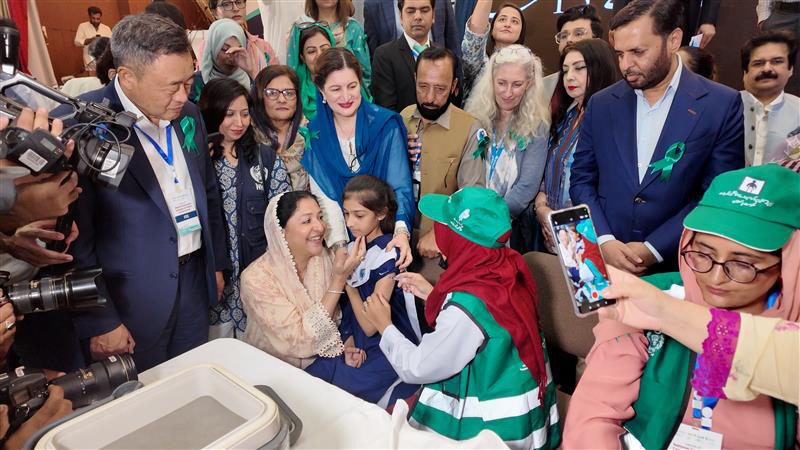
Pakistan has launched a national cervical cancer vaccination program, marking a significant step forward in women’s health protection. However, the initiative faces considerable challenges as vaccine resistance spreads beyond traditional pockets of hesitancy into the broader population.
Social media platforms have become breeding grounds for misinformation, with rumors about infertility, foreign control, and “experimental injections” gaining traction across both urban and rural communities. This phenomenon reflects a global trend where scientific advances in vaccine development are increasingly outpaced by declining public trust.
The stakes for Pakistani women are particularly high. According to the HPV Information Centre, approximately 73.8 million women aged 15 and older are at risk of cervical cancer in the country. Each year, about 5,008 women are diagnosed with the disease, and 3,197 die from it. Cervical cancer now ranks as the third most common cancer among Pakistani women overall and the second most common among those aged 15-44.
Despite these alarming statistics, awareness remains critically low. Fewer than 2% of women in Pakistan have ever undergone cervical screening. Research indicates that HPV prevalence across all types in Pakistani women is around 23.1%, highlighting both the widespread nature of the infection and significant missed opportunities for prevention.
The World Health Organization has consistently advocated for HPV vaccination as essential to women’s health equity. Dr. Tedros Adhanom Ghebreyesus, WHO’s Director-General, has emphasized that “when trust in health and science breaks down, the consequences can be deadly. We cannot assume or expect trust; we must earn it.”
This trust deficit appears to be widening in Pakistan. While vaccine fears were previously largely confined to specific regions affected by militancy and poverty, urban misinformation networks powered by social media have extended skepticism to educated populations. A 2024 UNICEF health communication survey found that nearly 45% of Pakistani parents had encountered negative vaccine content online, while another WHO-supported study across South Asia revealed that 56% of adolescent girls considered “vaccine hesitancy” the greatest barrier to HPV rollout.
The global picture reflects similar challenges. Approximately 60% of vaccine-hesitant individuals report exposure to negative or misleading vaccine narratives online. Studies show that fewer than 1,000 high-activity accounts are responsible for over one-third of all vaccine-related falsehoods. Meanwhile, confidence in health institutions including WHO, CDC, and national health ministries fell by 15-25% between 2020 and 2023.
Ironically, as public trust declines, vaccine science continues to advance rapidly. The Coalition for Epidemic Preparedness Innovations reports that AI-assisted vaccine design now significantly reduces preclinical discovery time. New technologies including mRNA and self-amplifying RNA platforms can progress from genetic sequencing to clinical trials in under 100 days, compared to the 12-18 months traditionally required.
These scientific advances have attracted substantial investment, with global vaccine R&D exceeding USD 9 billion in 2024, representing a 40% increase from pre-COVID levels. More than 25 countries are now developing domestic mRNA manufacturing facilities. As Dr. Kate O’Brien, WHO’s Immunization Director, noted, “The challenge is no longer supply. The challenge is confidence.”
Pakistan’s HPV campaign illustrates how confidence gaps form at the intersection of culture, communication, and history. In many communities, discussions about HPV as a sexually transmitted virus remain taboo. A UNICEF Pakistan communication lead observed, “For parents, a vaccine is not a scientific decision—it’s a social one. And society listens to trust, not technology.”
The WHO Pakistan HPV campaign has tried to address these concerns by localizing the narrative, emphasizing that “Protecting girls from cervical cancer is not a foreign agenda. It is a local commitment to saving futures.” However, such messages must compete with viral myths that spread “faster than syringes,” as one health worker training brief noted.
The consequences of declining vaccine trust are measurable globally. The Lancet “State of Vaccine Technology 2024” reported that misinformation-driven declines in vaccination have contributed to measles resurgence in 17 countries and delayed HPV program rollouts in at least six. UNICEF estimates that up to 25 million children miss basic vaccinations annually due to misinformation, pandemic disruption, or fear.
Addressing these challenges requires a multifaceted approach that combines technological advances with social understanding. Community-based communication frameworks that engage religious leaders, local educators, and mothers’ networks can make health information culturally relevant. Digital surveillance systems using AI can identify emerging misinformation clusters across social platforms. Greater transparency in data sharing, from side-effect statistics to trial outcomes, can help rebuild trust.
As Pakistan continues its HPV rollout, the campaign symbolizes a global turning point. Its success or failure will not only determine the fate of thousands of women but also reflect the world’s collective ability to bridge the gap between scientific innovation and public trust. While vaccines may be developed in laboratories, widespread immunity ultimately depends on trust.
Fact Checker
Verify the accuracy of this article using The Disinformation Commission analysis and real-time sources.

10 Comments
Cervical cancer is a major public health issue in Pakistan, and the government’s efforts to address it are commendable. However, the challenge of combating misinformation and overcoming social barriers should not be underestimated.
It’s concerning to see the spread of misinformation undermining an important public health initiative. Developing targeted, culturally-relevant educational campaigns will be crucial to the success of Pakistan’s cervical cancer program.
While the spread of misinformation is worrying, I’m encouraged to see Pakistan taking proactive steps to protect women’s health. Leveraging digital platforms to counter false narratives could be a valuable strategy.
Absolutely. Partnering with local influencers and trusted community leaders to amplify accurate, science-based information will be key to combating misinformation.
Pakistan’s cervical cancer vaccination program is a positive step, but the battle against misinformation will require a multi-pronged approach. Collaboration with local communities and trusted messengers could help build confidence in the vaccines.
Cervical cancer is a preventable disease, and Pakistan’s vaccination program has the potential to save thousands of lives. However, the challenge of tackling deeply rooted social biases and vaccine hesitancy should not be underestimated.
Cervical cancer is a devastating disease that disproportionately affects women in developing countries. Pakistan’s efforts to increase vaccination and screening rates are commendable, but they must overcome significant cultural and social barriers.
You’re right, the low awareness and screening rates are very concerning. Effective education campaigns that address local misconceptions will be crucial.
Combating misinformation around cervical cancer vaccines is a critical public health challenge. Building trust through transparent communication and community outreach will be key to the success of Pakistan’s vaccination program.
The low cervical cancer screening rates in Pakistan are alarming. Improving access to testing and treatment, while also addressing social stigma, will be essential to improving outcomes for women.