


Listen to the article
Taiwan Tensions Raise Nuclear Risks Amid Growing Information Crisis
Japan’s Prime Minister Sanae Takaichi has taken an unprecedented step in regional diplomacy by explicitly warning that a Chinese attack on Taiwan would directly threaten Japan’s security. This marked departure from decades of strategic ambiguity signals a significant shift in East Asian geopolitics and highlights growing concerns about potential nuclear escalation in the region.
“Japan appears to be shedding its strategic ambiguity regarding Taiwan because of rising talk—not refuted by China—that China might attack Taiwan sometime in the next decade,” according to analysis published in the National Security Journal. The statement represents a dramatic recalibration of Japan’s position as tensions in the Taiwan Strait continue to mount.
Security experts warn that Taiwan’s geopolitical situation presents a particularly dangerous test case for nuclear deterrence theory. Dr. Robert Kelly, professor at Pusan National University, argues that Taiwan’s vulnerability—greater than Ukraine’s due to its geography and China’s relative strength—creates a precarious scenario where miscalculation could lead to catastrophic consequences.
“Nuclear escalation—even its potential—is so terrifying that it dissuades aggressors from taking large chances,” Kelly notes, referencing the concept of ‘nuclear peace.’ However, this theory faces unprecedented challenges in the Taiwan context, where China’s growing military capabilities and strategic interests create complex escalation risks.
The pressure on the United States to consider nuclear options in defense of Taiwan would likely exceed even that seen in other recent conflicts, Kelly suggests. This raises the alarming possibility of inadvertent escalation, where defensive actions might be misinterpreted as preemptive strikes against nuclear arsenals.
Complicating these already dangerous dynamics is the deteriorating information environment in which modern crises unfold. Recent disasters—from the 2020 Beirut explosion to the catastrophic Hurricane Helene in 2024 and the massive Kamchatka earthquake in July 2025—have demonstrated how quickly misinformation can spread, undermining official response efforts and public trust.
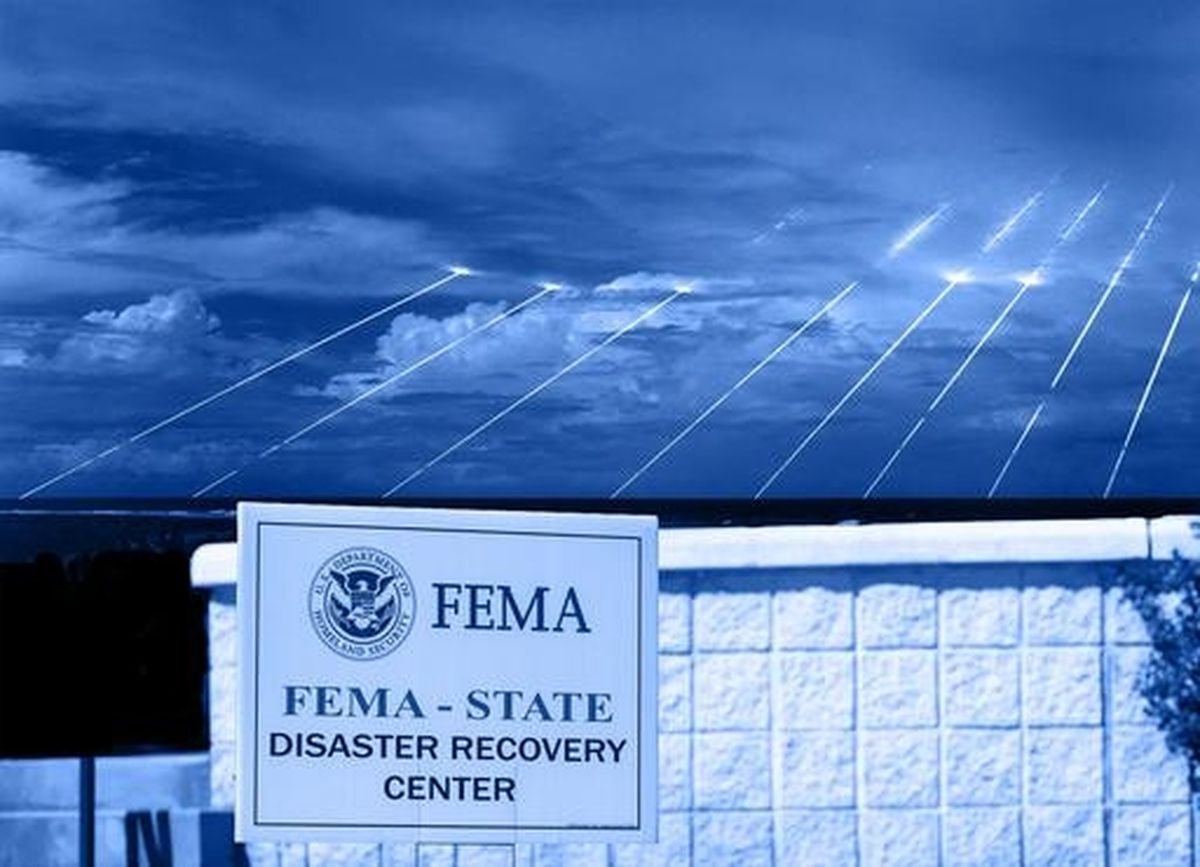
“These false claims were massively advantaged over factual reporting on social media, undermining public trust and causing additional challenges for local officials,” writes Andrew Facini in The Bulletin. During Hurricane Helene, authorities even arrested a man who threatened FEMA workers after being influenced by online conspiracy theories.
This information breakdown represents more than a nuisance; it constitutes a serious national security vulnerability. “If a country’s overall resilience can be measured by its ability to respond to hostile acts, it depends to a large degree on its ability to quickly reach its people with critical, reliable information,” Facini warns.
The convergence of nuclear risks and information chaos is particularly troubling given recent global developments. The past year has witnessed direct conflict between nuclear-armed India and Pakistan, war between nuclear-armed Israel and nuclear-aspirant Iran, and Russia’s continued nuclear posturing in its war against Ukraine, now in its fourth year.
These concurrent crises have prompted some U.S. allies to consider independent nuclear capabilities—a worrying indication that traditional security structures and nuclear deterrence frameworks may be eroding. The prospect of limited “tactical” nuclear strikes looms increasingly large in strategic calculations.
In such a scenario, the immediate aftermath would create a desperate information environment ripe for exploitation. “Like the Beirut explosion, a single tactical nuclear strike may present a shocking disaster scene which can be documented and shared—and potentially distorted—by reporters and witnesses,” notes Facini. AI-driven content and algorithmic amplification would further complicate efforts to establish ground truth.
The risks were illustrated after the Beirut explosion when then-President Trump incorrectly suggested it was “a bomb of some kind,” triggering a wave of conspiracy theories that required extensive official corrections. In a nuclear crisis, with compressed decision timeframes and higher stakes, such confusion could prove disastrous.
Security experts recommend three urgent measures to address these intertwined challenges: enhancing public media literacy to build resistance to misinformation; developing transparent crisis protocols for social media platforms; and raising public understanding of nuclear risks to reinforce the taboo against nuclear weapons use.
As global tensions continue to rise around Taiwan and other flashpoints, the intersection of nuclear escalation risks and information warfare presents one of the most significant security challenges of the modern era. The ability of governments to navigate these twin threats may determine not just regional stability but global security in the years ahead.
Fact Checker
Verify the accuracy of this article using The Disinformation Commission analysis and real-time sources.

10 Comments
This is a complex and delicate geopolitical situation. The risks of nuclear conflict are very real and must be taken seriously. Policymakers need to tread carefully, prioritizing de-escalation and conflict resolution over posturing or saber-rattling.
The prospect of nuclear conflict is deeply unsettling. Miscalculation and escalation are real dangers that must be actively managed. Clear communication, restraint, and a commitment to de-escalation will be essential to navigating this crisis.
This is a complex geopolitical issue with potentially catastrophic consequences. Policymakers must prioritize conflict resolution and risk mitigation over posturing or saber-rattling. Careful, nuanced diplomacy will be critical to maintaining stability and avoiding disaster.
Well said. The risks are simply too high to allow this situation to spiral out of control. Diplomacy and restraint must prevail.
Japan’s shift in position reflects the gravity of the situation in the Taiwan Strait. Taiwan’s strategic importance and the risk of nuclear escalation demand a measured, diplomatic approach from all parties involved. Miscalculation must be avoided at all costs.
The prospect of nuclear conflict in the Taiwan Strait is truly alarming. Careful risk management and a commitment to de-escalation will be essential to navigating this crisis. Policymakers must exercise restraint and prioritize conflict resolution over confrontation.
The threat of misinformation and disinformation is deeply concerning in a crisis of this magnitude. Access to reliable, factual information will be crucial for the public and policymakers alike. Fact-checking and media literacy initiatives will be vital to counter harmful narratives.
Misinformation and disinformation could exacerbate this crisis and heighten the risks. It’s critical that the public has access to accurate, reliable information from authoritative sources. Fact-checking and media literacy will be vital to counter the spread of harmful narratives.
Japan’s shift in position is a significant development that underscores the gravity of the situation. Taiwan’s strategic position makes it a potential flashpoint, and the threat of nuclear escalation cannot be ignored. Diplomats must work tirelessly to find a peaceful resolution.
The rising tensions in the Taiwan Strait are deeply concerning. Nuclear escalation would be a catastrophic outcome, with potentially devastating consequences for the entire region. Careful diplomacy and clear communication will be crucial to avoid miscalculation and maintain stability.