


Listen to the article
Religious Leaders Urged to Combat Fake News About Government Policies
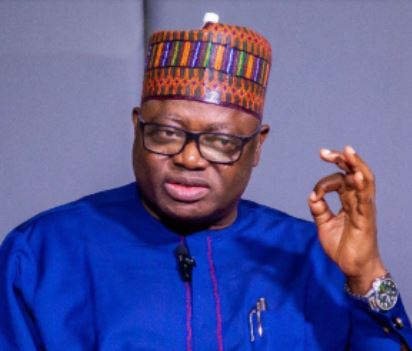
The National Orientation Agency (NOA) has called upon religious leaders across Nigeria to join efforts in combating the spread of misinformation regarding Federal Government policies and programs. The appeal was made during a one-day advocacy meeting held in Dutse, where NOA’s Jigawa State Director, Ahmad Ibrahim, emphasized that religious institutions play a crucial role in disseminating accurate information to grassroots communities.
“We appeal to our religious leaders to champion the fight against fake news and misinformation associated with government policies, programmes and activities,” Ibrahim stated. He highlighted that religious institutions possess influential platforms that can effectively counter false narratives by providing accurate information about government initiatives.
Ibrahim explained that the federal government has implemented various economic recovery reforms designed to benefit all Nigerians regardless of class, religion, or social status. However, he noted that the proliferation of fake news, particularly on social media platforms, has prevented many citizens from recognizing the potential benefits of these reforms.
“No government will deliberately introduce a policy in order to impose hardship on its citizens,” the director emphasized, adding that all federal government policies are crafted with the nation’s best interests in mind.
The NOA director pointed to several initiatives launched by the current administration in sectors including economy, education, and agriculture. He specifically mentioned the Nigeria Education Loan Fund (NELFUND) as a significant achievement aimed at supporting Nigerian students.
Religious representatives at the event echoed the need for greater public education about government policies. Sheikh Aminu Baba-Waziri urged the NOA to intensify efforts to instill patriotism and respect for leadership among Nigerians. Similarly, Pastor Alhamdu Kade called for continued education about recent tax reforms to counter misinformation circulating on social media platforms.
The advocacy meeting featured presentations from various federal and state agencies, including the Nigeria Revenue Service, Bank of Industry, Bank of Agriculture, Federal Mortgage Bank, the Police, the Nigeria Security and Civil Defence Corps, and the Federal Fire Service. These presentations aimed to provide accurate information about government programs directly from implementing agencies.
Nigeria has faced challenges with misinformation in recent years, particularly following controversial policy changes such as fuel subsidy removal and currency redesign. The spread of false information has occasionally led to public unrest and resistance to government initiatives, making the role of trusted community leaders increasingly important in maintaining social cohesion.
According to media analysts, religious institutions in Nigeria wield significant influence, with an estimated 90% of Nigerians identifying as either Christian or Muslim. This makes religious leaders uniquely positioned to shape public opinion and counter misleading narratives about government policies.
Participant feedback from the event highlighted the need for NOA to strengthen citizen engagement strategies and address knowledge gaps that make Nigerians vulnerable to misinformation. Experts suggest that effective public communication requires not only countering false information but also providing clear, transparent explanations of policy objectives and implementation processes.
The NOA’s outreach to religious leaders represents part of a broader strategy to improve public understanding of government initiatives at a time when economic reforms have created challenges for many Nigerians. By enlisting trusted community figures in this effort, the agency aims to foster greater national unity and support for development programs.
Fact Checker
Verify the accuracy of this article using The Disinformation Commission analysis and real-time sources.

10 Comments
I’m curious to see how effective this approach will be. Engaging religious leaders seems like a promising strategy, but the spread of misinformation online can be difficult to control. It will be important to monitor the impact and make adjustments as needed.
That’s a fair point. The online landscape poses unique challenges, so a multi-pronged approach may be required to truly curb the spread of fake news and misinformation.
While I’m skeptical of the government’s motives, I do think involving religious leaders in this effort is a pragmatic approach. They have the ability to reach people in a way that government agencies cannot. However, it will be crucial to ensure they are provided with factual information to disseminate.
That’s a fair concern. Maintaining the independence and credibility of religious institutions will be key to the success of this initiative. Transparency and a commitment to truth-telling will be essential.
Interesting initiative to involve religious leaders in combating misinformation. Their influence in local communities could be very valuable in disseminating accurate information about government policies and programs.
Agreed. Religious leaders often have a strong platform to reach people at the grassroots level, which can be crucial for countering fake news and rumors.
The government’s efforts to partner with religious institutions to combat misinformation are commendable. Addressing this issue at the community level could be more effective than top-down approaches.
I agree. Leveraging the trusted voices and platforms of religious leaders is a smart way to reach people and provide them with accurate, reliable information.
Fake news and misinformation have become a major challenge, undermining public trust and distorting important issues. Tapping into the credibility of religious institutions is a smart move to tackle this problem.
Absolutely. Religious leaders can play a pivotal role in cutting through the noise and ensuring citizens have access to reliable, factual information from trusted sources.