


Listen to the article
Interstellar Comet 3I/ATLAS Sparks Scientific Interest and Online Misinformation
An extraordinary visitor from beyond our solar system is currently making its journey past our cosmic neighborhood, but its scientific significance has become entangled with unfounded speculation and deliberate misinformation online.
Comet 3I/ATLAS, discovered on July 1, 2025, by Hawaii’s Asteroid Terrestrial-impact Last Alert System, is definitively an interstellar object—the third confirmed visitor from another star system. Following a hyperbolic orbit at speeds of approximately 250,000 km/h (155,000 mph), the comet will make a single pass through our solar system before returning to interstellar space.
Astronomers have been particularly intrigued by data from the James Webb Space Telescope showing the comet possesses an unusual 8:1 ratio of carbon dioxide ice to water ice, providing valuable insights into the formation of distant planetary systems. The comet will pass approximately 270 million kilometers from Earth, posing no threat while remaining observable by ground-based telescopes through September 2025.
Despite the clear scientific consensus on 3I/ATLAS’s natural origins, Tech Business News reports that at least six deepfake videos falsely claiming the comet is an alien spacecraft are circulating widely on Facebook. Meta has reportedly declined to remove this content despite multiple user reports.
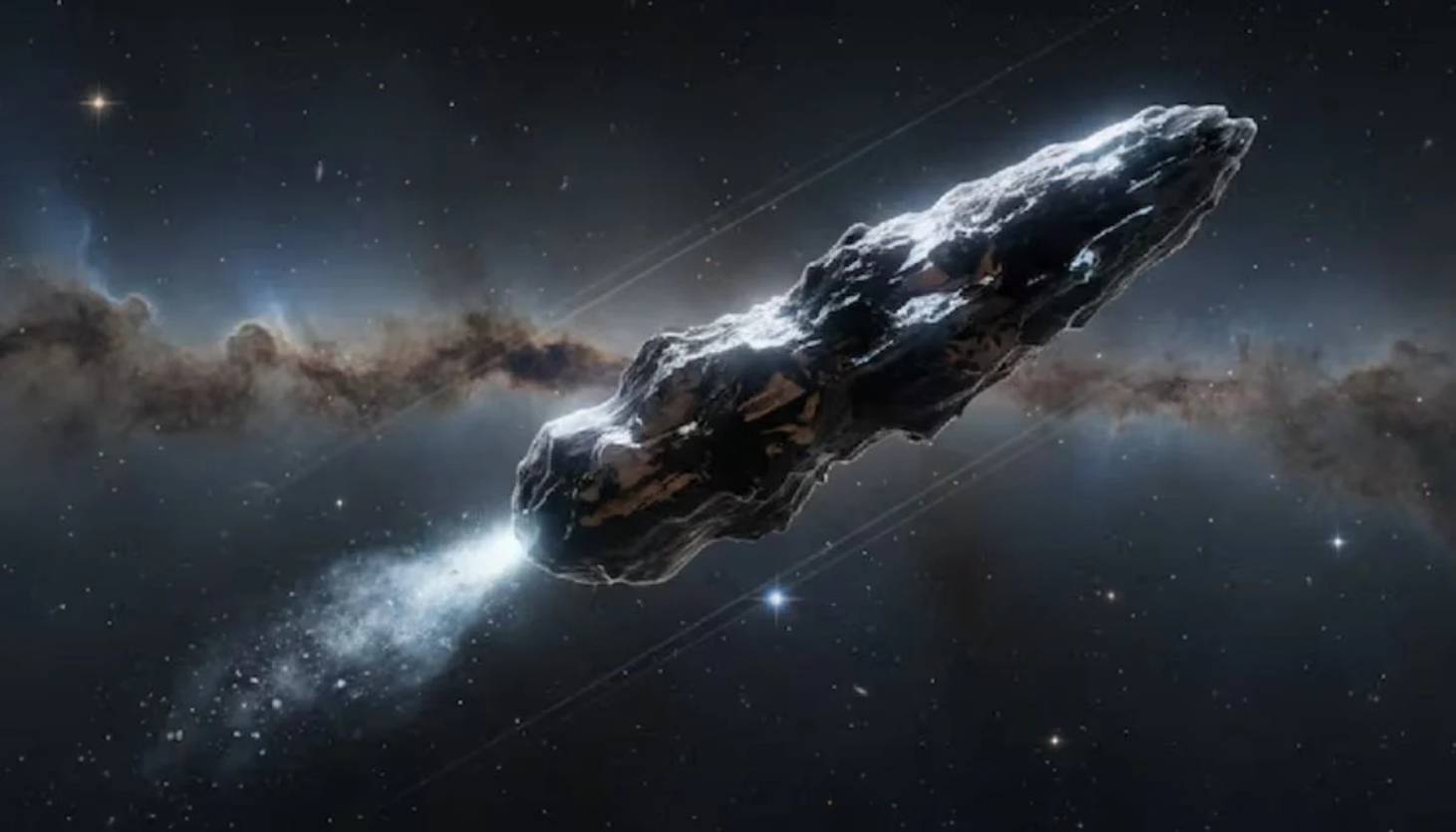
These synthetic media attacks feature AI-generated imagery showing supposed geometric patterns, metallic surfaces, and even fabricated “leaked” telescope footage—none of which reflect the comet’s actual appearance. Some posts falsely claim NASA has confirmed the object contains non-human technology, while deepfake videos impersonating scientists spread the same baseless narratives.
The situation illustrates the growing challenge of science communication in an era where sophisticated AI tools can create convincing but entirely fabricated “evidence.” Official astronomical images—often faint, low-resolution, or highly processed—struggle to compete visually with stylized AI creations that match cultural expectations of what alien technology might look like.
“3I/ATLAS is not an alien craft but an active comet,” explains one astronomer who requested anonymity due to online harassment faced by colleagues debunking the misinformation. “Like all comets, it consists of an icy nucleus surrounded by a coma—the envelope of gas and dust that forms as sunlight warms the comet and causes material to sublimate into space.”
The “3I” in its designation simply indicates it’s the third recognized interstellar object observed by astronomers, following 1I/’Oumuamua and 2I/Borisov. While rare, such objects are believed to be naturally ejected from other planetary systems through gravitational interactions, traveling for millions of years before entering our solar system.
Harvard astronomer Avi Loeb, known for his controversial suggestions that previous interstellar visitor ‘Oumuamua might have artificial origins, has proposed some speculative theories about 3I/ATLAS as well. After discussing brightness profile data with colleague Eric Keto, Loeb suggested the object might be generating its own light—either from being “a rare fragment from the core of a nearby supernova rich in radioactive material” or, more controversially, a “nuclear-powered spacecraft.”
Loeb has also noted the object’s trajectory passes relatively close to both Earth and Jupiter, and will make an even closer approach to Mars this fall. He has suggested using NASA’s Mars Reconnaissance Orbiter to observe the object during this close encounter.
The mainstream astronomical community maintains there is no credible evidence supporting artificial origins for the comet. Its behavior aligns completely with natural processes, and variations in brightness—sometimes misinterpreted as evidence of propulsion—are normal features of active comets as they approach or recede from the Sun.
The controversy underscores a critical responsibility for media platforms, science communicators, and educational institutions to help the public distinguish between legitimate scientific discourse and fabricated content, particularly when the latter impersonates credible sources.
3I/ATLAS represents a genuine scientific opportunity to study material from beyond our solar system—a remarkable phenomenon that needs no embellishment to inspire wonder about our universe.
Fact Checker
Verify the accuracy of this article using The Disinformation Commission analysis and real-time sources.

10 Comments
It’s no surprise that a unique celestial object like 3I/ATLAS would capture people’s imaginations and inspire some outlandish theories. But the scientific evidence is clear – this is a natural comet from another star system, not an alien spacecraft.
Absolutely. The speeds and trajectory described make it clear this is a comet, not some kind of extraterrestrial craft. Misinformation can spread quickly online, so it’s good to see reputable sources setting the record straight.
Comets and other interstellar objects are already fascinating enough without needing to embellish them. I’m glad the scientific community is getting good data from observing 3I/ATLAS and can share accurate information to counteract the misinformation.
The passage of 3I/ATLAS is an excellent opportunity for astronomers to gather valuable insights. I’m glad to see they are making good use of powerful instruments like the James Webb Space Telescope to study this comet’s unique properties.
As someone with a keen interest in space exploration and astronomy, I find this comet quite intriguing. The unusual ice composition is really interesting, and I look forward to learning more from the scientific observations.
While I can understand the public’s curiosity about an interstellar object passing through our solar system, it’s important to rely on reputable scientific sources and not get caught up in unsubstantiated conspiracy theories. Misinformation helps no one.
Comet 3I/ATLAS is certainly a noteworthy celestial event, but the scientific explanations and data seem clear. I hope the public can appreciate the real significance of this natural phenomenon without resorting to fantastical claims.
The scientific community is rightfully excited to study this rare interstellar comet and learn more about its composition and origins. While some online speculation is understandable, it’s important to rely on reputable sources and avoid spreading unsubstantiated claims.
Agreed. The data from the James Webb Space Telescope sounds fascinating – I’m curious to see what new insights into distant planetary systems this comet can provide.
It’s understandable that people might want to imagine something more exciting than just a comet passing through. But the scientific community has presented a clear, well-supported explanation for 3I/ATLAS, and we should trust their expertise on this matter.