


Listen to the article
In the aftermath of Iran’s missile attack on Israel, a wave of false information and manipulated images has flooded social media platforms, complicating public understanding of an already tense geopolitical situation.
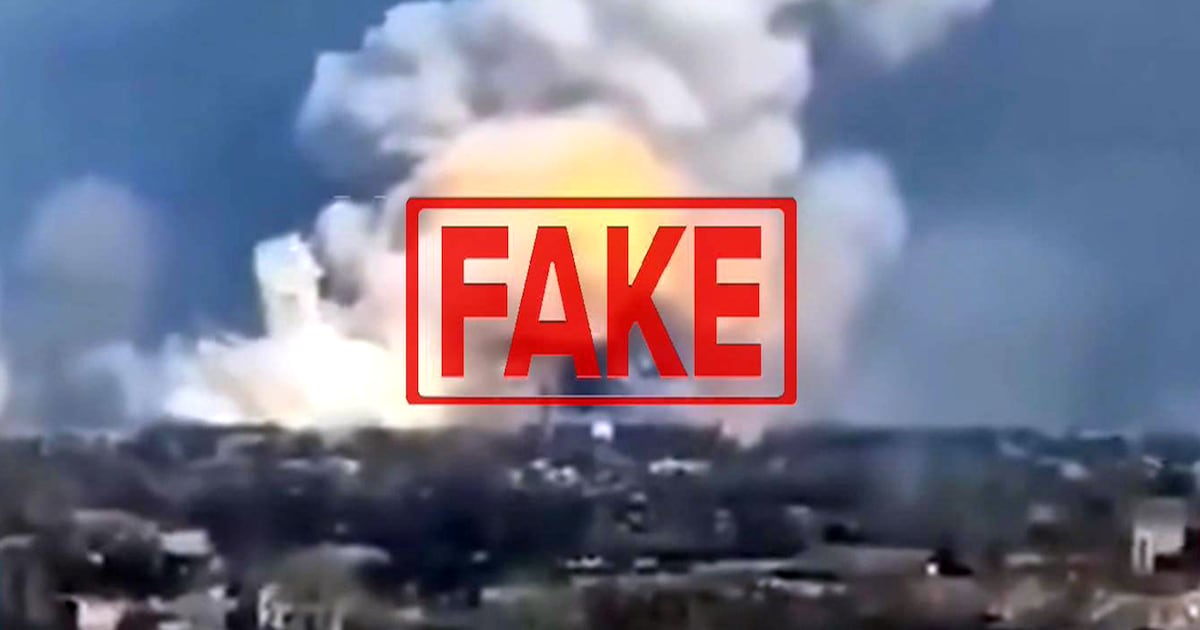
Security experts and misinformation researchers have identified numerous instances of doctored photos and videos circulating online, many created using artificial intelligence. These deceptive visuals depict scenarios ranging from fabricated missile strikes to nonexistent military deployments, often garnering thousands of views before fact-checkers can intervene.
“We’re seeing an unprecedented surge in AI-generated content specifically designed to inflame tensions around the Iran-Israel conflict,” said Dr. Sarah Mendez, digital forensics specialist at the Center for Digital Integrity. “The sophistication of these fakes has improved dramatically even in the past six months.”
One particularly viral image showed what appeared to be multiple explosions across Tel Aviv’s skyline, suggesting a devastating impact from Iran’s missile barrage. The image was shared by accounts with millions of followers before being identified as AI-generated. In reality, Israel’s Iron Dome defense system intercepted the vast majority of incoming missiles, resulting in minimal damage.
Other misleading content includes recycled footage from previous conflicts, including the Russia-Ukraine war and past Middle East skirmishes, falsely labeled as current events in Israel. Some videos from video games or military training exercises have also been repurposed to suggest active combat.
The problem extends beyond just visual manipulation. Text-based misinformation has spread rapidly, with fabricated statements attributed to world leaders and false reports about military casualties or escalations. Several imposter accounts mimicking legitimate news organizations have published alarming but unverified claims about the conflict’s progression.
Social media platforms have struggled to contain the deluge of false information despite enhanced monitoring efforts. Meta, which owns Facebook and Instagram, reported removing thousands of posts containing misleading content about the Iran-Israel situation, but critics argue these measures remain insufficient.
“By the time a false image is flagged and removed, it may have already been seen by millions and reshared across multiple platforms,” explained Mira Patel, policy director at Digital Rights Watch. “The current content moderation systems simply can’t keep pace with the volume and velocity of misinformation.”
The proliferation of misleading content comes at a particularly volatile moment in Middle East relations. Iran’s missile attack on Israel was itself a response to an earlier Israeli strike on Iranian diplomatic facilities in Syria, creating a cycle of retaliation that has raised fears of a broader regional conflict.
Intelligence analysts warn that misinformation can serve strategic purposes for various actors in the conflict. “Some of this content is opportunistic—people seeking engagement or visibility—but we’re also seeing coordinated campaigns designed to shape public opinion or provoke specific reactions,” noted former intelligence officer James Harrington.
Experts recommend several strategies for consumers attempting to navigate this complex information landscape. These include verifying information through multiple reliable news sources, checking publication dates on shared content, being wary of emotional or sensationalist framing, and using reverse image searches to identify repurposed visuals.
Media literacy organizations have also called for increased educational efforts to help the public better identify AI-generated content. Telltale signs can include unusual lighting, unnatural textures, or distorted facial features, though these indicators are becoming less obvious as AI technology advances.
“This is unfortunately the new normal for how information spreads during international crises,” said Dr. Mendez. “The technology to create convincing fakes has democratized faster than our systems to detect and counter them have evolved.”
As tensions remain high in the Middle East, the challenge of separating fact from fiction continues to complicate both public understanding and diplomatic responses to the evolving situation between Iran and Israel.
Fact Checker
Verify the accuracy of this article using The Disinformation Commission analysis and real-time sources.

10 Comments
Concerning to see how quickly misinformation can spread, especially with the help of AI-generated visuals. Fact-checking is crucial in these tense situations to separate truth from fiction.
Absolutely. The sophistication of these fakes is alarming and highlights the need for robust digital forensics to combat the spread of disinformation.
The Iran-Israel conflict is tense enough without having to deal with a barrage of manipulated images and false information. I hope authorities can get a handle on this quickly to restore public trust.
Agreed. Misinformation during conflicts can have serious real-world consequences, so it’s critical that the public has access to reliable, fact-based reporting to make informed decisions.
It’s alarming to see how quickly misinformation can spread, especially when it’s amplified by AI-generated visuals. Fact-checking and media literacy efforts will be crucial going forward.
Absolutely. The ability of these fakes to go viral before being debunked highlights the need for better detection and response mechanisms to combat online disinformation.
This is a troubling development. AI-generated content has the potential to seriously undermine public trust and understanding of complex geopolitical events. Rigorous fact-checking is essential.
Well said. The sophistication of these fakes is a concerning sign of the times. Vigilance and digital literacy will be key to navigating this landscape.
The Iran-Israel conflict is already fraught enough without having to deal with a wave of manipulated images and false information. I hope authorities can get a handle on this quickly.
Agreed. Misinformation during conflicts can have serious real-world consequences, so it’s critical that the public has access to reliable, fact-based reporting.