


Listen to the article
In a significant policy reversal that has stunned many in the medical community, the Centers for Disease Control and Prevention’s website now suggests a possible link between vaccines and autism, contradicting decades of scientific consensus and the agency’s own long-held position.
The controversial update, implemented Wednesday, states that “studies supporting a link have been ignored by health authorities” and that “the claim ‘vaccines do not cause autism’ is not an evidence-based claim because studies have not ruled out the possibility that infant vaccines cause autism.”
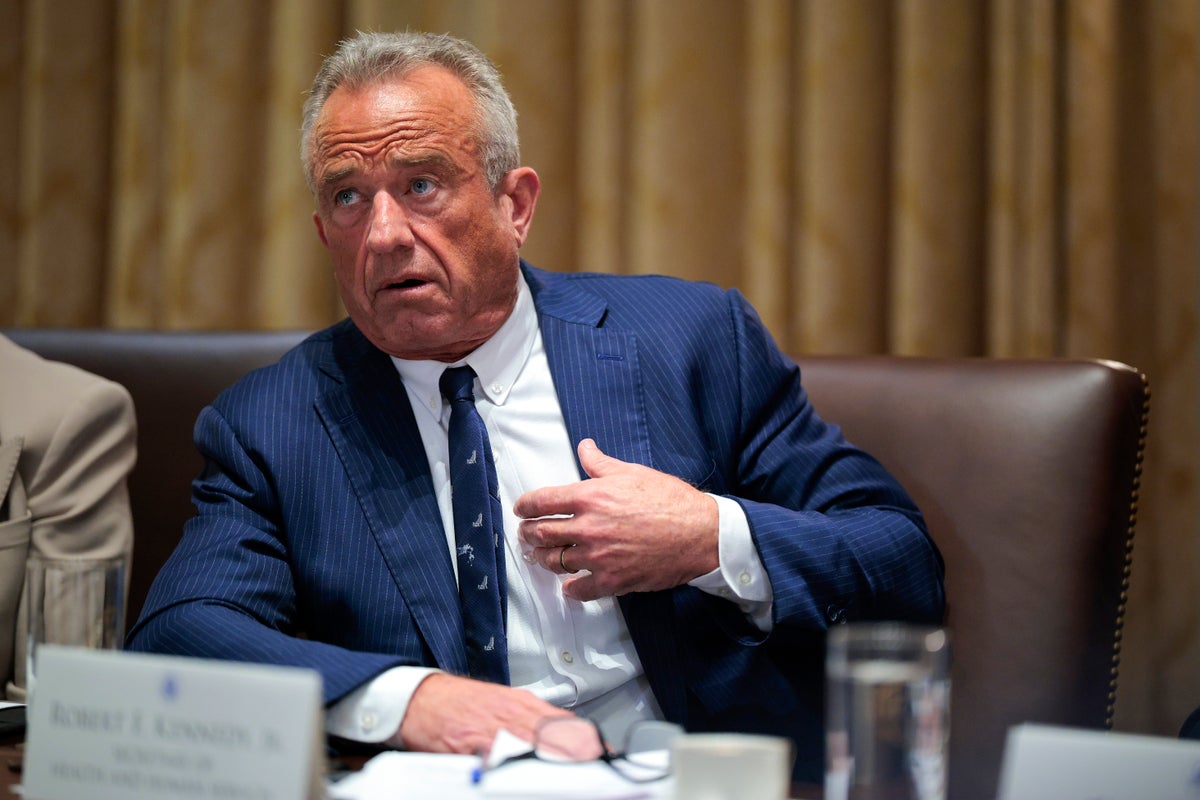
This dramatic shift appears to reflect the views of Health and Human Services Secretary Robert F. Kennedy Jr., who has spent years promoting theories about vaccine dangers despite widespread scientific rejection of such claims.
Before the change, the CDC website had clearly stated that studies found “no link” between vaccines or their ingredients and autism development. The new language also mentions that HHS has initiated an investigation into autism’s root causes, focusing on “plausible biologic mechanisms.”
The unexpected revision has sent shockwaves through the public health community. Demetre Daskalakis, who resigned this summer as head of the CDC’s center for respiratory viruses and immunizations, told The Washington Post that the change suggests the “CDC cannot currently be trusted as a scientific voice.”
“The weaponization of the CDC voice by validating false claims on official websites confirms what we have been saying,” Daskalakis added, referring to concerns about political interference in the agency’s work.
The notion of a vaccine-autism connection first gained traction following a 1998 research paper that was subsequently retracted. Despite being thoroughly debunked by numerous large-scale studies, the theory has persisted in some circles.
When asked about the website changes, Andrew Nixon, an HHS spokesman, told The Washington Post, “We are updating the CDC’s website to reflect gold standard, evidence-based science.” He did not specify who authorized the changes or provide scientific justification for them.
Kennedy, who was appointed by President Donald Trump to lead HHS, has made vaccine skepticism a central theme of his career. In 2005, he published an article in Rolling Stone promoting vaccine-autism theories – a piece the magazine later removed. During his unsuccessful 2024 presidential campaign, Kennedy frequently highlighted what he described as vaccine dangers.
The website revision appears to contradict commitments Kennedy made during his Senate confirmation process. Republican Senator Bill Cassidy of Louisiana reportedly supported Kennedy’s nomination after receiving assurances that “CDC will not remove statements on their website pointing out that vaccines do not cause autism.”
The timing is particularly notable as it comes amid reports of internal tension at HHS. According to Politico, Kennedy is engaged in a “power struggle” with FDA Commissioner Marty Makary over vaccine policy direction.
Kennedy’s influence on public health messaging has been evident since his appointment. Last month, during a press conference with President Trump, he announced a purported link between autism and acetaminophen, warning pregnant women against taking Tylenol – advice that contradicted recommendations from major medical organizations.
Autism rates have increased significantly in recent decades, with CDC data now indicating the condition affects approximately one in 31 children in the United States. While researchers continue studying potential environmental and genetic factors, the scientific consensus remains that vaccines are not a causative factor.
Public health experts worry that the CDC website changes could undermine vaccine confidence at a time when immunization rates for childhood diseases have declined in many parts of the country. The revision represents an unusual instance of a federal health agency contradicting established scientific consensus without new evidence to support the change.
HHS did not immediately respond to requests for additional comment on the website modifications or their scientific basis.
Fact Checker
Verify the accuracy of this article using The Disinformation Commission analysis and real-time sources.

9 Comments
This is a concerning reversal that could have serious public health consequences. The CDC must be extremely cautious and transparent in making any changes to longstanding vaccine policies. The scientific evidence on vaccine safety is overwhelming and should not be ignored.
As a parent, I’m very concerned to see the CDC seemingly casting doubt on the safety of vaccines. Any policy changes around childhood immunizations need to be based on the strongest possible scientific evidence, not personal beliefs or speculation.
I find this update quite puzzling. The scientific consensus on the lack of a link between vaccines and autism is overwhelming. I hope the CDC provides a clear, evidence-based rationale for this reversal to reassure the public and the medical community.
I’m very concerned to see the CDC seemingly casting doubt on the safety of vaccines. Childhood immunizations are a critical public health tool, and any policy changes must be extremely well-justified based on the best available scientific evidence.
This is a significant shift in the CDC’s position on vaccines and autism. I’m curious to see what new evidence has emerged to prompt this change. Vaccines are a critical public health tool, so any policy changes need to be handled with great care and transparency.
I’m troubled by this apparent reversal on such an important public health issue. The CDC should be guided by the overwhelming scientific consensus, not unsubstantiated theories. I hope they carefully review all the evidence before making any definitive claims.
I’m quite skeptical of this update. The scientific consensus on the safety and efficacy of vaccines is overwhelming. Unless the CDC can provide compelling new evidence, I don’t believe they should be casting doubt on such a critical public health issue.
This is a concerning reversal by the CDC. While it’s important to keep an open mind, any change in vaccine policy must be based on robust scientific evidence, not on unsubstantiated theories. I hope the CDC carefully reviews all the data before making any definitive claims about a link to autism.
This is a concerning development. Vaccines have been shown time and again to be safe and effective at preventing serious diseases. I hope the CDC provides a clear, evidence-based rationale for this shift in position to reassure the public.